das Korn
grain
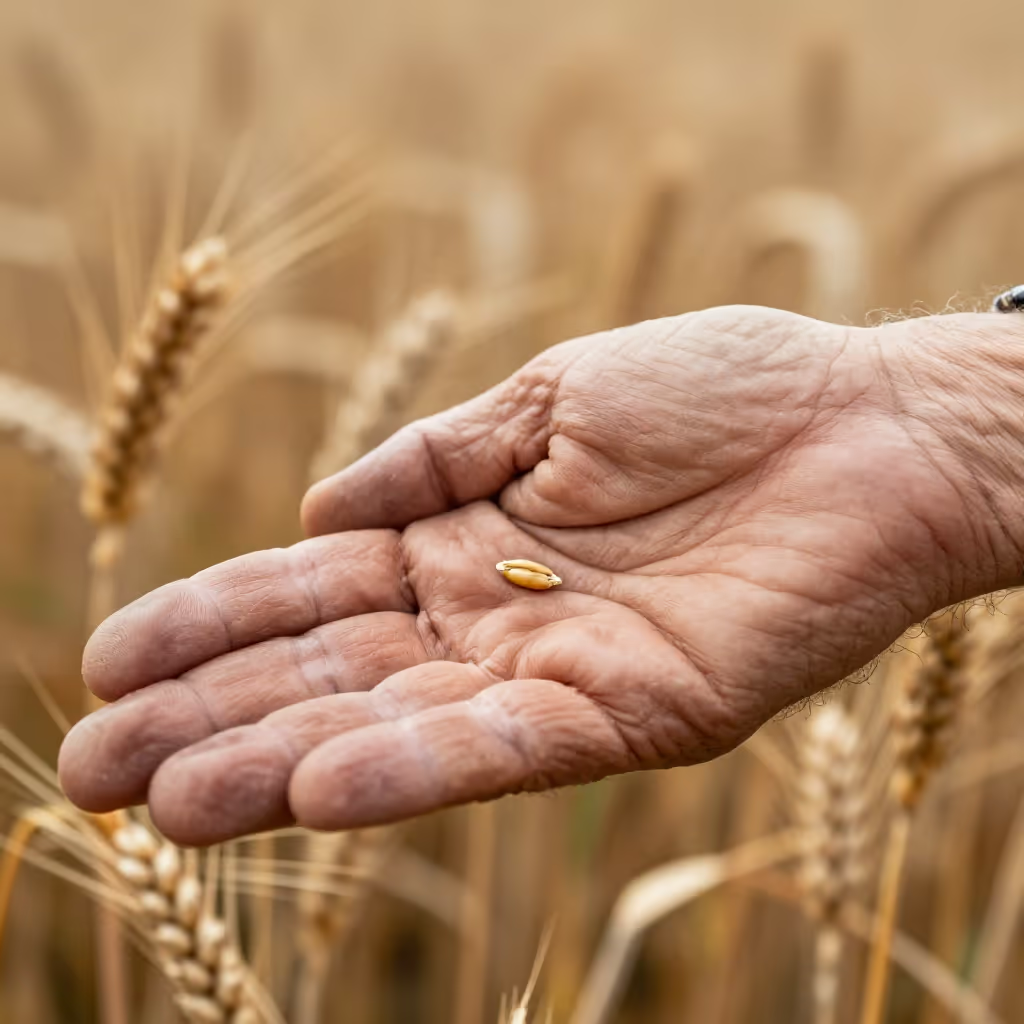
The individual seed of a cereal plant such as wheat, rye, or barley.
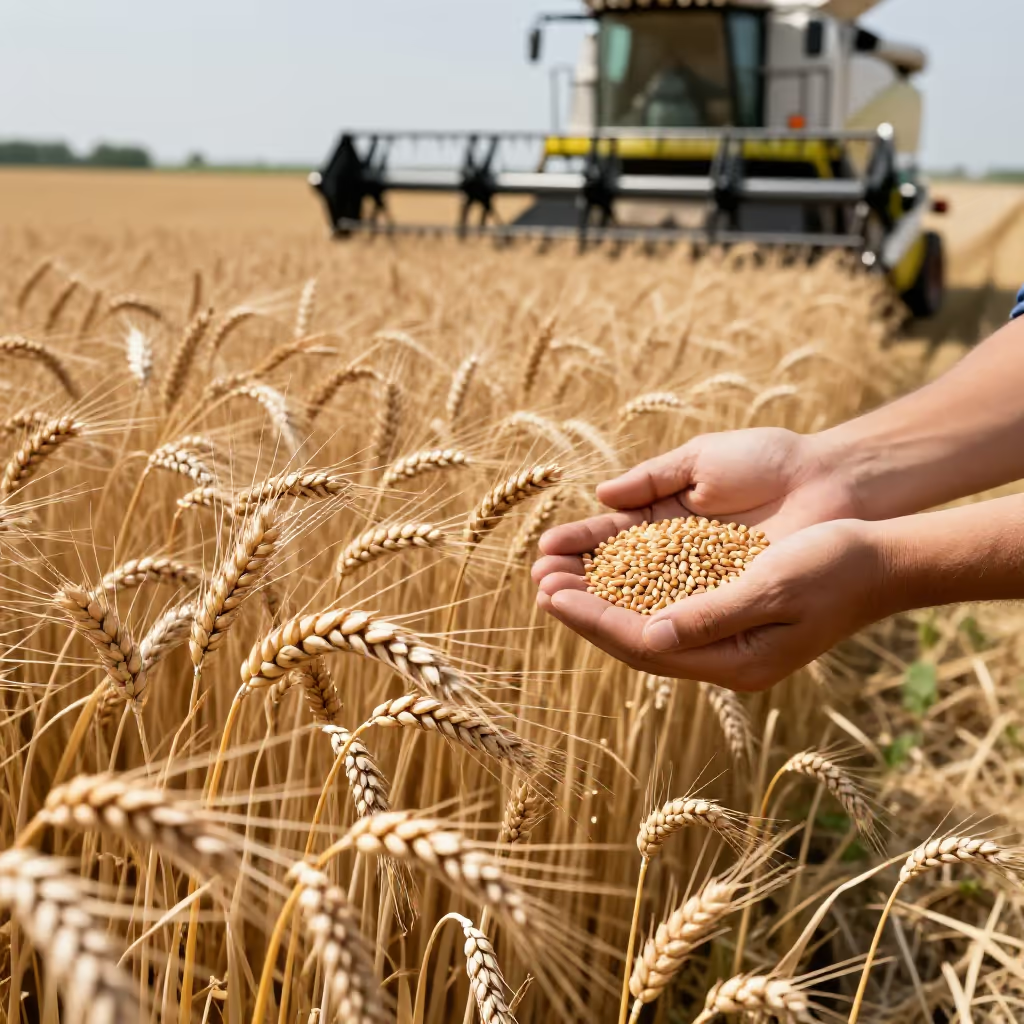
Ein einzelnes Korn Weizen ist winzig, aber zusammen ergeben sie ein ganzes Feld.
A single grain of wheat is tiny, but together they make up an entire field.
grain / schnapps / sight
Loading your saved state.

grain
The individual seed of a cereal plant such as wheat, rye, or barley.
Ein einzelnes Korn Weizen ist winzig, aber zusammen ergeben sie ein ganzes Feld.
A single grain of wheat is tiny, but together they make up an entire field.


grain
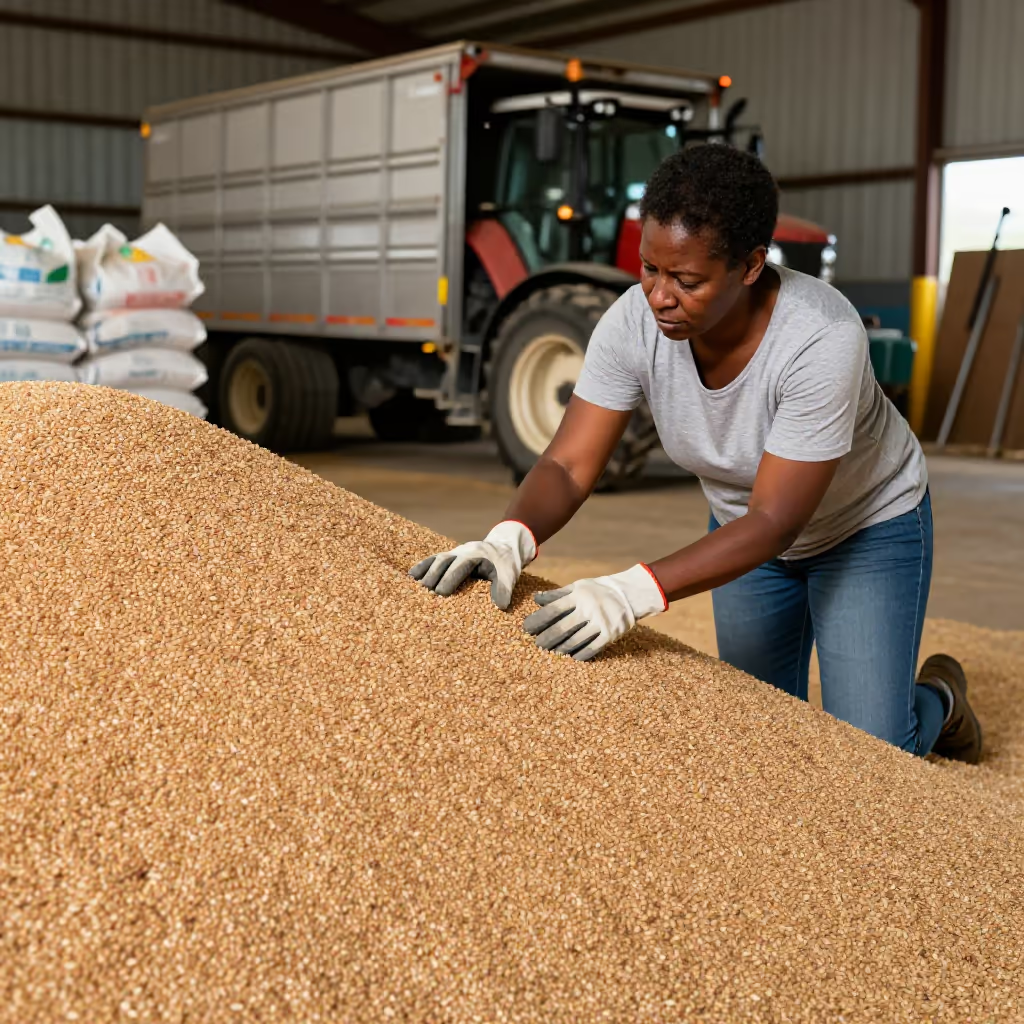
As a collective term for grain or cereal crops in general.
Der Bauer fährt das Korn nach der Ernte in die Mühle.
The farmer takes the grain to the mill after the harvest.

Korn schnapps
A clear schnapps distilled from grain.
Zum Feierabend trank er einen Korn mit einem Glas Bier.
After work, he drank a Korn schnapps with a glass of beer.

grain
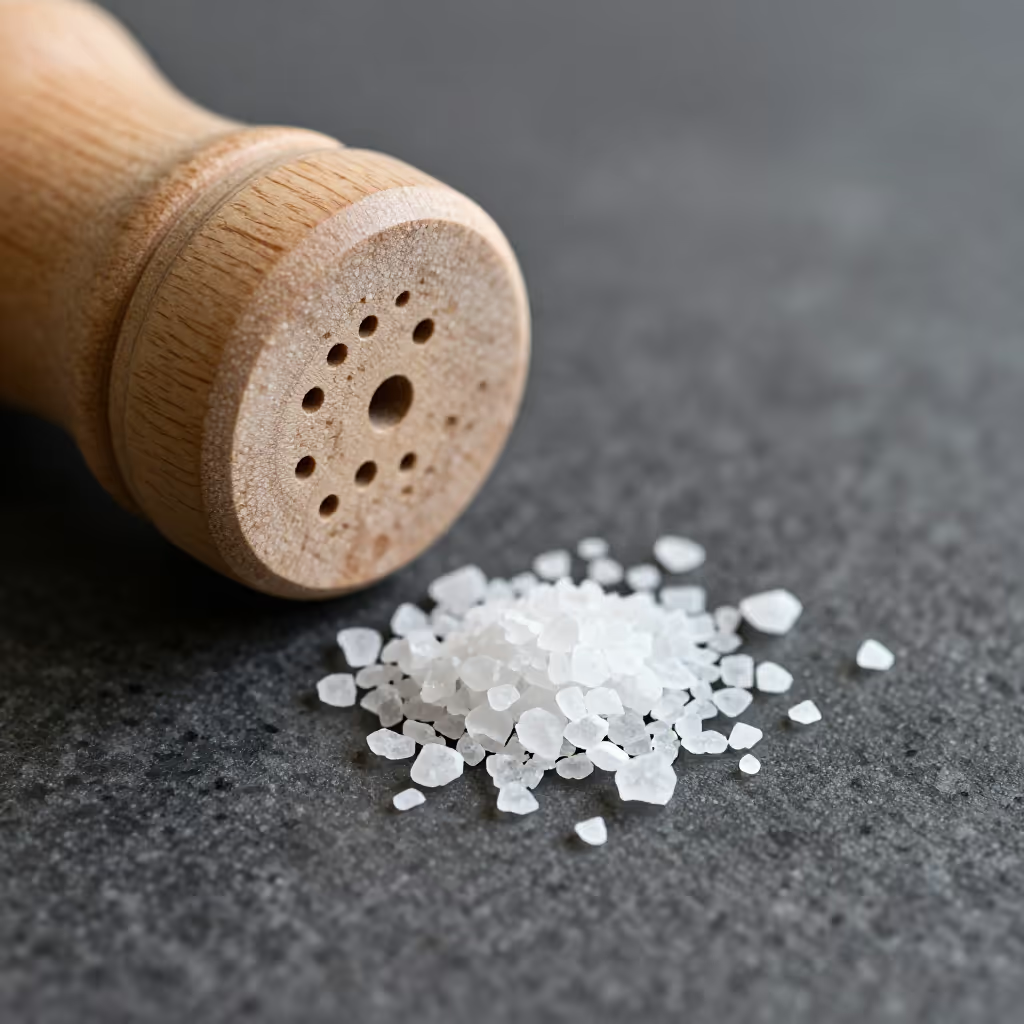
A very small, hard particle of something, for example sand or salt.
Ich habe ein Sandkorn im Auge.
I have a grain of sand in my eye.

front sight
The front part of the sighting device on a firearm, used for aiming.
Um präzise zu schießen, müssen Kimme und Korn genau auf das Ziel ausgerichtet sein.
To shoot accurately, the rear sight and front sight must be aligned exactly with the target.
The article is crucial: 'das Korn' refers to grain or a small particle. 'der Korn', on the other hand, always refers to the schnapps distilled from grain.
Das Korn auf dem Feld ist reif für die Ernte.
The grain in the field is ready for harvest.
The ending '-korn' is often used to describe a single small particle of something. Examples are 'Sandkorn' (grain of sand), 'Reiskorn' (grain of rice), or 'Staubkorn' (speck of dust).
Ein einzelnes Reiskorn lag noch auf dem Teller.
A single grain of rice was still lying on the plate.
'Das Korn' can be countable when it means an individual seed grain ('ein Korn' — one grain). But it can also be uncountable when it refers to grain as a whole ('das Korn' — the grain).
Der Vogel pickte ein Korn vom Boden auf.
The bird picked up a grain from the ground.
When 'Korn' means grain, it is often combined with verbs from agriculture, for example 'Korn anbauen' (to grow grain), 'Korn ernten' (to harvest grain), or 'Korn mahlen' (to mill grain).
Die Mühle mahlt das Korn zu feinem Mehl.
The mill grinds the grain into fine flour.
The idiom 'jemanden/etwas aufs Korn nehmen' comes from the meaning 'sighting device'. It means to focus on someone or something in order to observe, criticize, or make fun of them.
Der Komiker nahm in seinem Programm die aktuelle Politik aufs Korn.
In his program, the comedian took current politics to task.
grain / cereal
Korn and Getreide can both refer to the harvested grains of plants such as wheat or rye. Getreide is the neutral collective term and can also refer to the plants themselves. In the appropriate context, Korn tends to emphasize the grains as a mass.

Beim Umladen rieselt das trockene Korn aus dem Sack.
The dry grain spills out of the sack during unloading.
Nach der Ernte lagert der Bauer das trockene Getreide im Silo.
After the harvest, the farmer stores the dry grain in the silo.