

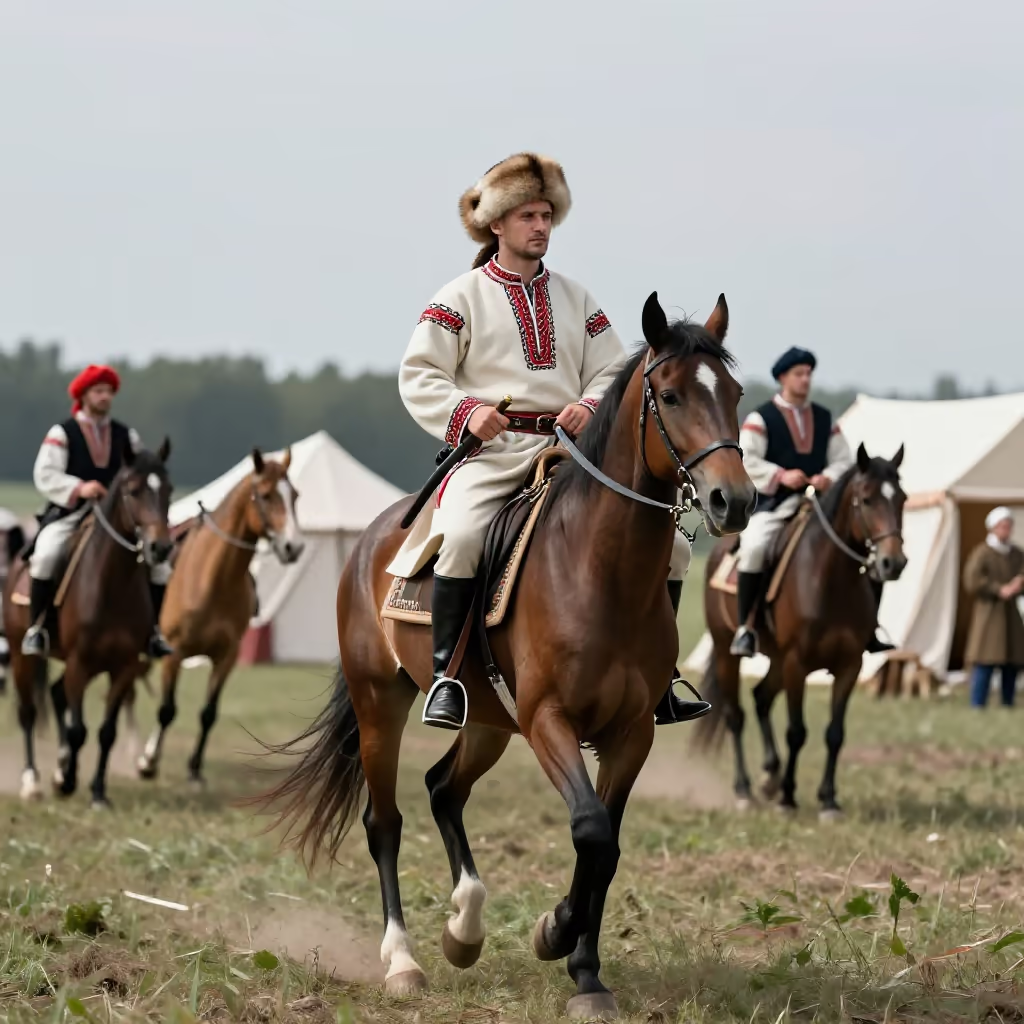
A member of a historical, mostly East Slavic people known for their military skills and self-governing communities in southern Russia and Ukraine.
example
Der Kosake saß stolz auf seinem Pferd und blickte über die weite Steppe.
The Cossack sat proudly on his horse and gazed across the wide steppe.
Usage tips
Grammar: N-declension
'Der Kosake' (the Cossack) is a weak masculine noun (N-declension). This means that it takes the ending '-n' in all cases except the nominative singular: 'den/dem/des Kosaken'. The plural is also 'die Kosaken' (the Cossacks).
EXAMPLE
Der Film handelt von einem jungen Kosaken.
The film is about a young Cossack.
Typical associations
The word is strongly linked to certain images. Common associations are 'auf dem Pferd reiten' (to ride on horseback), 'in der weiten Steppe leben' (to live in the wide steppe), and their role as 'berühmte Reiter' (famous horsemen) or 'mutige Krieger' (brave warriors).
EXAMPLE
Man sagt, ein Kosake sei ohne sein Pferd nicht vollständig.
It is said that a Cossack is not complete without his horse.
Cultural context
In the German-speaking world, Cossacks are also known for their culture, especially through the 'Kosakenchöre' (Cossack choirs). These choirs are famous for their powerful voices and traditional Russian songs.
EXAMPLE
Zu Weihnachten besucht meine Familie oft ein Konzert eines Kosakenchors.
At Christmas, my family often attends a concert by a Cossack choir.