


die Kost
food
The totality of the food that a person or group of people regularly consumes. It often refers to the type and quality of the food.
EXAMPLE
Im Krankenhaus bekam er nur leichte Kost.
In the hospital, he was given only light food.
food / board
Loading your saved state.
food
The totality of the food that a person or group of people regularly consumes. It often refers to the type and quality of the food.
Im Krankenhaus bekam er nur leichte Kost.
In the hospital, he was given only light food.
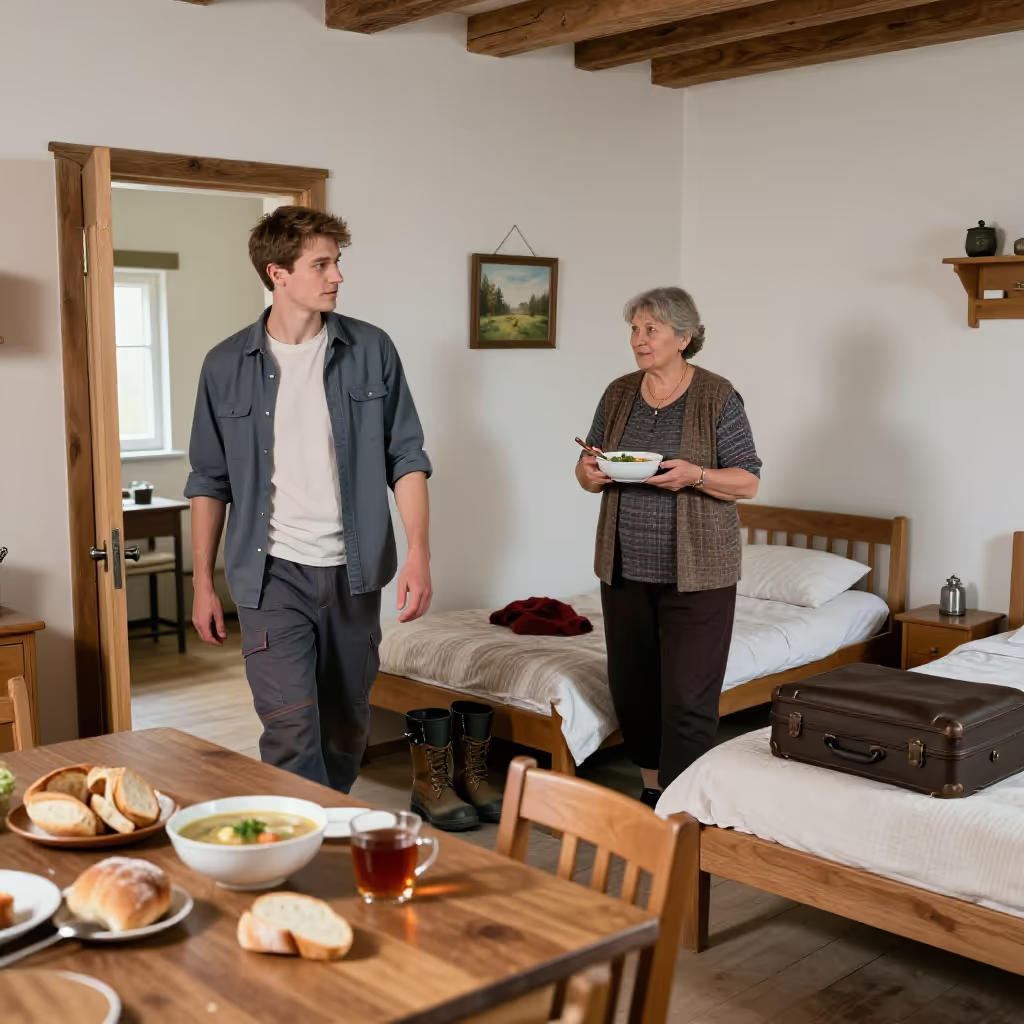
board and lodging
A fixed expression referring to meals and accommodation, meaning a place to sleep. It is often used in connection with work or travel.
Für seine Arbeit auf dem Bauernhof erhielt er freie Kost und Logis.
For his work on the farm, he received free board and lodging.

heavy going
In a figurative sense, something that is intellectually or emotionally difficult to process or understand, such as a demanding film or a complex book.
Der Film über den Krieg war wirklich schwere Kost.
The film about the war was really heavy going.
The noun 'die Kost' (food / fare) is closely related to the verb 'kosten' (in the sense of to taste). It originally referred to what one tastes or samples, that is, food.
In diesem Restaurant gibt es traditionelle deutsche Kost.
This restaurant serves traditional German fare.
When 'die Kost' (food / fare) refers to general nutrition, the word is almost always used in the singular. It is a collective term and has no plural form in this meaning.
Die Kost in der Kantine ist sehr abwechslungsreich.
The food in the cafeteria is very varied.
The word 'Kost' (food / fare) is often used in more formal or institutional contexts to describe the type of diet. It is frequently found in contexts such as diets, gastronomy, or medicine.
Der Arzt hat mir für die nächste Woche Schonkost verordnet.
The doctor prescribed bland food for me for the next week.
The expression 'Kost und Logis' (board and lodging) is a fixed unit and means 'meals and accommodation.' The two words are almost always used together in this meaning.
Als Saisonarbeiter auf dem Weingut erhielt er ein kleines Gehalt sowie freie Kost und Logis.
As a seasonal worker at the winery, he received a small salary as well as free board and lodging.
The expression 'schwere Kost' (heavy going) is used metaphorically for content that is intellectually demanding or emotionally burdensome. The opposite is 'leichte Kost' (light reading / light entertainment) for entertaining, simple content.
Der Roman über die Nachkriegszeit war wirklich schwere Kost.
The novel about the postwar period was really heavy going.
food / meal / eating
Essen is the everyday term for specific dishes or food. Kost, on the other hand, refers to the food someone regularly eats as a whole and often emphasizes its type or quality. Essen is appropriate in normal conversation; when describing or recommending a particular diet, Kost is often more suitable.

Der Arzt empfiehlt ihr leichte Kost mit viel frischem Gemüse.
The doctor recommends a light diet with lots of fresh vegetables.
Sie mag leichtes Essen mit viel frischem Gemüse.
She likes light food with lots of fresh vegetables.