

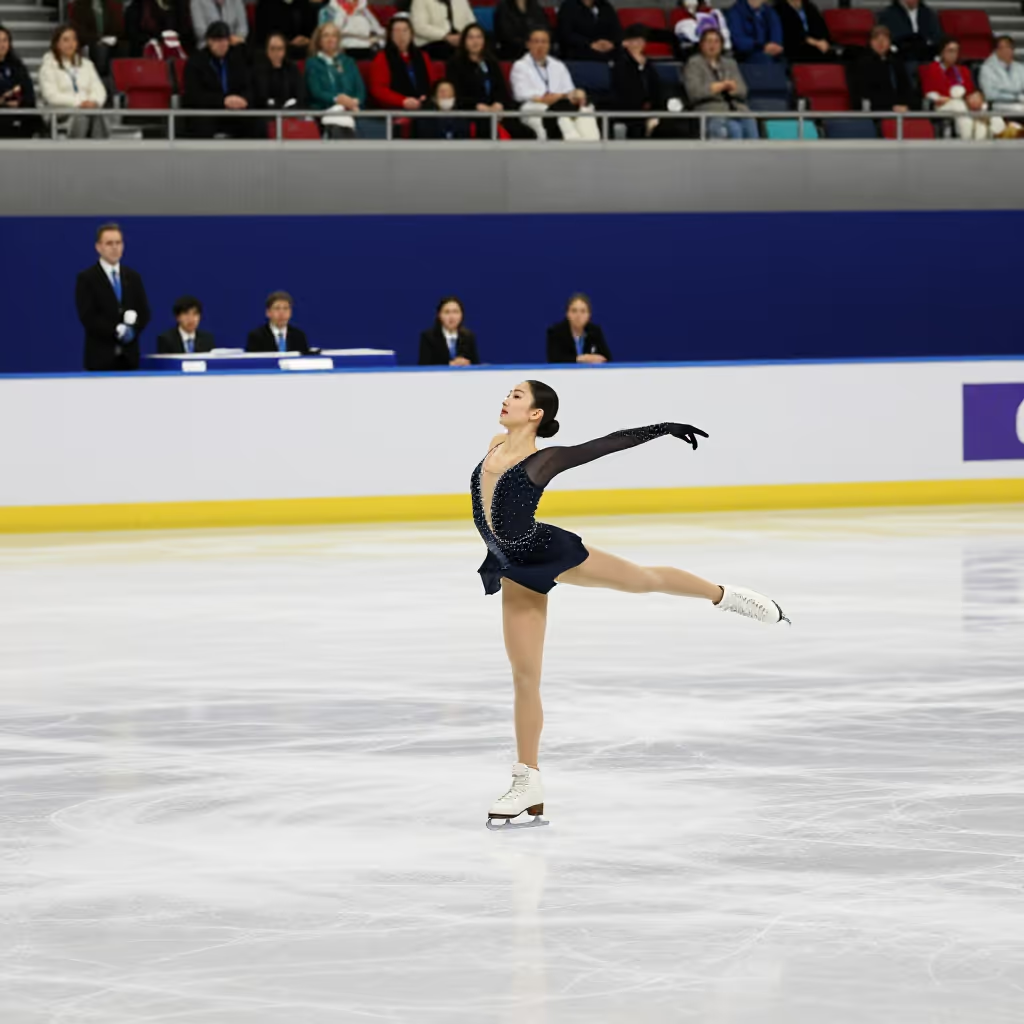
A freely arranged program in sports competitions such as figure skating, gymnastics, or dressage, as opposed to the compulsory program.
example
Mit ihrer fehlerfreien Kür gewann die Eiskunstläuferin die Goldmedaille.
With her flawless freestyle routine, the figure skater won the gold medal.

Usage tips
Word family
The word 'Kür' comes from the old verb 'küren', which means 'to choose'. A 'Kür' is therefore the 'chosen' program that an athlete puts together themselves—as opposed to the 'Pflicht' (compulsory program/required part), which is prescribed for everyone.
EXAMPLE
Die Athletin wählte für ihre Kür eine sehr anspruchsvolle Musik.
The athlete chose very demanding music for her freestyle routine.
Typical collocations
In a sports context, 'Kür' (freestyle routine) is often used with verbs such as 'laufen' (to skate, in figure skating), 'turnen' (to perform gymnastics), or 'zeigen' (to show/perform). Adjectives such as 'fehlerfrei' (flawless), 'elegant' (elegant), or 'technisch anspruchsvoll' (technically demanding) are also common.
EXAMPLE
Er turnte eine fast perfekte Kür am Reck.
He performed an almost perfect freestyle routine on the high bar.
Fixed expression
The figurative use of 'Kür' (optional extra) is almost always contrasted with 'Pflicht' (duty/required part). The saying 'Erst die Pflicht, dann die Kür' means that you must first complete the necessary tasks before turning to the pleasant or special things.
EXAMPLE
Das Projekt pünktlich abzuschließen war die Pflicht, die kreative Präsentation war die Kür.
Finishing the project on time was the required part; the creative presentation was the optional extra.
Compare with
antonym · confusable
Kür vs Pflicht
duty
'die Pflicht' and 'die Kür' often form a contrast. In sports, 'Pflicht' is the compulsory part that everyone has to do. 'Kür' is the free part, where you put something together yourself and can show special skills. In a figurative sense, too, 'Pflicht' means what is necessary, while 'Kür' is a voluntary extra achievement. Learners may confuse the words because they are often mentioned together. Remember: first comes what has to be done, the 'Pflicht'; after that, the 'Kür' can come.
Kür
Wenn die Pflichtaufgaben fertig sind, beginnt für das Team die Kür.
When the required tasks are finished, the optional extra begins for the team.
Pflicht
Beim Training übt Eva zuerst die Pflicht, damit sie die Grundelemente sicher kann.
During training, Eva practices the compulsory program first so that she can perform the basic elements reliably.