

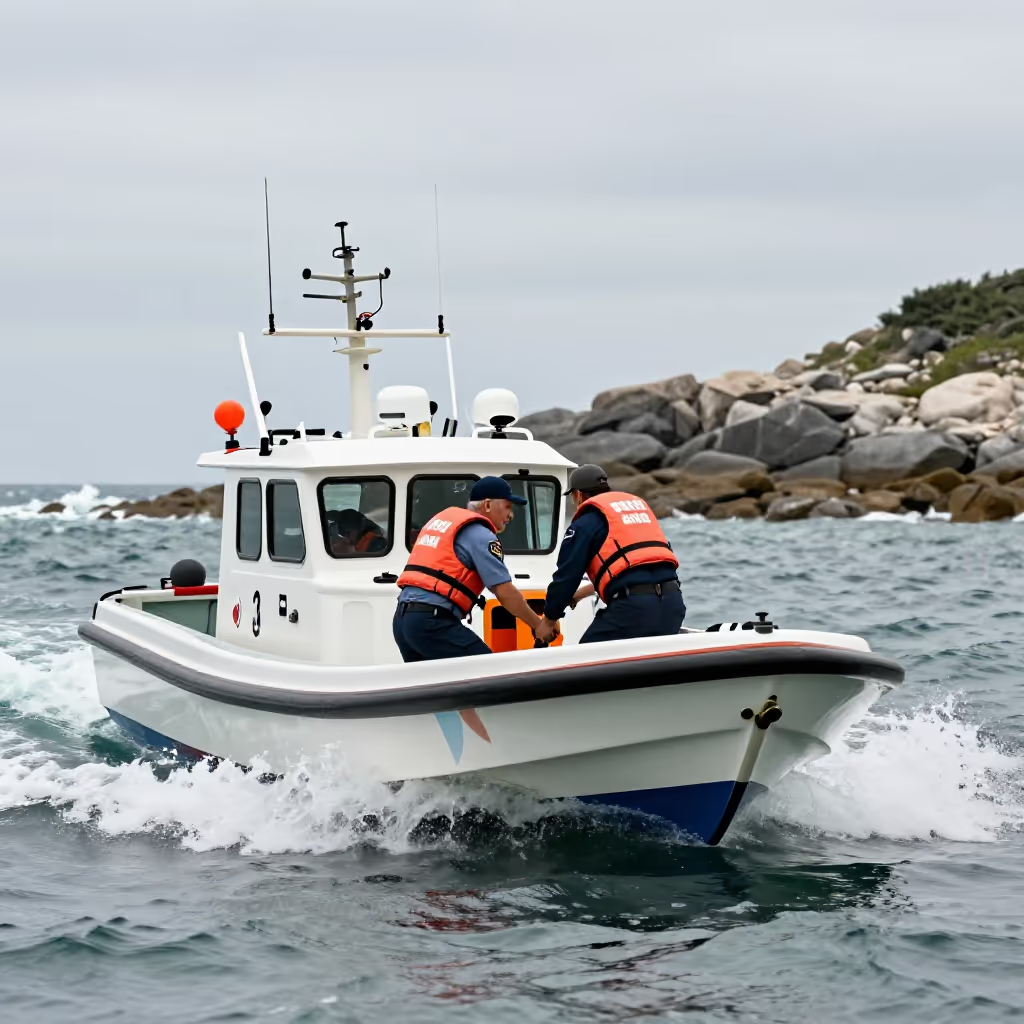
A government agency responsible for the safety, monitoring, and control of maritime traffic in a country's coastal waters. It carries out rescue operations and enforces laws at sea.
example
Die Küstenwache hat das in Seenot geratene Schiff sicher in den Hafen eskortiert.
The coast guard safely escorted the ship in distress into the harbor.
Usage tips
Compound word
This word is made up of 'Küste' (coast) and 'Wache' (guard). The 'n' is a linking element. Literally, it is a guard for the coast.
EXAMPLE
Die Ausbildung bei der Küstenwache ist sehr anspruchsvoll.
Training with the coast guard is very demanding.
Use with article
Since it usually refers to a specific government organization, 'Küstenwache' (coast guard) is almost always used with the definite article 'die'.
EXAMPLE
Die Küstenwache warnte vor hohen Wellen.
The coast guard warned of high waves.
Typical verbs
Die Küstenwache (the coast guard) is often the subject of sentences with verbs such as 'retten' (to rescue), 'kontrollieren' (to check/control), 'warnen' (to warn), or 'eskortieren' (to escort). You can also 'alarmieren' (alert) or 'rufen' (call) the coast guard.
EXAMPLE
Die Küstenwache kontrolliert regelmäßig die Papiere der Schiffe.
The coast guard regularly checks the ships' papers.
Compare with
confusable
Küstenwache vs Marine
navy / navy blue
'die Marine' and 'die Küstenwache' both have to do with government tasks at sea. 'Die Marine' is a military part of the armed forces and is responsible for operations at sea. 'Die Küstenwache' monitors and protects coastal waters, helps with rescues, and makes sure rules in maritime traffic are followed. The words can be confusing because both use ships and work at sea. 'Marine' sounds more military, while 'Küstenwache' fits more with monitoring, safety, and rescue along the coast.
Küstenwache
Die Küstenwache sucht nach einem vermissten Segelboot.
The coast guard is searching for a missing sailboat.
Marine
Die Marine hat heute ein neues Schiff in Dienst gestellt.