

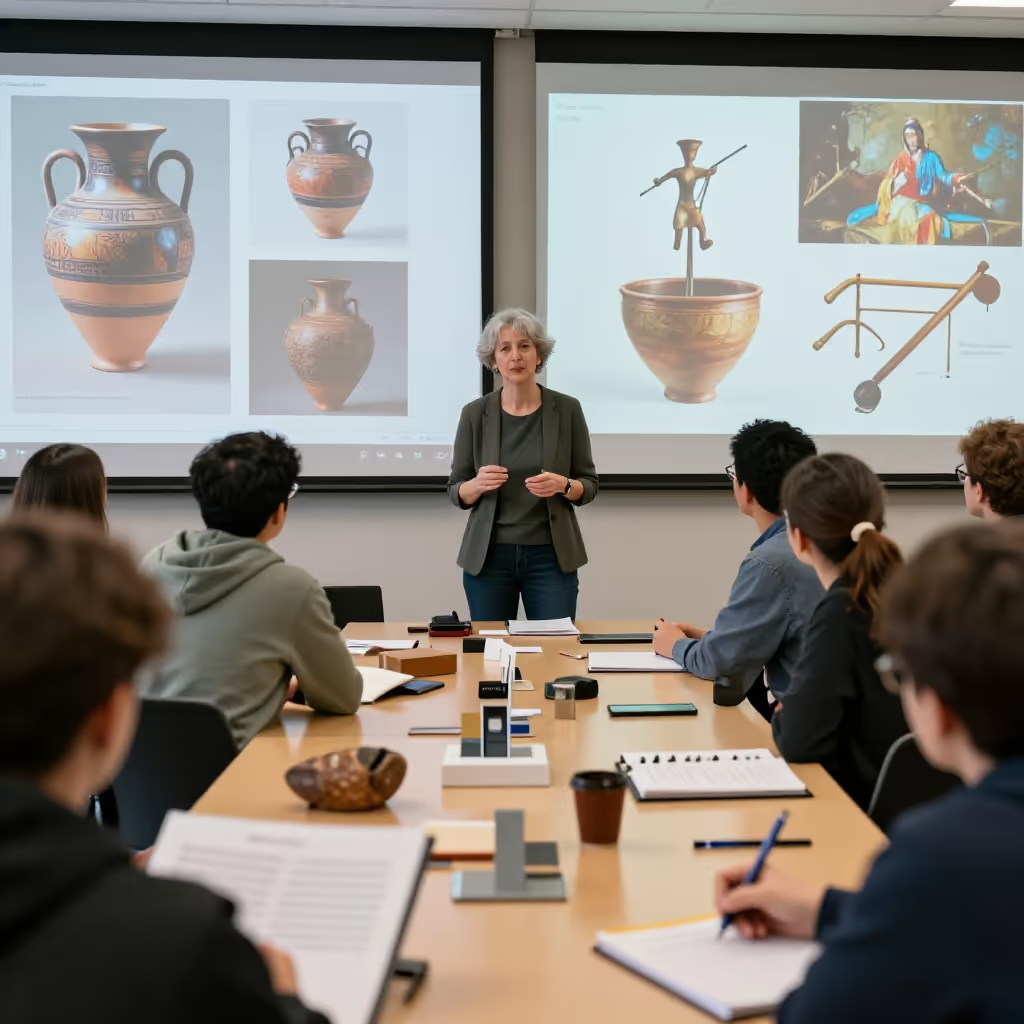
The academic discipline concerned with researching the historical development of cultures. It examines the art, religion, customs, everyday life, and ways of thinking of past societies.
example
Im Seminar zur Kulturgeschichte des Mittelalters haben wir die damaligen Tischsitten analysiert.
In the seminar on the cultural history of the Middle Ages, we analyzed the table manners of that time.
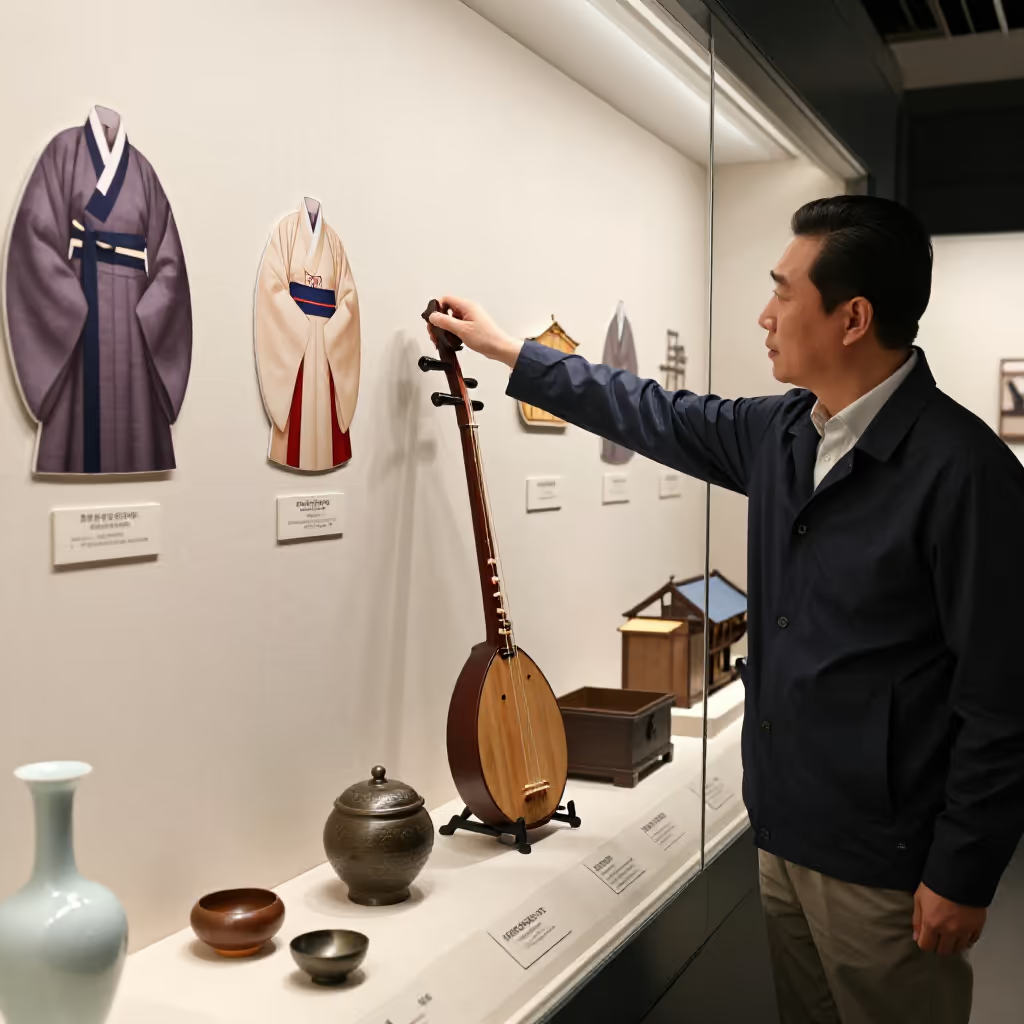
Usage tips
Compound word
'Kulturgeschichte' (cultural history) is a compound noun made up of 'die Kultur' (culture) and 'die Geschichte' (history). It literally means 'the history of culture'.
EXAMPLE
Dieses Museum widmet sich der Kulturgeschichte der Region.
This museum is dedicated to the cultural history of the region.
Word formation with '-geschichte'
The component '-geschichte' (-history) is very productive. When you see it, you know that it is about the historical development of a topic, for example in 'Kunstgeschichte' (art history) or 'Wirtschaftsgeschichte' (economic history).
EXAMPLE
Sie ist Expertin für die Kunstgeschichte der Renaissance.
She is an expert in the art history of the Renaissance.
Context clue
Without an article or specification, 'Kulturgeschichte' (cultural history) often refers to the university discipline. With an article and an addition (e.g., with the genitive), it means the concrete history of an era or group.
EXAMPLE
An der Universität kann man Kulturgeschichte studieren.
You can study cultural history at the university.
Specification with the genitive
To say whose cultural history is meant, the genitive or the preposition 'von' (of/from) is used very often.
EXAMPLE
Er schreibt ein Buch über die Kulturgeschichte des Essens.
He is writing a book about the cultural history of food.
Compare with
near_synonym · confusable
Kulturgeschichte vs Geschichte
story / history
'die Geschichte' and 'die Kulturgeschichte' can both deal with the past. 'Geschichte' is the broad term for past events or the school and university subject about them. 'Kulturgeschichte' is narrower: it looks especially at art, religion, everyday life, customs, and the ways people thought in earlier times. Learners may confuse the words because both occur in academic contexts or in class. When the topic is generally wars, politics, dates, or past events, you say 'Geschichte'. When it is about the development of a culture and its life, 'Kulturgeschichte' is more precise.
Kulturgeschichte
Die Kulturgeschichte dieser Stadt zeigt sich besonders in ihren alten Festen und Gebäuden.
The cultural history of this city is especially visible in its old festivals and buildings.
Geschichte
Im Unterricht sprechen wir heute über die Geschichte Deutschlands nach 1945.
In class today, we are talking about the history of Germany after 1945.