

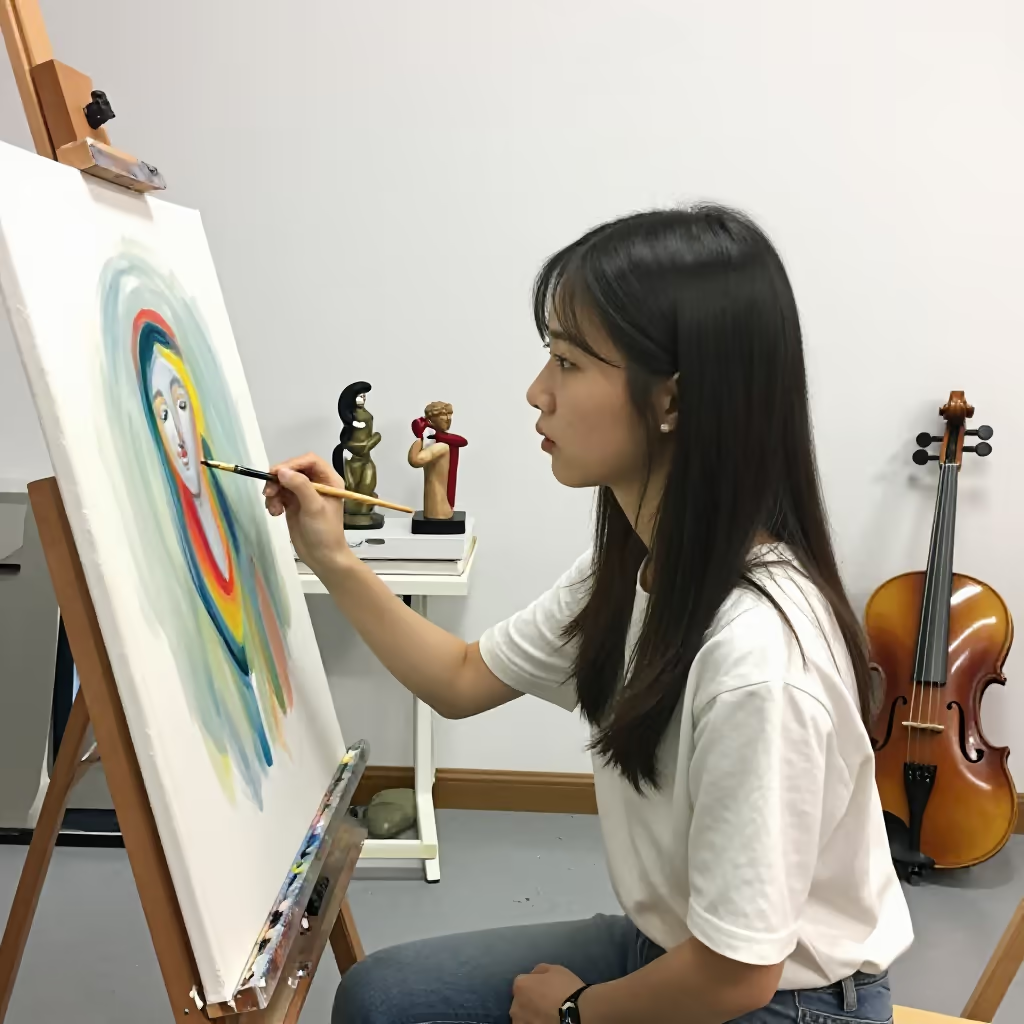
die Kunst
art
The creative expression of ideas or feelings in works such as painting, music, literature, or theater.
EXAMPLE
Im Museum gibt es eine beeindruckende Sammlung moderner Kunst.
The museum has an impressive collection of modern art.
art
Loading your saved state.
art
The creative expression of ideas or feelings in works such as painting, music, literature, or theater.
Im Museum gibt es eine beeindruckende Sammlung moderner Kunst.
The museum has an impressive collection of modern art.
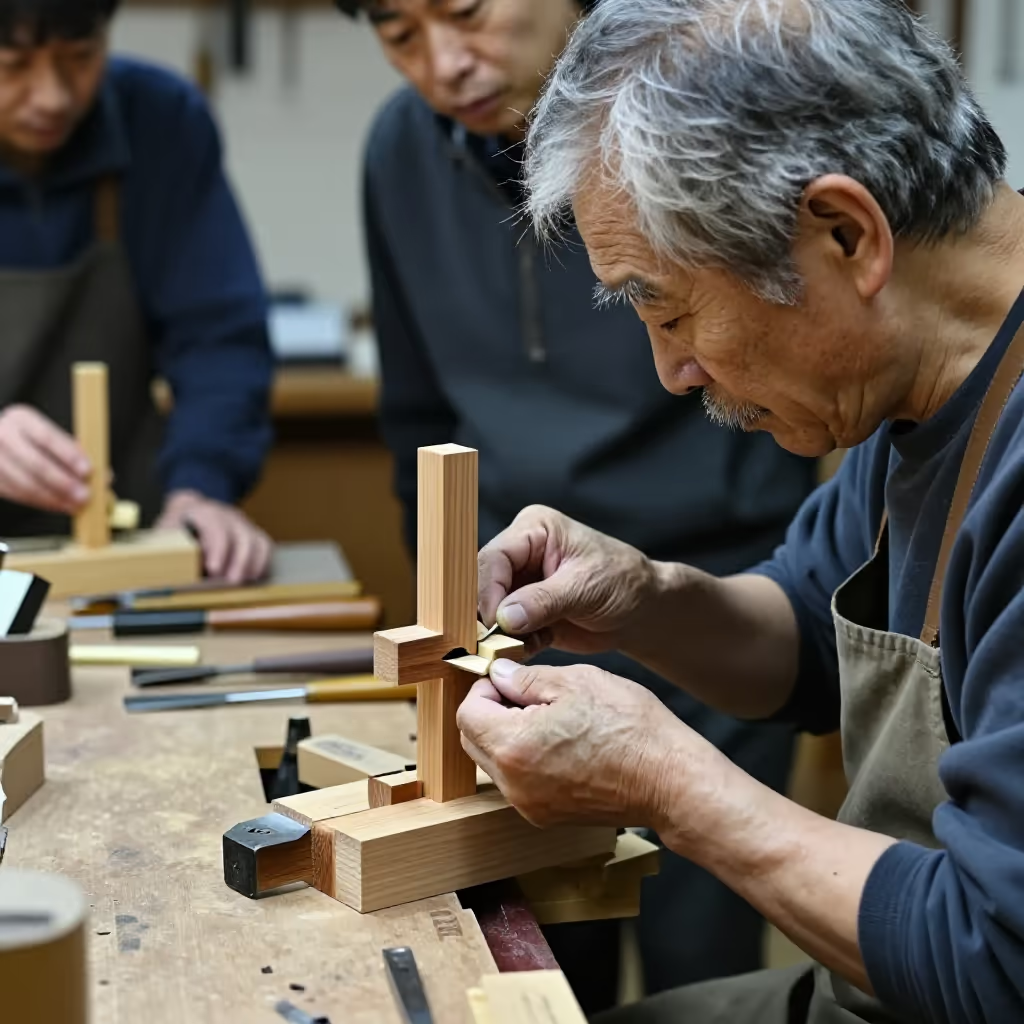
skill / art
A special ability or skill that one learns through practice and that is often considered difficult.
Es ist eine wahre Kunst, ein perfektes Soufflé zu backen.
It is a true art to bake a perfect soufflé.

to make a big deal of it
A colloquial expression meaning that someone makes something unnecessarily complicated or behaves in an affected way.
Es ist nur ein einfaches Abendessen, du musst keine solche Kunst daraus machen.
It's just a simple dinner; you don't have to make such a big deal of it.
The word 'Kunst' (art) is closely related to the verb 'können' (to be able to/can). It originally describes a special ability or a high level of skill that someone has developed. This connection explains both main meanings: creative art and a learned skill.
Er kann sehr gut zeichnen, seine Kunst ist beeindruckend.
He can draw very well; his art is impressive.
'Kunst' (art) is the first part of many compound nouns. These usually refer to creative art, for example: das Kunstwerk (work of art), das Kunstmuseum (art museum), die Kunstgeschichte (art history), or der Kunstunterricht (art class).
Am Wochenende besuchen wir das Kunstmuseum.
At the weekend, we're visiting the art museum.
When 'Kunst' (skill/art) describes a difficult skill, it is often followed by an infinitive construction with 'zu' (to). The structure is then: 'die Kunst, etwas zu tun' (the art of doing something).
Die wahre Kunst ist es, auch in stressigen Situationen ruhig zu bleiben.
The true art is to remain calm even in stressful situations.
The idiom 'eine Kunst daraus machen' (to make a big deal of it) is colloquial and has a slightly negative meaning. It is used when someone makes a simple matter unnecessarily complicated or elaborate.
Du musst nur die E-Mail beantworten, mach doch keine Kunst daraus!
You just have to answer the email—don't make a big deal of it!
to be able to
“Können” and “die Kunst” can both refer to a special skill. “Können” says that a person has mastered something, while “die Kunst” highlights the skill itself as particularly difficult or stylistically distinctive. “Können” usually fits a person, while “die Kunst” is more suitable for the special technique.
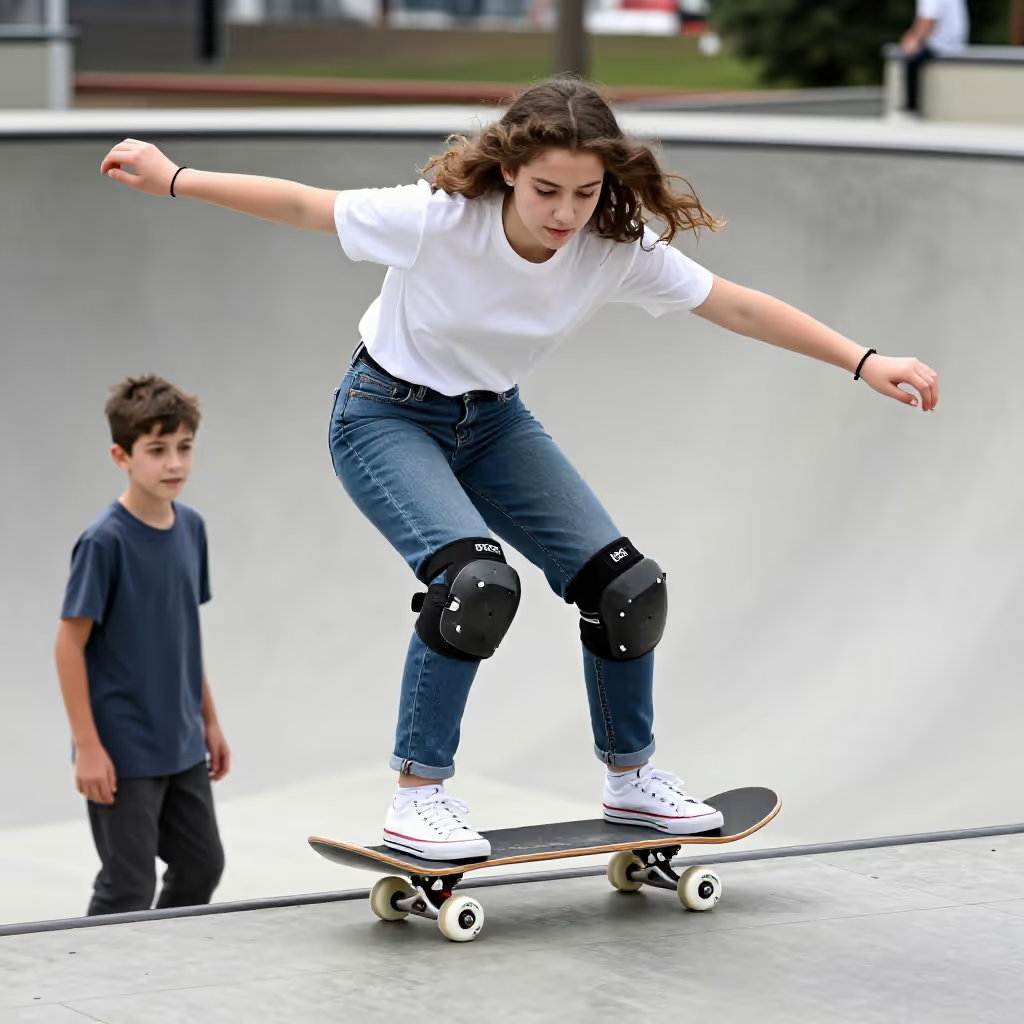
Die Kunst, sehr feine Muster auf Torten zu malen, braucht viel Übung.
The art of painting very fine patterns on cakes takes a lot of practice.
Mara kann sehr feine Muster auf die Torten malen.
Mara can paint very fine patterns on cakes.