

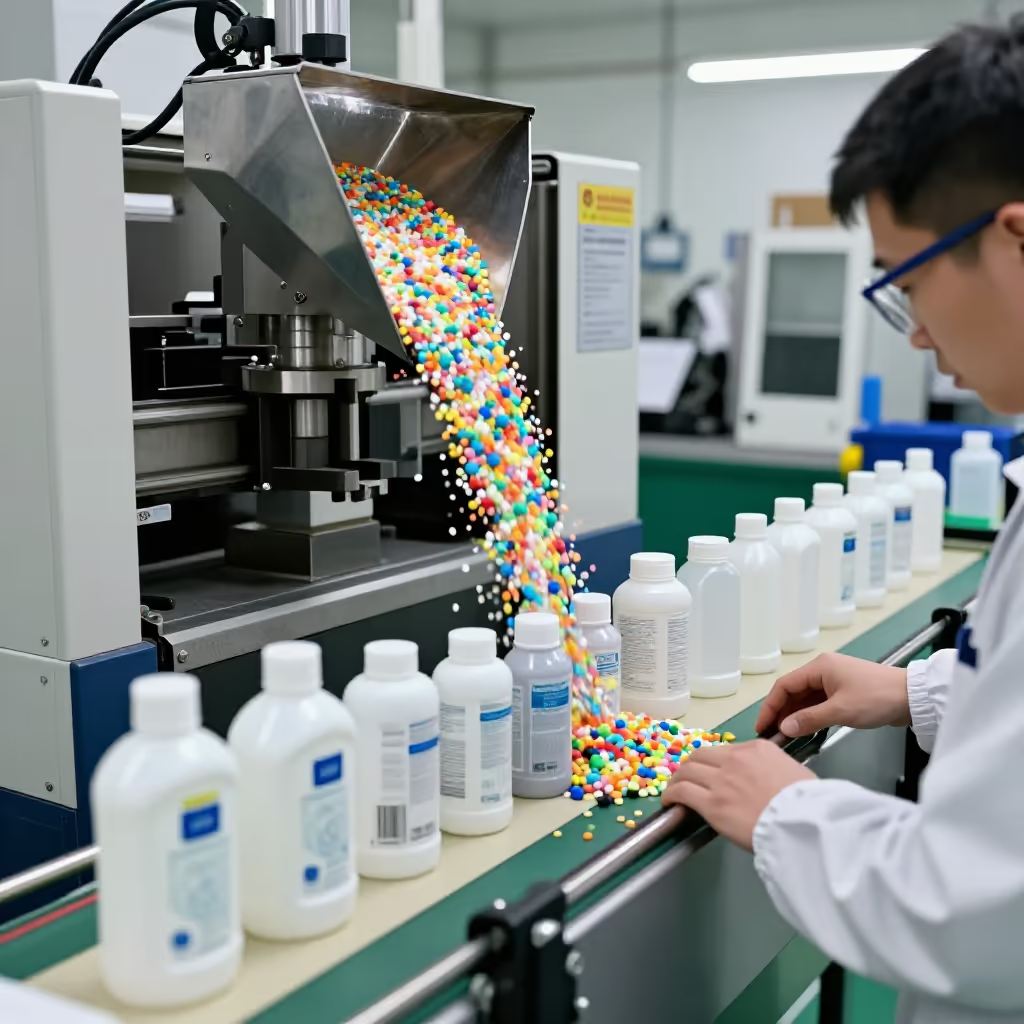
An artificially produced material obtained through chemical processes from organic raw materials such as petroleum or natural gas. In everyday language, it is often called plastic.
example
Viele Alltagsgegenstände wie Flaschen, Verpackungen und Spielzeug werden aus Kunststoff hergestellt.
Many everyday objects such as bottles, packaging, and toys are made from plastic.

Usage tips
Word composition
'Kunststoff' (plastic) consists of the words 'Kunst' (in the sense of artificial) and 'Stoff' (material). So it literally means 'artificial material'.
EXAMPLE
Dieser Stuhl ist komplett aus Kunststoff gefertigt.
This chair is made entirely of plastic.
Register and style
'Kunststoff' (plastic) is the more technical and formal term. You often find it in product descriptions, scientific texts, or in the news.
EXAMPLE
Die Industrie sucht nach neuen Wegen, um Kunststoffe umweltfreundlicher zu machen.
The industry is looking for new ways to make plastics more environmentally friendly.
Typical collocations
Common verbs used with 'Kunststoff' (plastic) are 'herstellen' (to produce), 'verwenden' (to use), and 'recyceln' (to recycle). It also often appears in the combination 'aus Kunststoff bestehen' (to consist of plastic).
EXAMPLE
Es ist wichtig, Verpackungen aus Kunststoff richtig zu recyceln.
It is important to recycle plastic packaging properly.
Compare with
synonym · near_synonym · confusable
Kunststoff vs Plastik
plastic / sculpture
'Plastik' and 'Kunststoff' often mean the same material in everyday language. 'Plastik' is the more common everyday word, especially for packaging, bags, or objects. 'Kunststoff' sounds more precise and a bit more technical, for example in technology, production, or recycling. Learners may confuse the words because both refer to artificially produced materials. In everyday life, you can usually say 'Plastik'. When the material is meant in a technical or official context, 'Kunststoff' fits better.