


lässig
casual
A relaxed, informal, and uncomplicated manner or appearance.
EXAMPLE
Er trug ein lässiges Hemd und eine verwaschene Jeans.
He wore a casual shirt and faded jeans.
casual
Loading your saved state.
casual
A relaxed, informal, and uncomplicated manner or appearance.
Er trug ein lässiges Hemd und eine verwaschene Jeans.
He wore a casual shirt and faded jeans.

effortless
Doing something with apparent ease and great confidence.
Mit einer lässigen Bewegung warf er den Ball in den Korb.
With an effortless movement, he threw the ball into the basket.

careless
Showing a careless or indifferent attitude toward something.
Sein lässiger Umgang mit den Fristen hat das ganze Team unter Druck gesetzt.
His careless handling of the deadlines put the whole team under pressure.
The adjective 'lässig' (casual) is related to the verb 'lassen' (to let/leave). The basic idea is that you 'leave' things as they are, meaning you are carefree and relaxed.
Er hat eine sehr lässige Art, mit Problemen umzugehen.
He has a very casual way of dealing with problems.
'Lässig' (casual) can be positive (relaxed, cool) or negative (careless, indifferent). The context makes the difference: if it is about style or effortlessness, it is positive. If it is about duties or rules, it is often meant negatively.
Sie hat einen sehr lässigen und eleganten Kleidungsstil.
She has a very casual and elegant style of dress.
In the meaning of 'zwanglos' (informal/casual), 'lässig' (casual) often describes clothing or personal style. Typical combinations are 'lässige Kleidung' (casual clothing), 'ein lässiger Look' (a casual look), or 'lässig gekleidet sein' (to be dressed casually).
Für die Party am Strand ist ein lässiges Outfit perfekt.
A casual outfit is perfect for the party on the beach.
To express effortlessness, 'lässig' (casually/effortlessly) is very often used as an adverb. It then describes how an action is carried out: with apparent ease.
Er lehnte lässig an der Wand und beobachtete die Szene.
He leaned casually against the wall and watched the scene.
The negative meaning 'nachlässig' (careless) is often found in the fixed expression 'ein lässiger Umgang mit etwas' (a careless approach to something). It criticizes someone for not taking an important matter seriously enough.
Die Firma wurde für ihren lässigen Umgang mit Kundendaten kritisiert.
The company was criticized for its careless handling of customer data.
cool
Cool and lässig can both describe a calm, relaxed person or appearance. Lässig directly emphasizes a relaxed and informal manner. Cool can also express this calmness, but it often includes an additional positive evaluation: the person appears impressive or admirable.
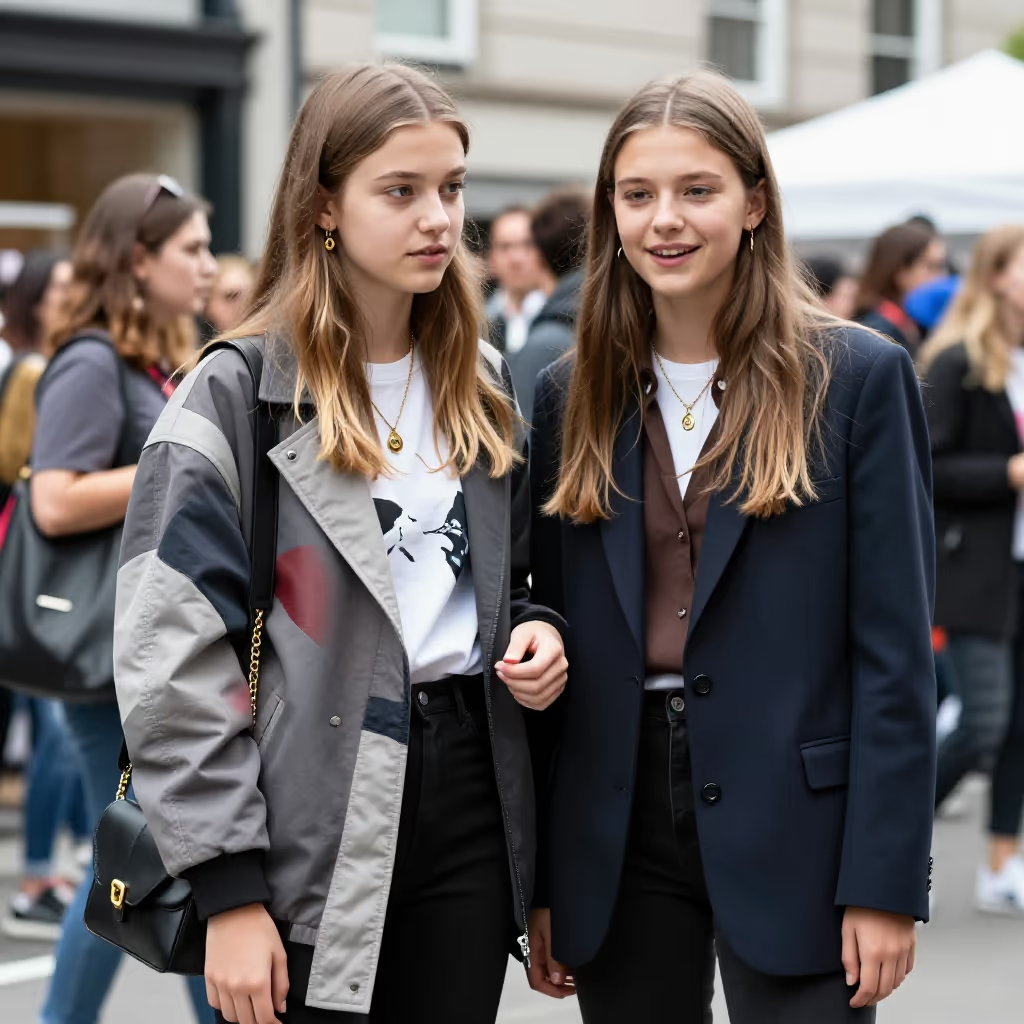
Auf der Bühne tritt Nina lässig auf und bewegt sich ganz ungezwungen.
Nina performs casually on stage and moves in a completely relaxed way.
Auf der Bühne tritt Nina cool auf und beeindruckt das Publikum mit ihrer ruhigen Art.
Nina performs coolly on stage and impresses the audience with her calm manner.