

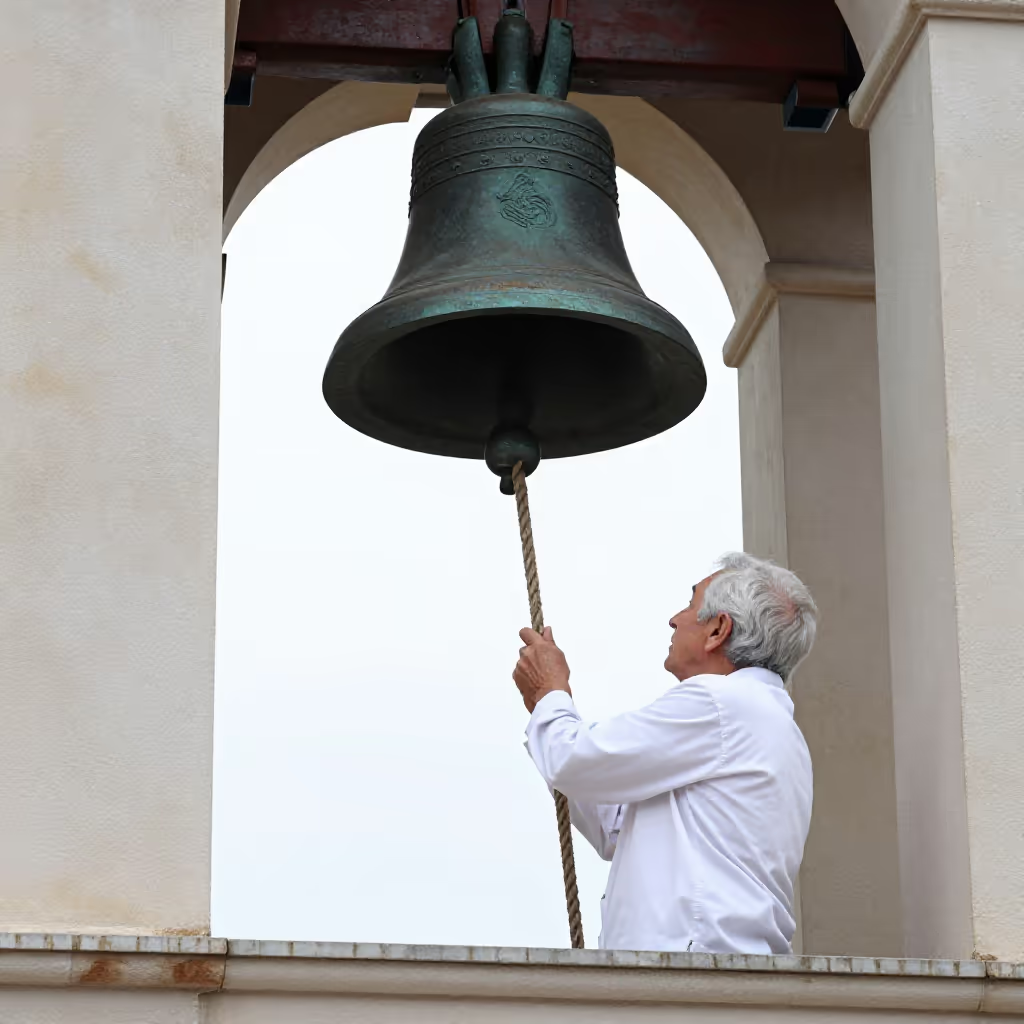
läuten
to ring
To produce or cause the sound of a bell, for example with a church bell or a doorbell.
EXAMPLE
Die Glocken der Kirche läuten jeden Sonntag um zehn Uhr.
The church bells ring every Sunday at ten o'clock.
to ring
Loading your saved state.
to ring
To produce or cause the sound of a bell, for example with a church bell or a doorbell.
Die Glocken der Kirche läuten jeden Sonntag um zehn Uhr.
The church bells ring every Sunday at ten o'clock.

to ring
To give an acoustic signal to indicate the beginning or end of something, such as in a school.
Wenn es zur Pause läutet, rennen alle Kinder auf den Hof.
When the bell rings for recess, all the children run into the yard.

to ring a bell
Colloquial for triggering a vague memory or a feeling of familiarity, often in the phrase 'bei jemandem läutet etwas'.
Der Name kommt mir bekannt vor, aber es läutet bei mir noch nicht.
The name sounds familiar, but it doesn't ring a bell yet.
The subject of the sentence is often the thing that makes the sound, e.g., 'die Glocke' (the bell) or 'die Klingel' (the doorbell). Alternatively, the impersonal pronoun 'es' (it) is often used as the subject.
Die alte Kirchenglocke läutet nicht mehr.
The old church bell no longer rings.
The colloquial meaning 'sich vage erinnern' (to vaguely remember) is used in a fixed expression: 'bei jemandem läutet etwas' (something rings a bell for someone). The person who remembers is in the dative after the preposition 'bei'.
Moment, bei dem Namen läutet es bei mir. Ich glaube, ich kenne ihn.
Wait, that name rings a bell for me. I think I know him.
In the literal meaning, 'läuten' (to ring) is often connected with things that have a bell. Typical examples are: 'die Türklingel läutet' (the doorbell rings), 'der Wecker läutet' (the alarm clock rings), or 'die Kirchenglocken läuten' (the church bells ring).
Mein Wecker läutet jeden Morgen um sechs Uhr.
My alarm clock rings every morning at six o'clock.
In the context of school or work, 'läuten' (to ring) signals the beginning or end of a unit of time. It is often combined with 'zur Pause' (for recess/break) or 'zum Unterricht' (for class).
Als es zum Ende der Stunde läutete, packten alle ihre Sachen ein.
When the bell rang for the end of the lesson, everyone packed up their things.
to sound
Klingen can generally mean that something produces a sound. Läuten, by contrast, refers to the sound of a bell or doorbell and can also denote an acoustic signal. Klingen fits the mere sound, while läuten fits a bell or doorbell signal.

Die Schulglocke läutet zum Beginn der Stunde.
The school bell rings to signal the start of class.
Die Schulglocke klingt hell und klar.
The school bell sounds bright and clear.