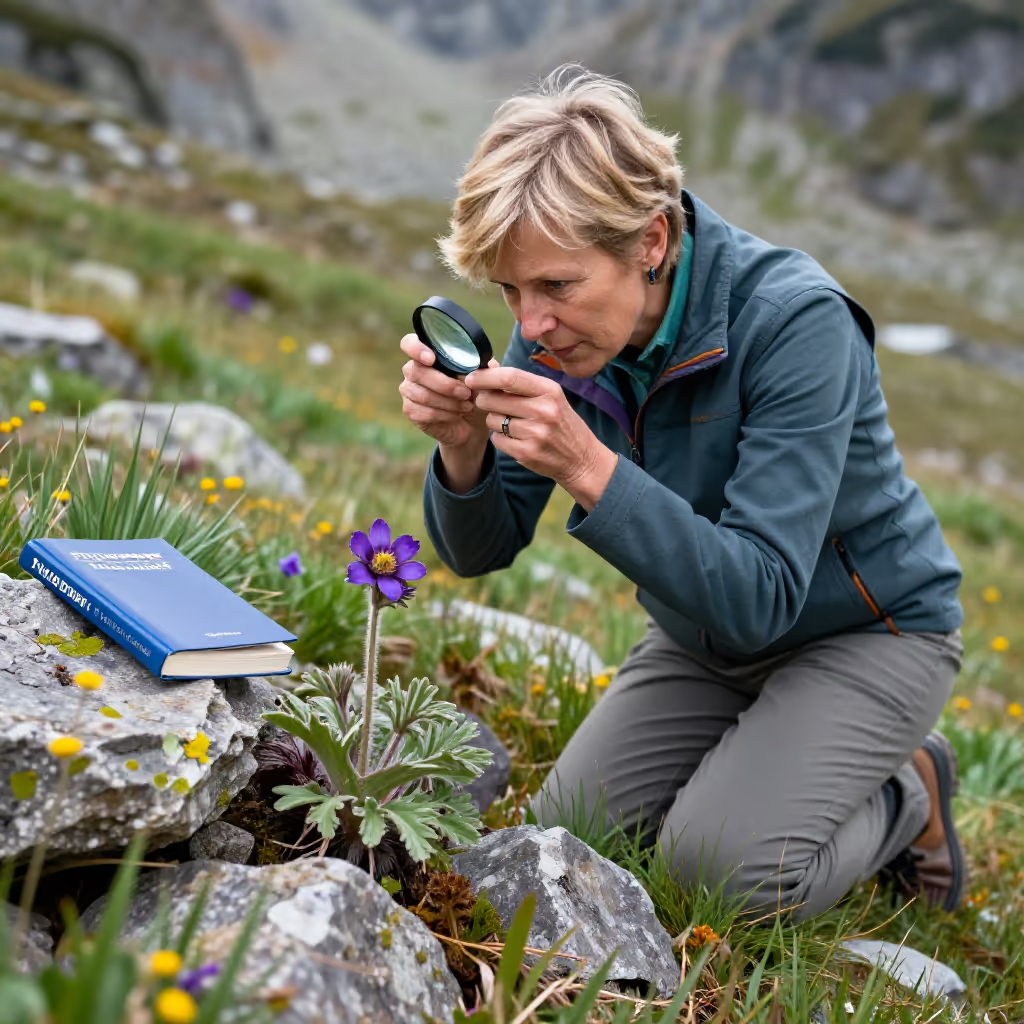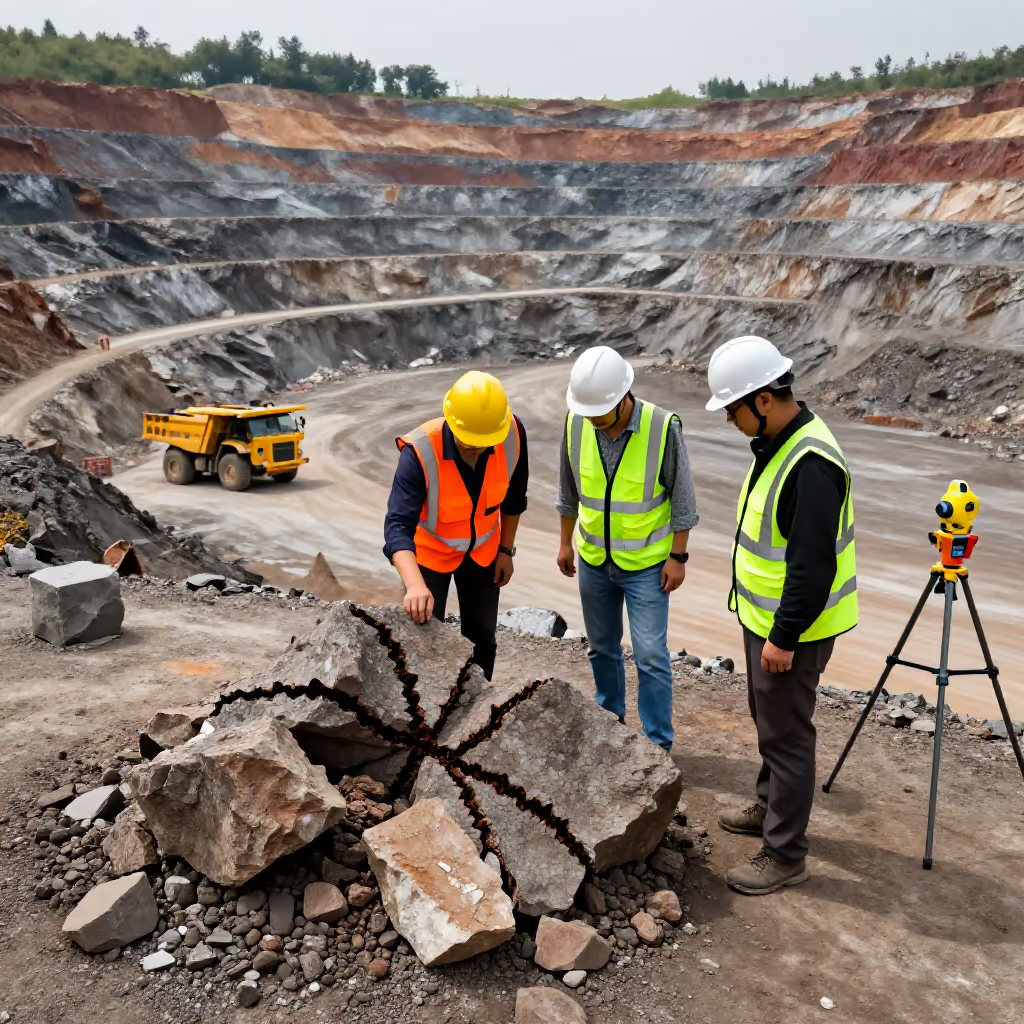
A place in the Earth's crust where raw materials such as ores, coal, petroleum, or natural gas occur naturally in quantities worth extracting.
example
In der Region wurde eine neue Lagerstätte für seltene Erden entdeckt.
A new deposit of rare earths was discovered in the region.
Usage tips
Word composition
The word consists of 'Lager' (storage, camp, deposit) and 'Stätte' (site). A 'Stätte' is a place. A 'Lagerstätte' is therefore literally a place where something is stored—either by humans (old meaning) or by nature (modern meaning).
EXAMPLE
Archäologen fanden eine prähistorische Lagerstätte für Werkzeuge.
Archaeologists found a prehistoric storage site for tools.
Technical term
In modern language, 'Lagerstätte' is almost exclusively a technical term from geology and economics. It is used to describe natural occurrences of raw materials.
EXAMPLE
Der Geologe schrieb einen Bericht über die neu entdeckte Lagerstätte.
The geologist wrote a report about the newly discovered deposit.
Typical collocations
In the context of raw materials, the word is often combined with certain verbs and nouns. Typical phrases are 'eine Lagerstätte entdecken' (to discover a deposit), 'eine Lagerstätte erschließen' (to develop a deposit), or 'eine Lagerstätte für Erdöl/Gas/Kohle' (a deposit of oil/gas/coal).
EXAMPLE
Es kostet viel Geld, eine neue Erdöl-Lagerstätte zu erschließen.
It costs a lot of money to develop a new oil deposit.
Outdated meaning
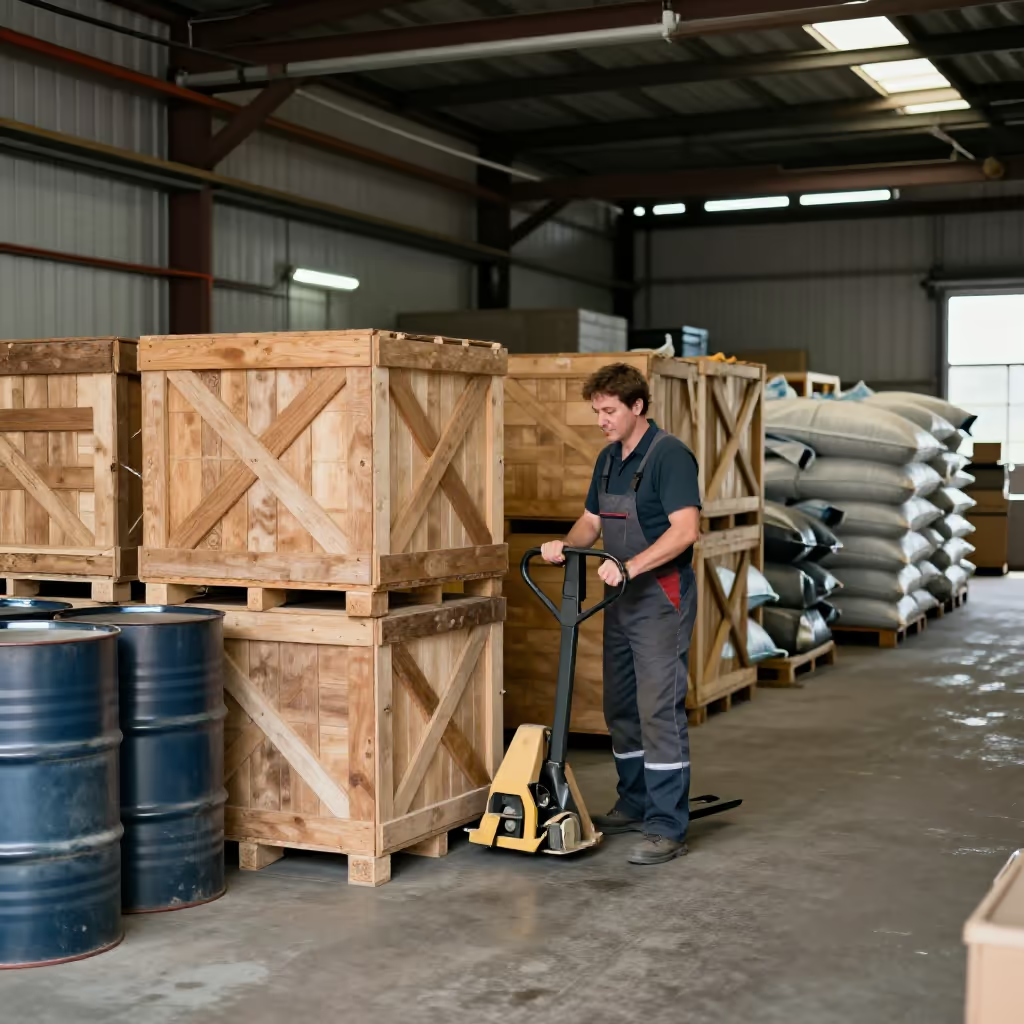
The meaning 'storage area for goods' is outdated today. You will find this usage almost only in historical texts. In modern German, you would instead say 'Lager' (warehouse/storage), 'Lagerhalle' (warehouse hall), or 'Depot' (depot).
EXAMPLE
In dem alten Dokument ist von einer Lagerstätte für Salz die Rede.
The old document refers to a storage site for salt.
Compare with
near_synonym · confusable
Lagerstätte vs Lager
warehouse / camp
'das Lager' and 'die Lagerstätte' can both mean a place where something is located or stored. 'das Lager' is the normal word for a room or building with goods, supplies, or materials. 'die Lagerstätte' is used today mainly for natural raw materials in the earth, for example coal, petroleum, or ore. As a word for a place where goods are stored, 'Lagerstätte' sounds rare or old-fashioned. The words can be confused because both have to do with 'lagern' (to store). In practical terms: for boxes, goods, and supplies, you usually say 'Lager'; for raw materials in the ground, you say 'Lagerstätte'.
Lagerstätte
Die Firma untersucht eine neue Lagerstätte für Erdgas.
The company is investigating a new deposit of natural gas.
Lager
Im Lager stehen noch viele Kartons mit neuen Büchern.
There are still many boxes of new books in the warehouse.