

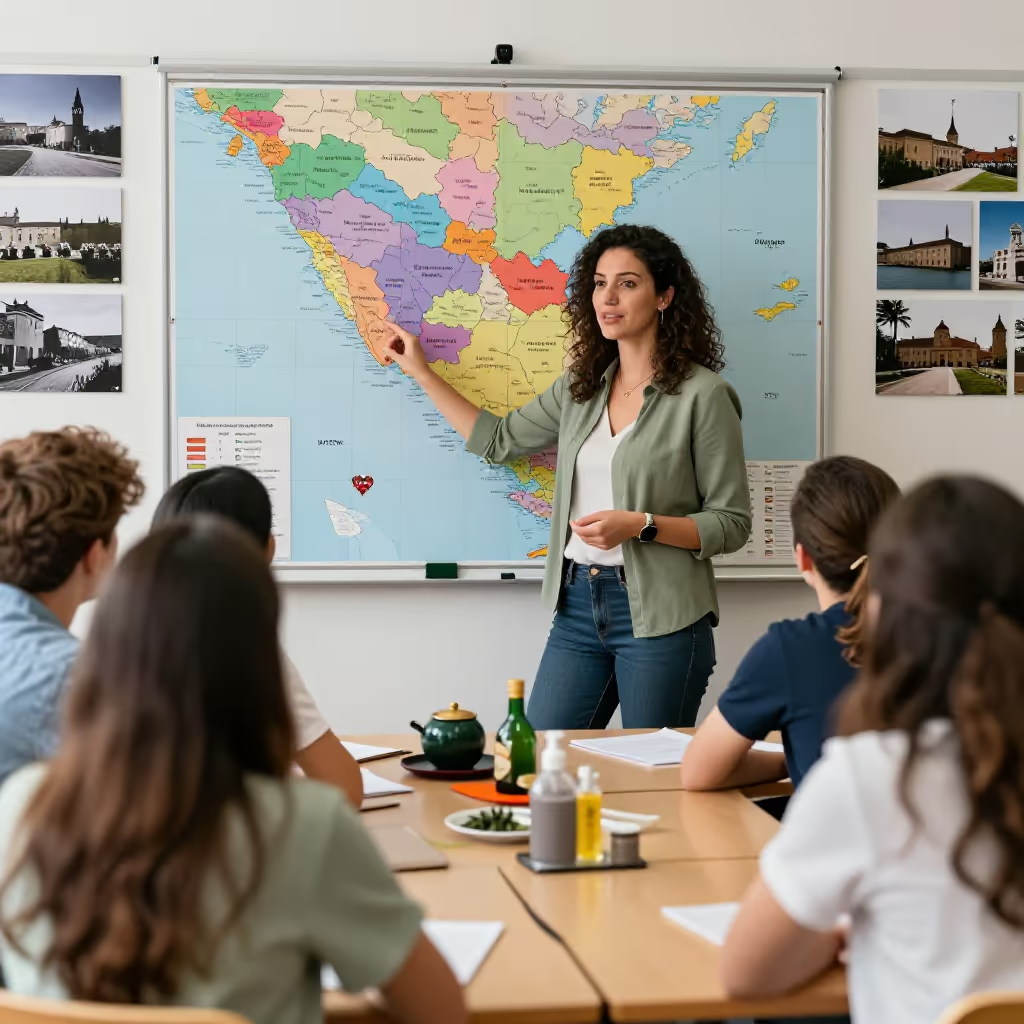
The study and knowledge of a particular country or region, including geography, history, culture, politics, and society. It is often a subject in language instruction.
example
Im Deutschkurs haben wir auch viel über die deutsche Landeskunde gelernt.
In our German course, we also learned a lot about German country studies.
Usage tips
Compound word
The word consists of 'Land' (country) and 'Kunde'. Careful: 'Kunde' here does not mean 'customer', but rather 'knowledge' or 'study', derived from 'kundig sein' (to be knowledgeable). So it is about knowledge of a country.
EXAMPLE
Die Landeskunde ist ein wichtiger Teil des Geschichtsunterrichts.
Country studies is an important part of history lessons.
Context of use
'Landeskunde' (country studies) is used almost exclusively in the context of education and learning, especially when learning a foreign language. It refers to the school subject or course content that deals with a country's culture.
EXAMPLE
Unsere Deutschlehrerin macht viel Landeskunde mit uns, damit wir Deutschland besser verstehen.
Our German teacher does a lot of country studies with us so that we understand Germany better.
Typical phrases
The word is often combined with an adjective naming the country, e.g., 'deutsche Landeskunde' (German country studies) or 'spanische Landeskunde' (Spanish country studies). People also speak of 'Landeskunde-Unterricht' (country studies lessons) or 'landeskundlichen Themen' (topics related to country studies).
EXAMPLE
Für das Examen müssen wir uns gut mit der deutschen Landeskunde auskennen.
For the exam, we need to be very familiar with German country studies.
Compare with
confusable
Landeskunde vs Erdkunde
geography
'Erdkunde' and 'Landeskunde' can both have to do with countries and regions. 'Erdkunde' mainly means geography: landscapes, climate, rivers, cities, maps, and the Earth as a space. In school, 'Erdkunde' is often the name of the subject. 'Landeskunde' means knowledge about a particular country or region, but not only in a geographical sense. It also includes culture, history, politics, everyday life, and society. Learners may confuse the words because both occur in classes. When it is about maps, nature, and spaces, 'Erdkunde' fits. When it is about life and culture in a particular country, 'Landeskunde' fits.
Landeskunde
Im Deutschkurs hilft Landeskunde dabei, Feste und Regeln in Deutschland besser zu verstehen.
In the German course, country studies help students better understand festivals and rules in Germany.
Erdkunde
In Erdkunde lernen wir heute, wie ein Vulkan entsteht.
In geography today, we are learning how a volcano forms.