

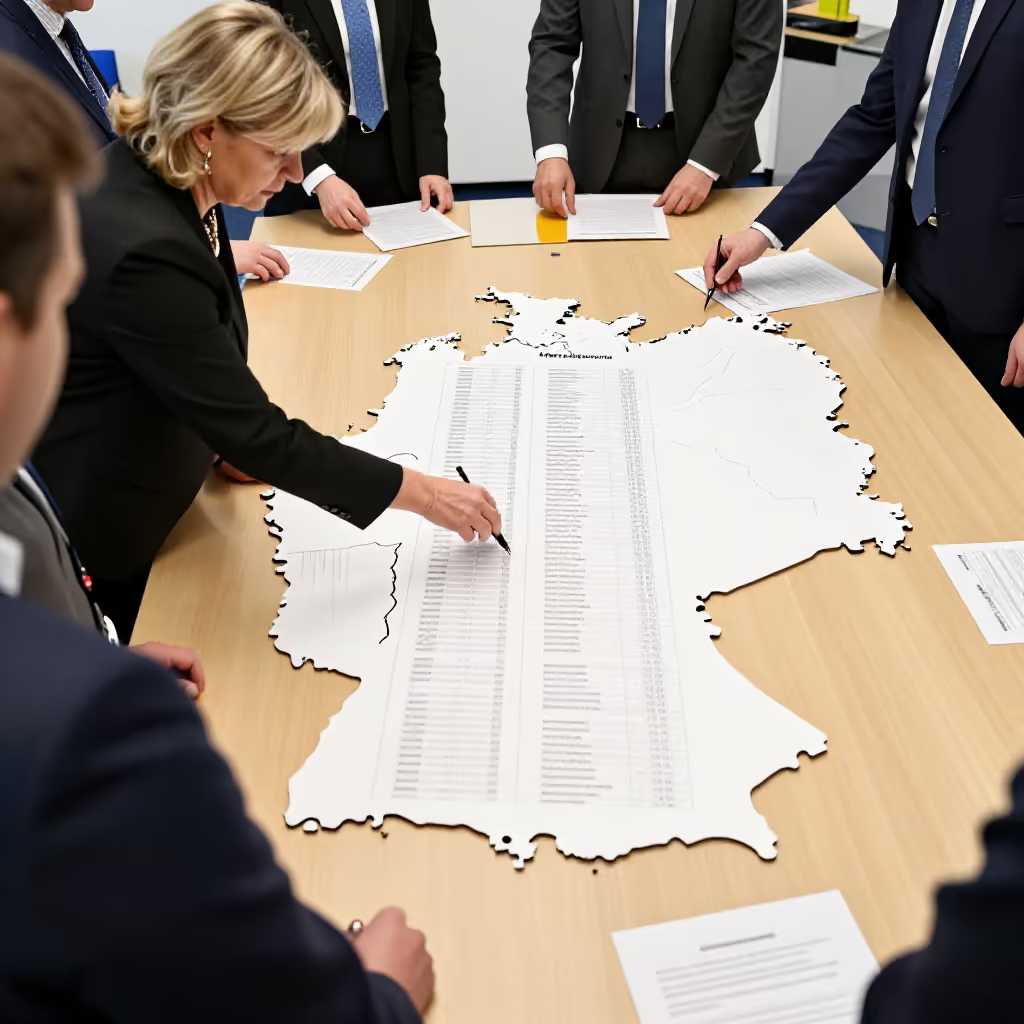
A list of candidates drawn up by a political party for an election at the level of a German federal state, especially in state parliament or Bundestag elections in Germany. The votes for the party determine how many candidates from this list enter parliament.
example
Der Politiker wurde über die Landesliste seiner Partei in den Bundestag gewählt, nicht über ein Direktmandat.
The politician was elected to the Bundestag via his party's state party list, not through a direct mandate.
Usage tips
Compound word
The word is made up of 'Landes-' (genitive of 'das Land' — state/country) and 'die Liste' (list). So it literally means 'the list of a state' and refers to a German federal state.
EXAMPLE
Jede Partei reicht vor der Wahl eine eigene Landesliste ein.
Each party submits its own state party list before the election.
Typical collocations
This noun is often used with certain verbs and prepositions. Typical phrases are 'auf der Landesliste stehen' (to be on the state party list), 'über die Landesliste einziehen' (to enter parliament via the state party list), or 'jemanden auf die Landesliste setzen' (to put someone on the state party list).
EXAMPLE
Sie hofft auf einen sicheren Platz auf der Landesliste für die nächste Wahl.
She is hoping for a safe spot on the state party list for the next election.
Cultural context
This word is central to the German electoral system. With the second vote, citizens vote for a party, whose candidates then enter parliament (e.g., the Bundestag) via the state party list according to the election result.
EXAMPLE
Da er seinen Wahlkreis nicht direkt gewann, zog er über die Landesliste ins Parlament ein.
Since he did not win his constituency directly, he entered parliament via the state party list.