

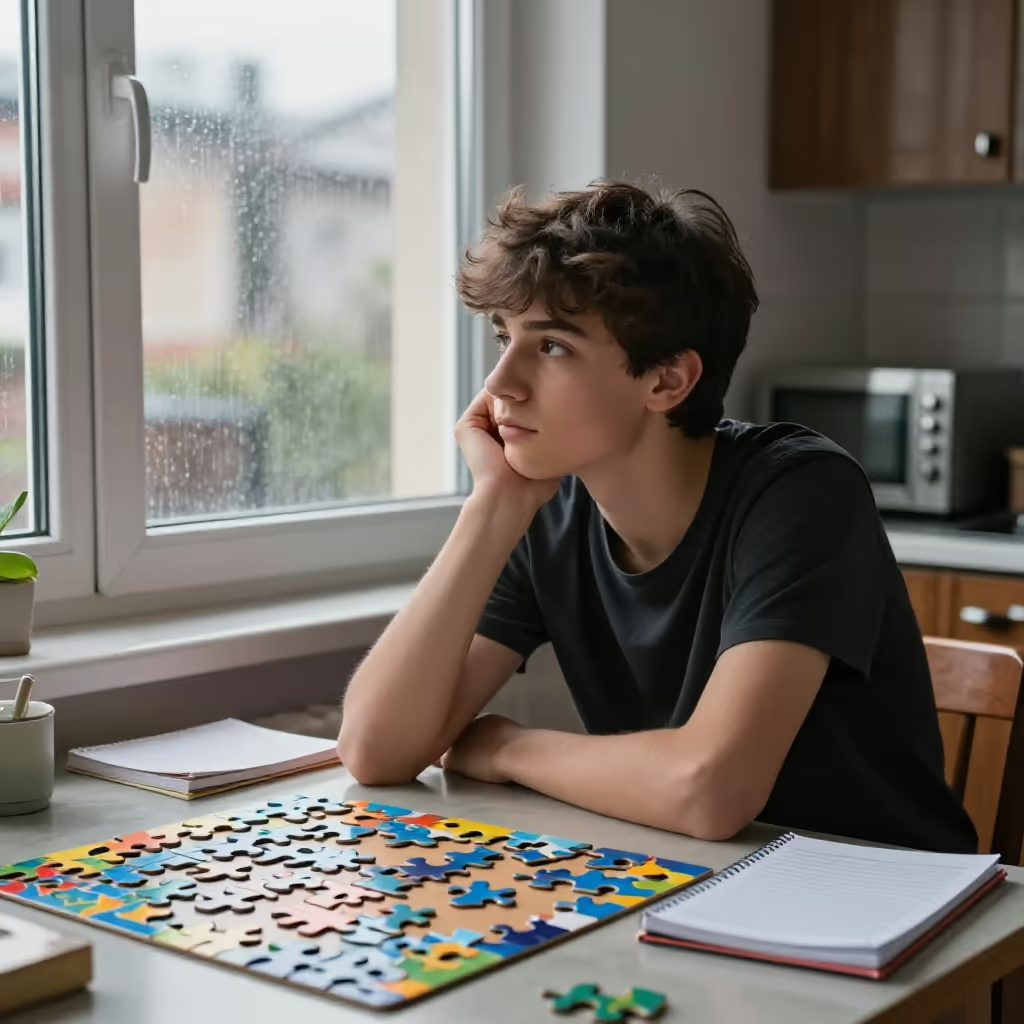
die Langeweile
boredom
An unpleasant feeling of being unoccupied and inactive because there are no interesting things to do.
Am Sonntagnachmittag überkam ihn oft eine große Langeweile.
On Sunday afternoons, he was often overcome by great boredom.

boredom
Loading your saved state.

boredom
An unpleasant feeling of being unoccupied and inactive because there are no interesting things to do.
Am Sonntagnachmittag überkam ihn oft eine große Langeweile.
On Sunday afternoons, he was often overcome by great boredom.

out of boredom
As the reason or motivation for an action that happens only because one has nothing better to do.
Er hat aus reiner Langeweile angefangen, die Decke anzustarren.
He started staring at the ceiling out of sheer boredom.
The word 'Langeweile' (boredom) is made up of 'lang' (long) and 'Weile' (a while / a period of time). So it literally describes a time that feels very long because nothing interesting is happening.
Diese lange Weile ohne Beschäftigung war kaum auszuhalten.
This long stretch of time with nothing to do was almost unbearable.
'Langeweile' (boredom) is an abstract feeling and is often used without an article, especially in the fixed expression 'Langeweile haben' (to be bored).
Die Kinder haben im Urlaub nie Langeweile.
The children are never bored on vacation.
Common phrases are 'gegen die Langeweile ankämpfen' (to fight boredom), 'vor Langeweile sterben' (to die of boredom, an exaggeration), or that 'Langeweile aufkommt' (boredom sets in).
Als der Strom ausfiel, kam bei den Kindern schnell Langeweile auf.
When the power went out, the children quickly became bored.
The fixed expression 'aus Langeweile' (out of boredom) is used to give the reason for an often pointless or spontaneous action. The preposition 'aus' is fixed here.
Sie hat aus Langeweile angefangen, alle ihre Stifte nach Farben zu sortieren.
Out of boredom, she started sorting all her pens by color.