


An officer rank in the armed forces, typically the lowest or one of the lowest officer ranks in the army or air force.
example
Nach Abschluss der Offiziersschule wurde er zum Leutnant befördert.
After completing officer training, he was promoted to lieutenant.
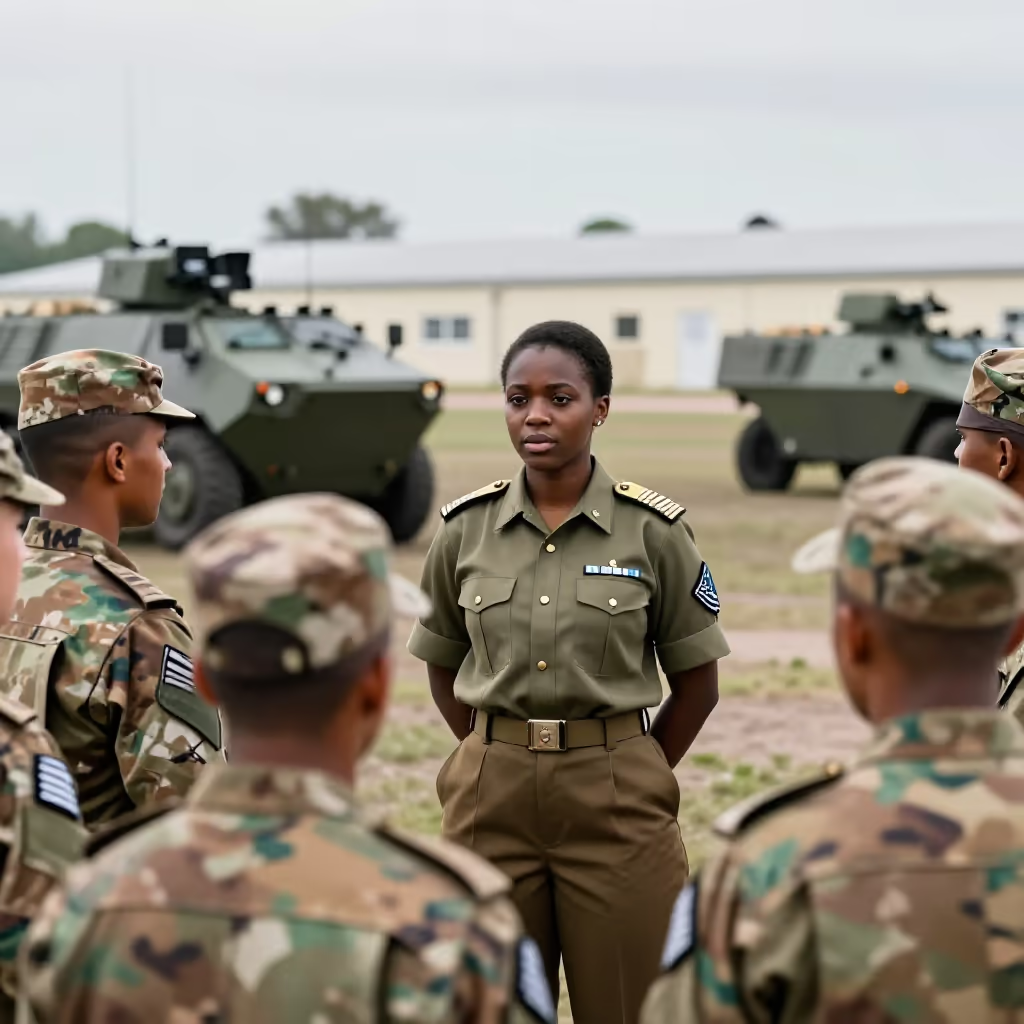
Usage tips
Word history
The word 'Leutnant' (lieutenant) comes from French: 'lieu' (place, position) and 'tenant' (holding). A Leutnant is therefore literally a 'placeholder' or 'deputy,' which describes his original role as the representative of a higher-ranking officer.
EXAMPLE
Historisch gesehen war der Leutnant der Stellvertreter des Hauptmanns.
Historically, the lieutenant was the captain's deputy.
Ranks and progression
'Leutnant' (lieutenant) is often the basis for higher ranks in the same category. One example is 'Oberleutnant' (first lieutenant), where 'ober-' indicates a higher position. This helps you understand the structure of military ranks.
EXAMPLE
Nach zwei Jahren als Leutnant wurde sie zum Oberleutnant befördert.
After two years as a lieutenant, she was promoted to first lieutenant.
Typical verbs
In connection with career steps in the military, 'Leutnant' (lieutenant) is often used with the verb 'befördern' (to promote). The fixed expression is 'zum Leutnant befördert werden' (to be promoted to lieutenant).
EXAMPLE
Er hofft, nächstes Jahr zum Leutnant befördert zu werden.
He hopes to be promoted to lieutenant next year.
Compare with
confusable
Leutnant vs Hauptmann
captain
'der Hauptmann' and 'der Leutnant' are both officer ranks in the military. They can be confused because both belong to the same rank group and both can have leadership duties. The difference is the rank: a Leutnant is usually a lower officer rank. A Hauptmann ranks above a Leutnant and often leads a larger unit, for example a company. When talking about the exact military rank, you should not use these words interchangeably.
Leutnant
Wegen der Übung spricht der Soldat zuerst mit dem Leutnant.
Because of the exercise, the soldier speaks with the lieutenant first.