

libanesisch
Lebanese
Relating to Lebanon, its inhabitants, or its culture; originating from Lebanon.
EXAMPLE
Wir haben gestern in einem ausgezeichneten libanesischen Restaurant gegessen.
Yesterday we ate at an excellent Lebanese restaurant.
Lebanese
Loading your saved state.
Lebanese
Relating to Lebanon, its inhabitants, or its culture; originating from Lebanon.
Wir haben gestern in einem ausgezeichneten libanesischen Restaurant gegessen.
Yesterday we ate at an excellent Lebanese restaurant.
Adjectives that indicate origin are often formed with the suffix '-isch'. 'Libanesisch' (Lebanese) is derived directly from the country name 'der Libanon' (Lebanon).
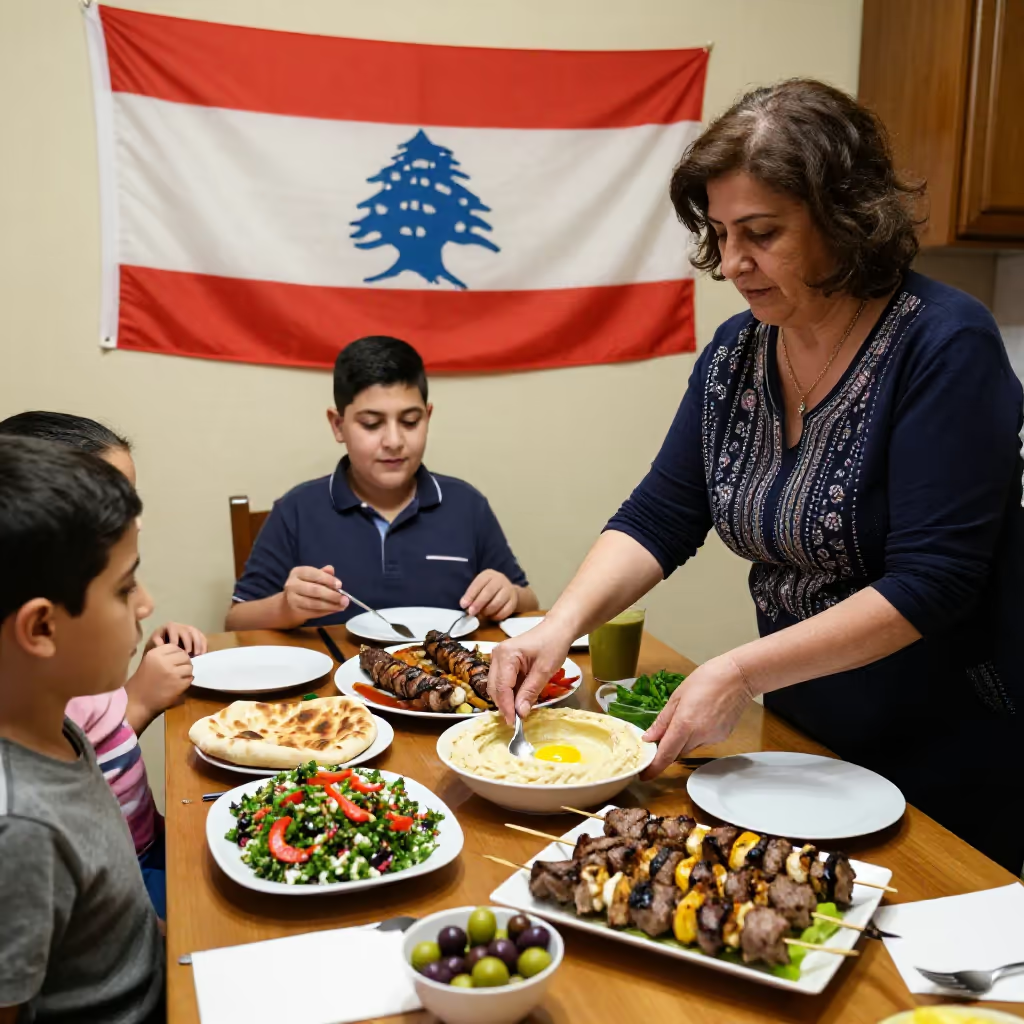
Die libanesische Flagge hat eine Zeder in der Mitte.
The Lebanese flag has a cedar tree in the middle.
Adjectives that are derived from geographic names and end in '-isch' are written in lowercase in German. Be careful not to confuse it with the capitalized name of the country.
Ich liebe libanesisches Essen, besonders Hummus und Taboulé.
I love Lebanese food, especially hummus and tabbouleh.
The adjective is very often used in connection with culture and cuisine. Typical combinations are 'libanesische Küche' (Lebanese cuisine), 'libanesischer Wein' (Lebanese wine), or 'libanesische Gastfreundschaft' (Lebanese hospitality).
Die libanesische Küche ist für ihre Vielfalt bekannt.
Lebanese cuisine is known for its variety.
Libyan
Both adjectives refer to an Arab Mediterranean country and its people or culture. „Libysch“ relates to Libya, while „libanesisch“ relates to Lebanon. Therefore, always check which country is meant, even though both countries are in a similar region.
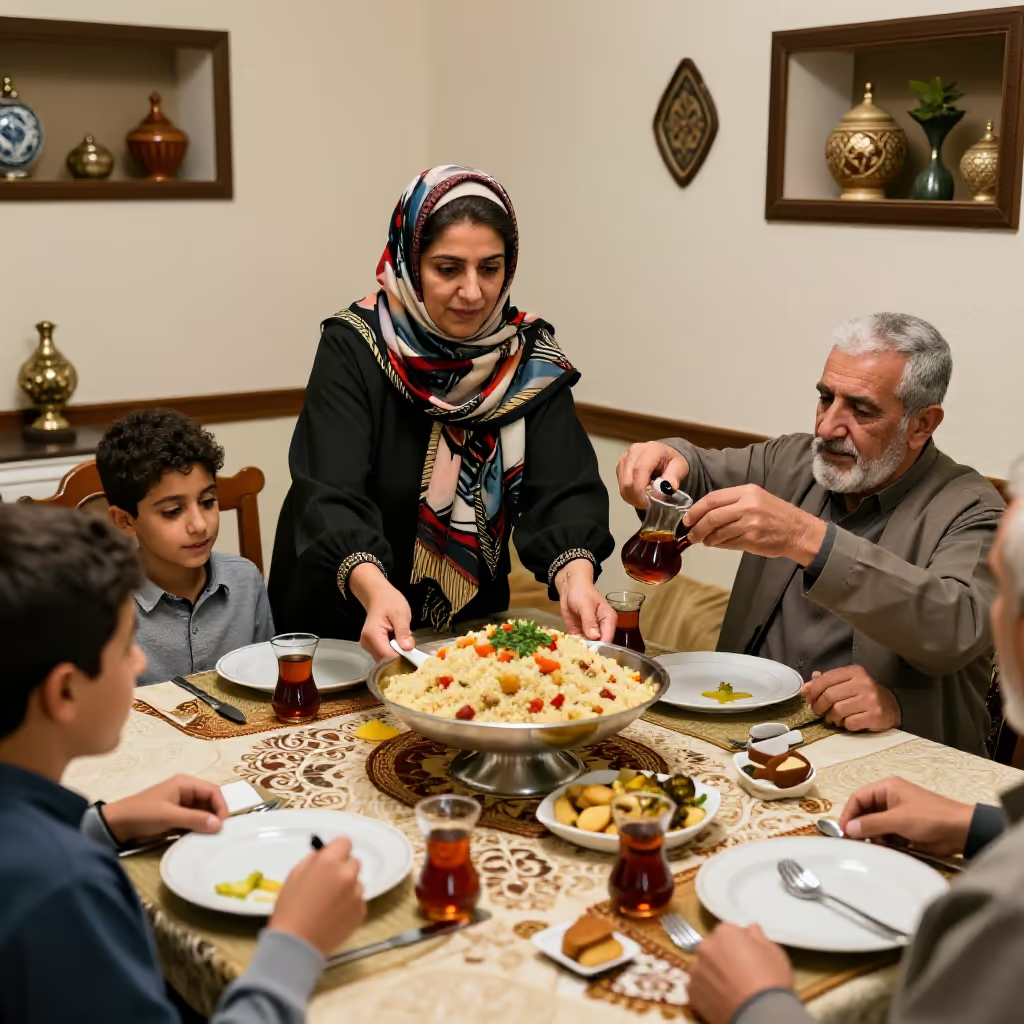
Das Restaurant bietet traditionelle libanesische Gerichte an.
The restaurant serves traditional Lebanese dishes.
Das Museum zeigt eine Ausstellung über libysche Kultur und Geschichte.
The museum is showing an exhibition about Libyan culture and history.