01
link
sneaky
Colloquial for deceitful, dishonest, or fraudulent. Describes a person or an action that cannot be trusted.
example
Das war eine linke Tour von ihm, mich so auszutricksen.
That was a sneaky trick of his, fooling me like that.

sneaky / left
Loading your saved state.
sneaky
Colloquial for deceitful, dishonest, or fraudulent. Describes a person or an action that cannot be trusted.
Das war eine linke Tour von ihm, mich so auszutricksen.
That was a sneaky trick of his, fooling me like that.
The context makes the meaning clear. If 'link' refers to a person or an action, it means 'sneaky' or 'deceitful'. If it refers to the side of an object, it means 'left'.
Sei vorsichtig, das ist ein linkes Geschäft.
Be careful, that's a shady deal.
The meaning 'sneaky' or 'dishonest' is purely colloquial. This usage is avoided in formal or written contexts.
Er hat versucht, mich mit einem linken Trick hereinzulegen.
He tried to trick me with a sneaky move.
In the colloquial meaning, 'link' is often used in fixed combinations, for example 'eine linke Tour' (a sneaky trick), 'ein linkes Spiel' (a dirty game), or 'ein linkes Ding drehen' (to pull a shady stunt).
Das war ein linkes Spiel von ihm, um den Job zu bekommen.
That was a dirty game on his part to get the job.
The use of 'link' as a directional indication is now outdated or only common in certain regions. In modern German, the form 'links' is almost always used.
In dem alten Gedicht stand: 'Zur linken Hand siehst du den Wald'.
In the old poem it said: 'On your left hand you see the forest.'
left
'links' and 'link' are both connected to the left side, but they are not used the same way today. 'links' is the normal word for a direction or position: you go left, something is on the left. 'link' can still describe the left side in some forms, for example 'die linke Hand' (the left hand). As a standalone word, however, 'link' is not common in this meaning. Also important: in colloquial German, 'link' often means 'dishonest' or 'sneaky'. That is why confusion can easily happen. For a direction, you almost always use 'links'; in 'ein linker Trick' (a sneaky trick), it is not about the side, but about unfair behavior.
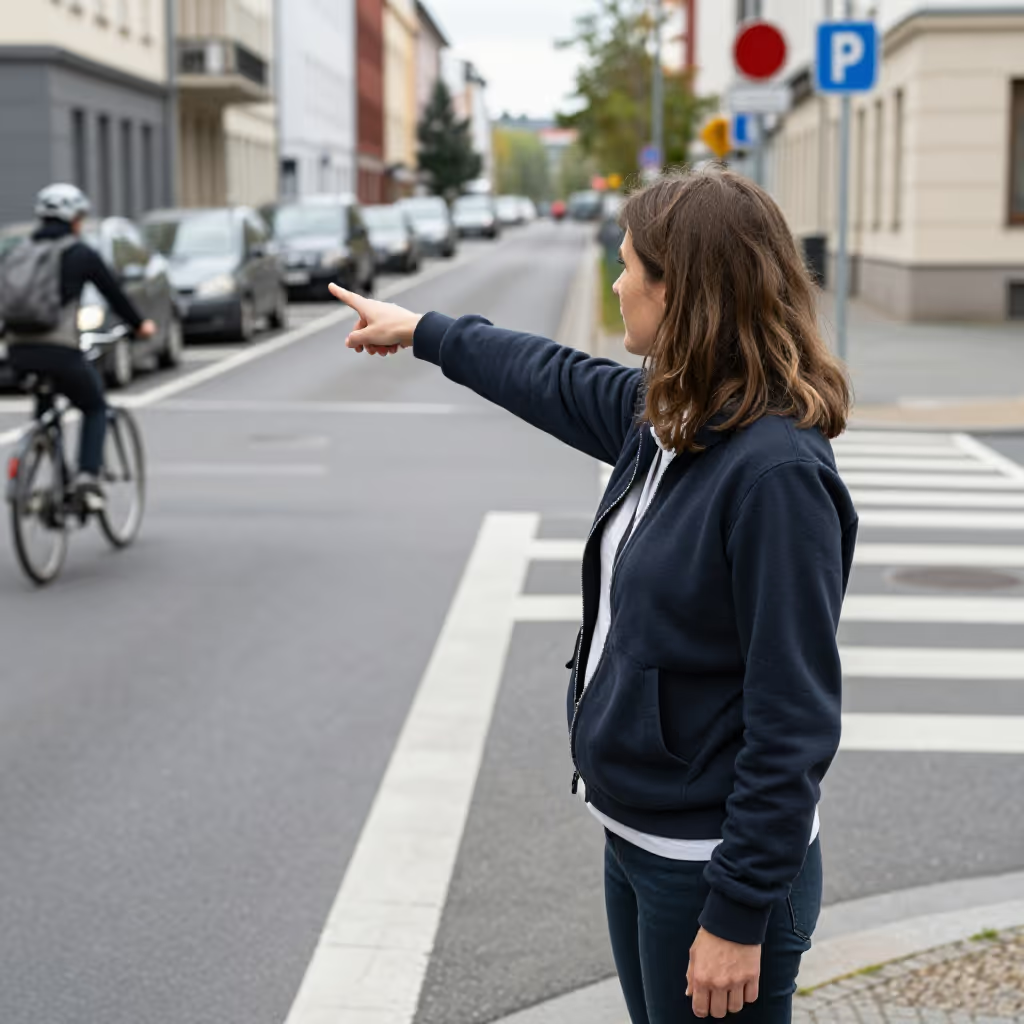
Die linke Tür führt direkt in den Garten.
The left door leads directly into the garden.
Der Eingang ist nicht rechts, sondern links neben der Apotheke.
The entrance is not on the right, but on the left next to the pharmacy.