

der Löwenzahn
dandelion
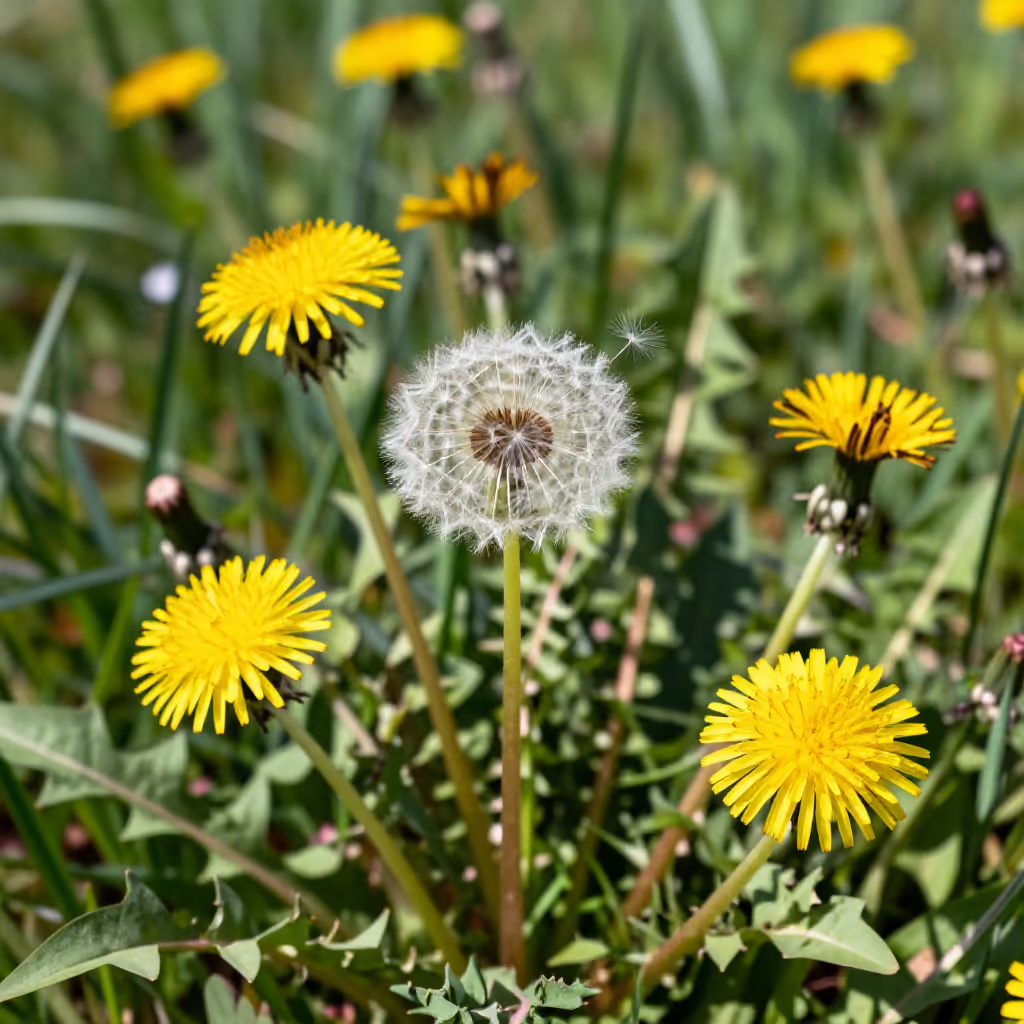
A widespread plant with bright yellow flowers and jagged leaves that, after blooming, forms a white, spherical seed head.
EXAMPLE
Die Wiese war voll mit gelbem Löwenzahn.
The meadow was full of yellow dandelions.
dandelion
Loading your saved state.
dandelion
A widespread plant with bright yellow flowers and jagged leaves that, after blooming, forms a white, spherical seed head.
Die Wiese war voll mit gelbem Löwenzahn.
The meadow was full of yellow dandelions.

Löwenzahn
The name of a well-known German children's TV program on ZDF that teaches knowledge about various topics.
Als Kind habe ich immer gerne Löwenzahn mit Peter Lustig geschaut.
As a child, I always enjoyed watching Löwenzahn with Peter Lustig.
dandelion greens
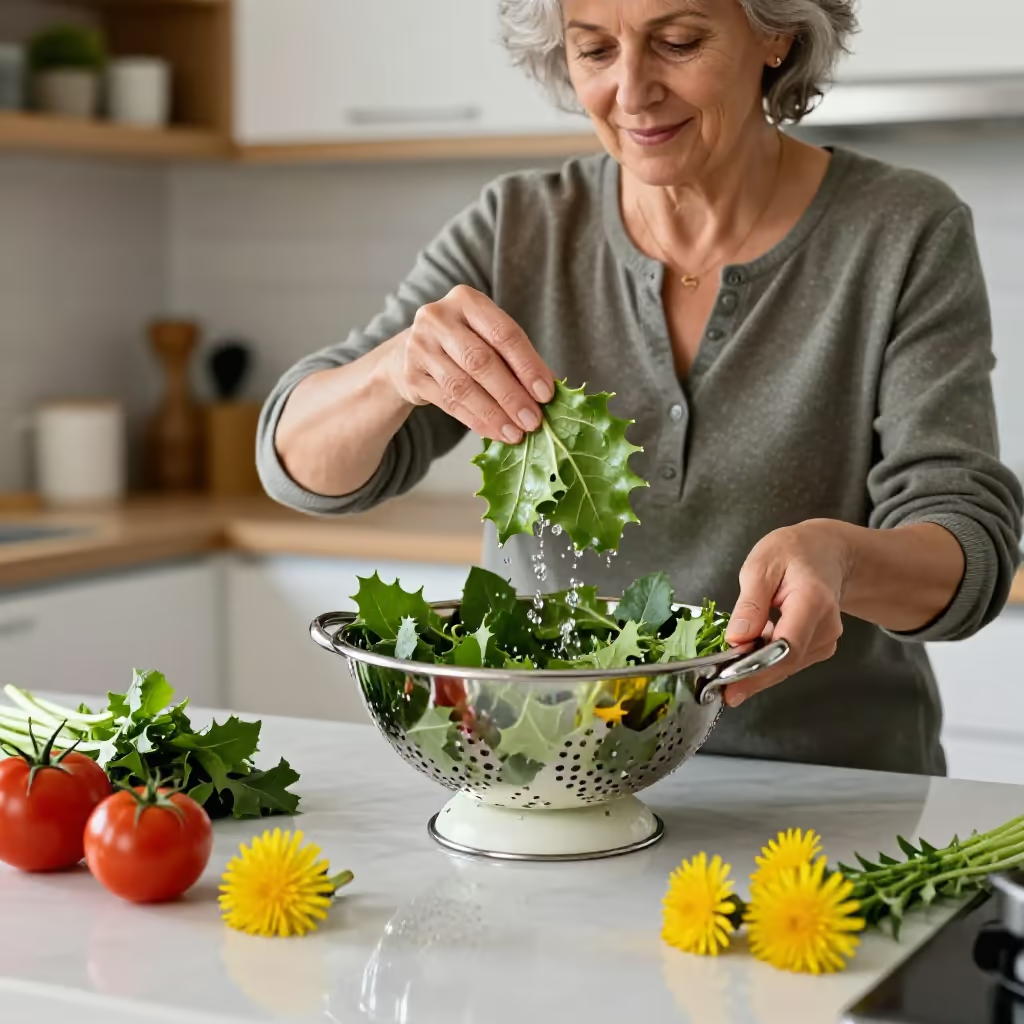
The young leaves of the dandelion plant, which can be eaten as a salad or vegetable.
Im Frühling machen wir manchmal einen Salat aus frischem Löwenzahn.
In spring, we sometimes make a salad from fresh dandelion greens.
The name 'Löwenzahn' (dandelion) is made up of 'der Löwe' (lion) and 'der Zahn' (tooth). It describes the plant's strongly jagged leaves, which resemble a lion's teeth.
Die gezackten Blätter geben dem Löwenzahn seinen Namen.
The jagged leaves give the dandelion its name.
The context makes clear which meaning is intended. If people talk about a 'Wiese' (meadow) or 'Pusteblume' (dandelion seed head), it refers to the plant. If it is about 'Essen' (food/eating) or 'Salat' (salad), the edible plant is meant. In connection with 'Fernsehen' (television) or 'Kindheit' (childhood), it refers to the TV program.
Auf der Wiese blüht der erste Löwenzahn des Jahres.
The first dandelions of the year are blooming in the meadow.
'Löwenzahn' is a very well-known and popular German children's TV program that has been on television for decades and has taught generations of children about the world.
Viele Erwachsene in Deutschland erinnern sich gerne an die Sendung Löwenzahn aus ihrer Kindheit.
Many adults in Germany fondly remember the program Löwenzahn from their childhood.
When 'Löwenzahn' (dandelion) is meant as a food, it is often used with verbs such as 'sammeln' (to gather), 'ernten' (to harvest), 'zubereiten' (to prepare), or 'essen' (to eat).
Man kann die jungen Blätter vom Löwenzahn sammeln und als Salat essen.
You can gather the young leaves of dandelions and eat them as a salad.