

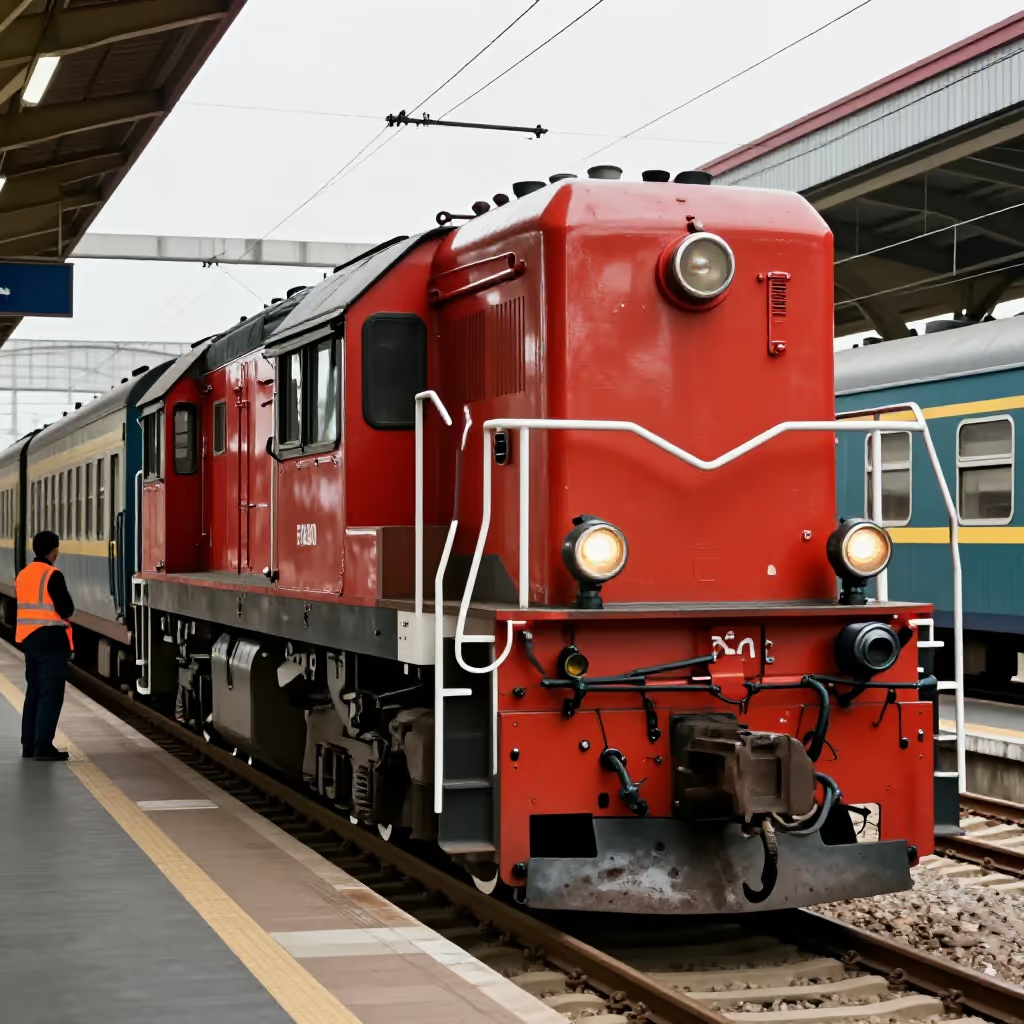
die Lok
locomotive
Short form of 'Lokomotive' (locomotive); the heavy vehicle at the front of a train that pulls the cars.
Die alte Dampflok im Museum ist eine beeindruckende Maschine.
The old steam locomotive in the museum is an impressive machine.
locomotive
Loading your saved state.

locomotive
Short form of 'Lokomotive' (locomotive); the heavy vehicle at the front of a train that pulls the cars.
Die alte Dampflok im Museum ist eine beeindruckende Maschine.
The old steam locomotive in the museum is an impressive machine.
'Lok' is the common and everyday short form of the word 'Lokomotive' (locomotive). In spoken language and informal texts, 'Lok' is almost always used.
Die Kinder winkten, als die Lok in den Bahnhof einfuhr.
The children waved as the locomotive entered the station.
A very important word combination is 'der Lokführer' or 'die Lokführerin' for the person who drives a train. Typical verbs are 'eine Lok fahren' (to drive a locomotive) or 'eine Lok zieht die Waggons' (a locomotive pulls the cars).
Der Lokführer hat den Zug sicher ans Ziel gebracht.
The train driver brought the train safely to its destination.
The word 'Lok' (locomotive) is often used to name different types of locomotives. Examples include 'Dampflok' (steam locomotive), 'Diesellok' (diesel locomotive), or 'E-Lok' (electric locomotive).
Die alte Dampflok wird nur noch für besondere Touristenfahrten eingesetzt.
The old steam locomotive is now only used for special tourist trips.