

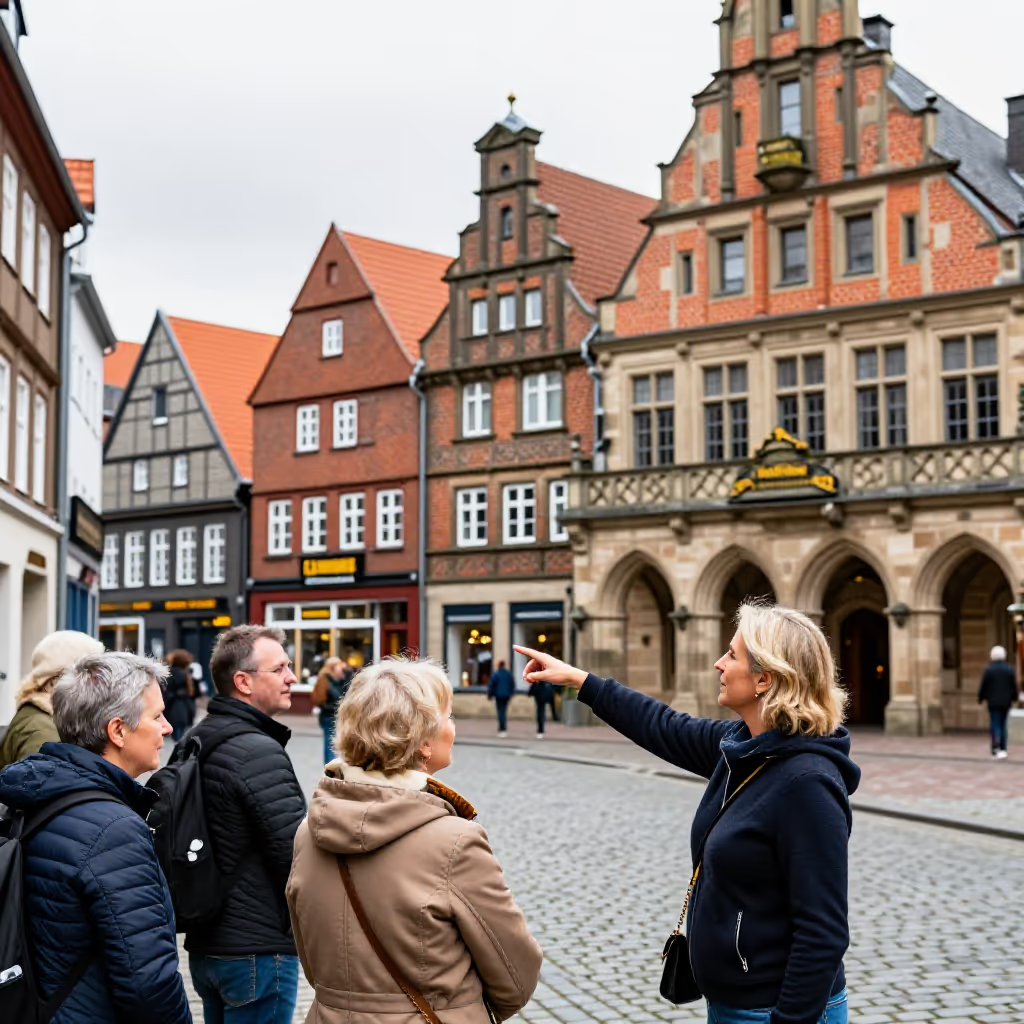
Originating from the city of Lüneburg or relating to it. It is used as an invariable adjective.
example
Die Lüneburger Heide ist ein bekanntes Naturschutzgebiet in Norddeutschland.
The Lüneburg Heath is a well-known nature reserve in northern Germany.
Usage tips
Invariable adjective
Adjectives derived from a city name with '-er' are invariable. This means they do not take a declension ending, no matter what gender, case, or number the noun has.
EXAMPLE
Der Lüneburger Bürgermeister hat die Gäste begrüßt.
The mayor of Lüneburg welcomed the guests.
Word structure
This adjective is formed from the city name 'Lüneburg' and the suffix '-er'. This pattern is used for many German cities to express belonging or association.
EXAMPLE
Das Lüneburger Salz war im Mittelalter sehr wertvoll.
Lüneburg salt was very valuable in the Middle Ages.
Typical collocation
The best-known and most common combination with this adjective is 'die Lüneburger Heide' (the Lüneburg Heath). This is the name of a large heath and forest landscape south of the city.
EXAMPLE
Im Spätsommer blüht die Lüneburger Heide in lila Farben.
In late summer, the Lüneburg Heath blooms in shades of purple.