

mächtig
powerful
Having a lot of power and influence.
EXAMPLE
Der Vorstandsvorsitzende ist eine mächtige Figur in der Wirtschaftswelt.
The CEO is a powerful figure in the business world.
powerful / mighty
Loading your saved state.
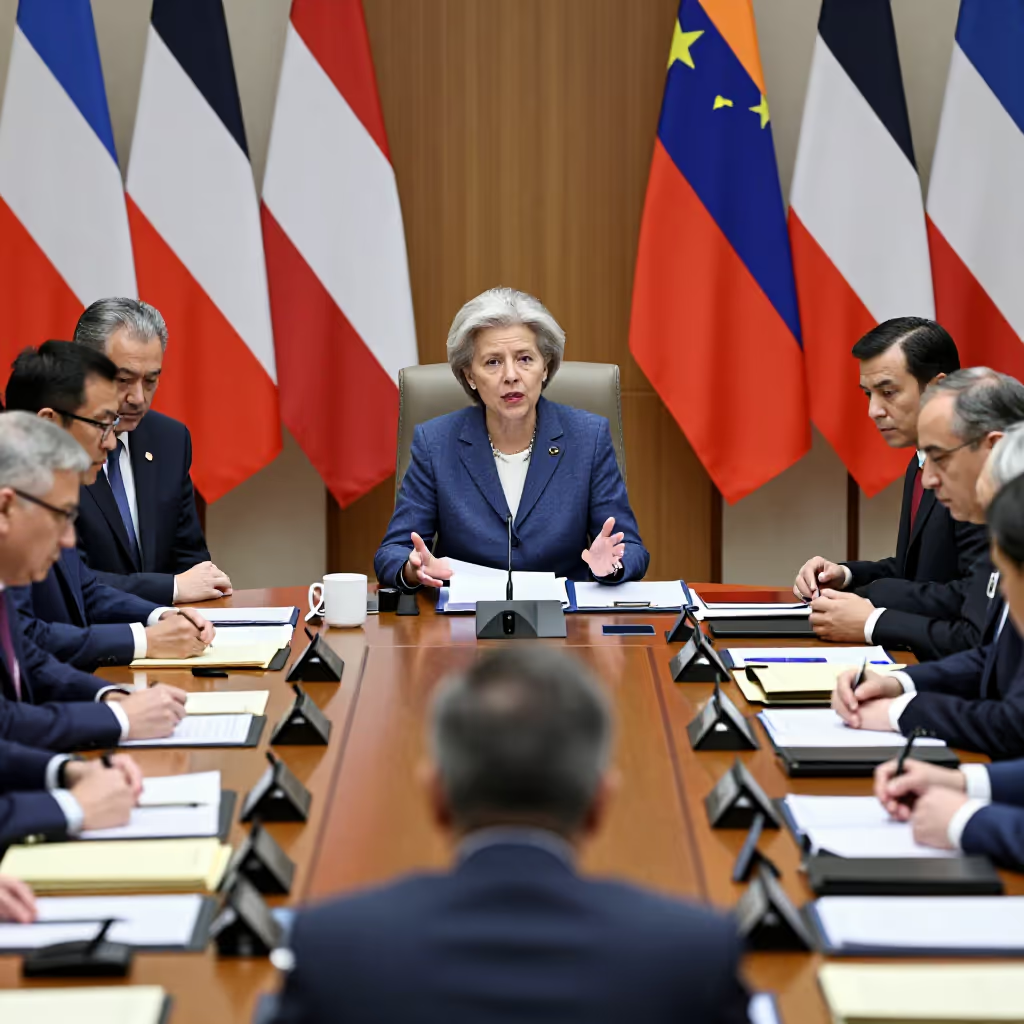
powerful
Having a lot of power and influence.
Der Vorstandsvorsitzende ist eine mächtige Figur in der Wirtschaftswelt.
The CEO is a powerful figure in the business world.
mighty / powerful
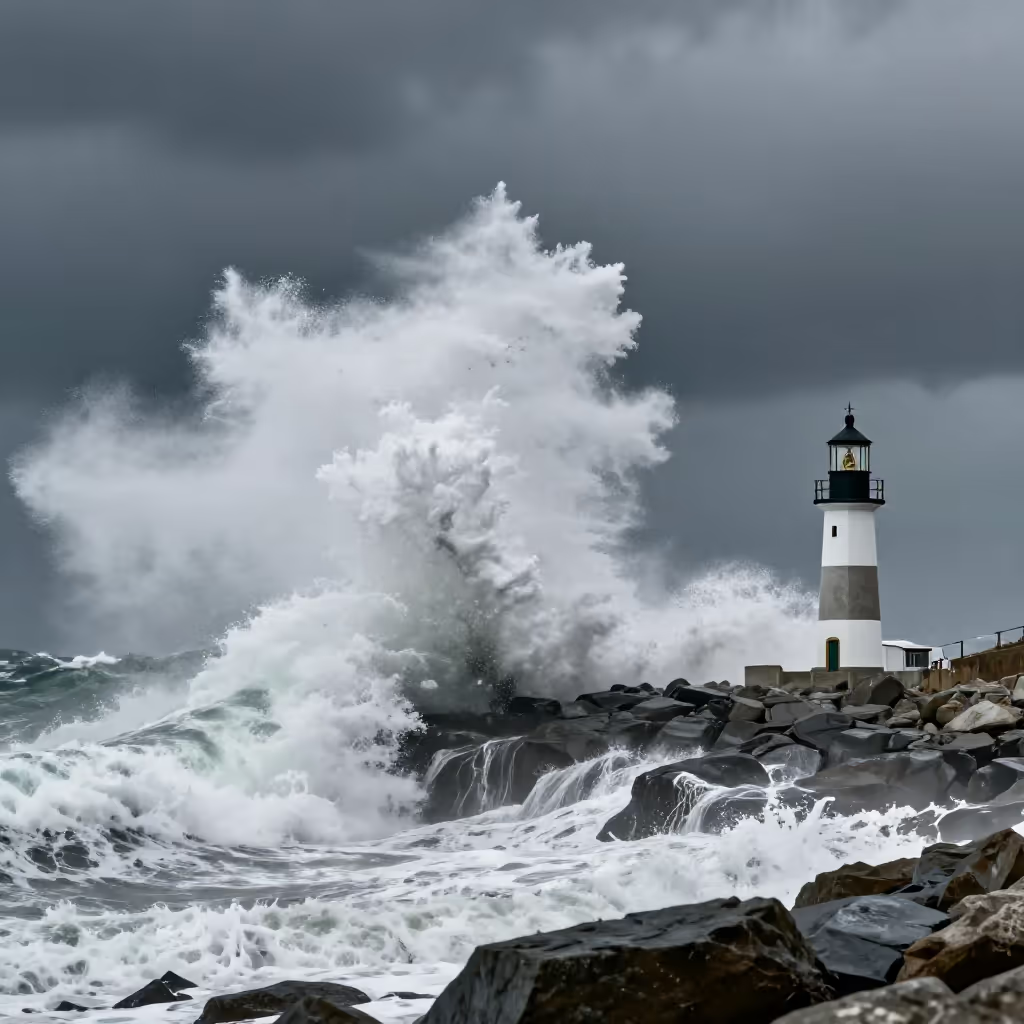
Very large, strong, or impressive in terms of extent or intensity.
Ein mächtiger Sturm zog über das Land und richtete große Schäden an.
A mighty storm swept across the country and caused major damage.

really / very
Used colloquially as an adverb meaning 'very' or 'tremendously' to intensify something.
Nach der langen Wanderung hatte ich mächtig Hunger.
After the long hike, I was really hungry.
The adjective 'mächtig' (powerful) is derived directly from the noun 'die Macht' (power). The ending '-ig' turns the noun into an adjective.
Der König war ein sehr mächtiger Mann.
The king was a very powerful man.
When 'mächtig' (powerful) describes people, organizations, or countries, it means 'influential'. When it describes things, forces of nature, or feelings, however, it means 'large', 'strong', or 'intense'.
Das Unternehmen ist ein mächtiger Konkurrent auf dem Weltmarkt.
The company is a powerful competitor on the global market.
In the meaning of 'large' or 'strong', 'mächtig' (mighty/powerful) is often combined with natural phenomena or impressive objects. Typical phrases are 'ein mächtiger Baum' (a mighty tree), 'ein mächtiger Fluss' (a mighty river), or 'ein mächtiger Eindruck' (a powerful impression).
Vor uns stand eine mächtige alte Eiche.
A mighty old oak tree stood before us.
In colloquial speech, 'mächtig' (really/very) is used as an adverb to intensify a feeling or state, similar to 'sehr' (very). In this function, it is not declined.
Ich habe heute mächtig Durst.
I'm really thirsty today.
strong
„Stark“ and „mächtig“ can both express a high level of intensity. „Stark“ is the neutral and generally appropriate choice, while „mächtig“ is colloquial in this use and sounds natural only in certain combinations. „Stark“ is therefore more suitable in factual language.

Nach der langen Wanderung hatte sie mächtig Hunger.
After the long hike, she was really hungry.
Nach der langen Wanderung hatte sie starken Hunger.
After the long hike, she was very hungry.