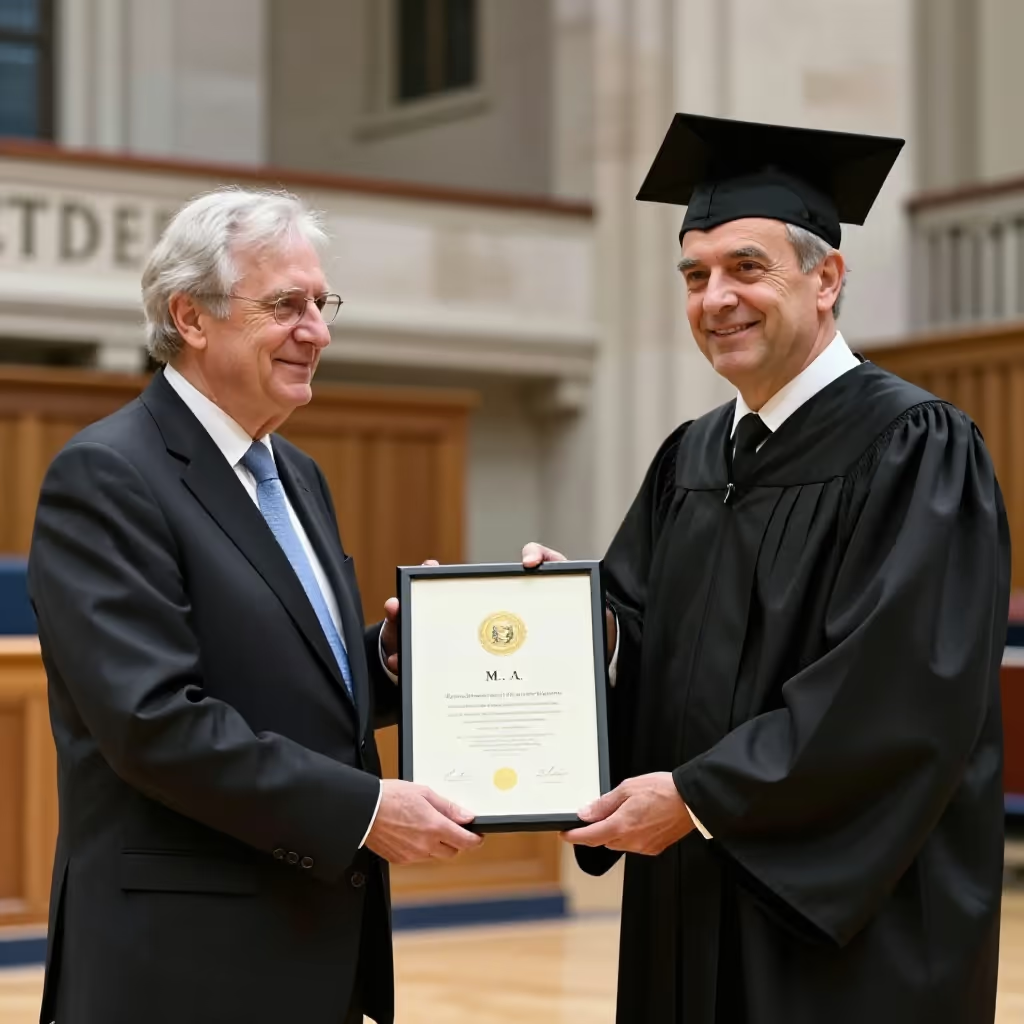
An academic degree that was formerly awarded at universities in Germany and Austria and corresponds to today's master's degree.
example
Sie hat ihren Magister in Germanistik und Geschichte gemacht.
She completed her master's degree in German studies and history.
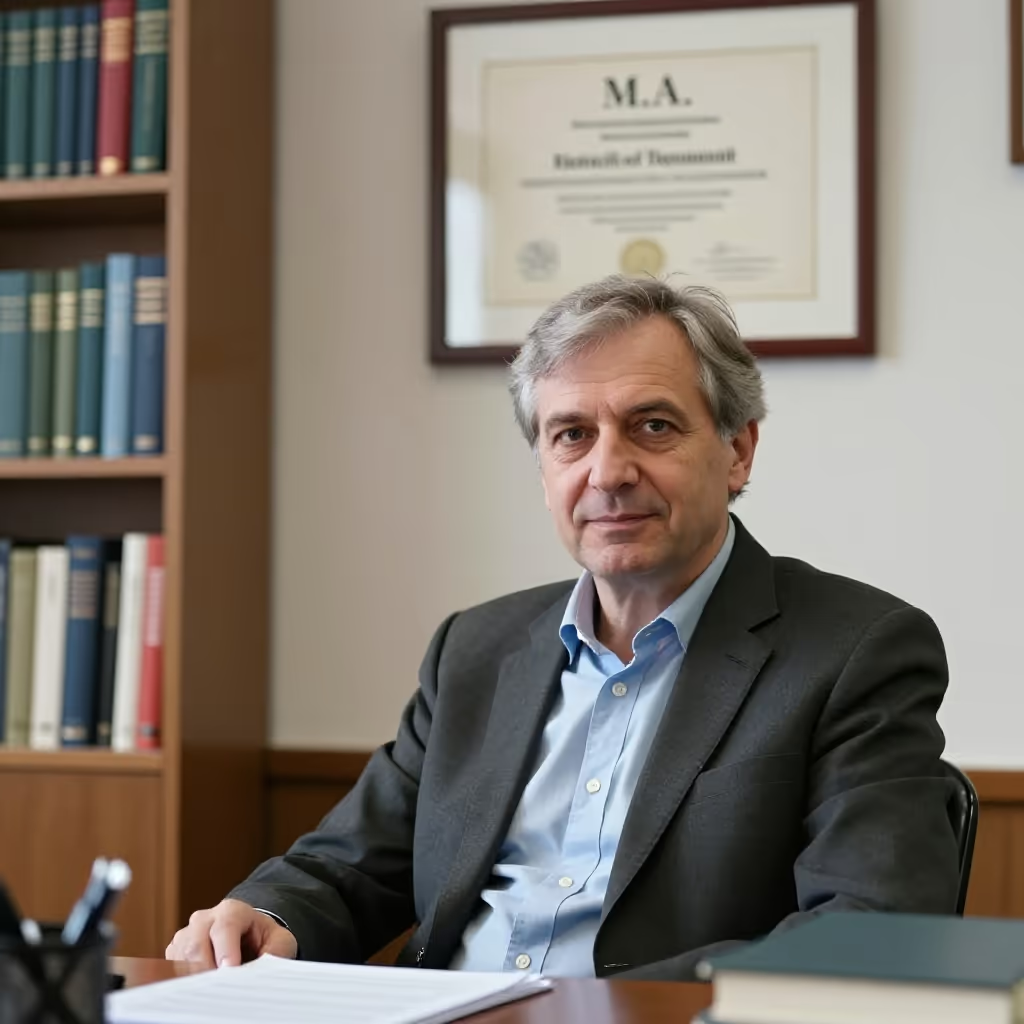
Usage tips
Word family
The word 'Magister' comes from the Latin 'magister', meaning 'master' or 'teacher'. This origin connects all meanings: the academic master's degree, the person with this degree, and the historical master teacher.
EXAMPLE
Sein Wissen war so groß, dass man ihn ehrfürchtig Magister nannte.
His knowledge was so great that people respectfully called him Magister.
Historical context
The academic degree 'Magister' has no longer been newly awarded in most subjects in Germany since the Bologna reform (around 2010). It was replaced by the master's degree, but it is still considered a fully valid academic degree.
EXAMPLE
Mein Professor hat noch einen Magister, keinen Master.
My professor still has a Magister, not a master's degree.
Use as a title
When 'Magister' refers to a person, the title can stand before the surname like part of the name. In direct address, however, it is rarely used.
EXAMPLE
Der nächste Vortrag wird von Magister Huber gehalten.
The next lecture will be given by Magister Huber.
Typical collocations
When referring to the degree, 'Magister' is often used with certain verbs and prepositions. Typical phrases are 'einen Magister machen' (to do/complete a Magister degree), 'seinen Magister haben in' (to have one's Magister in), or 'für den Magister studieren' (to study for the Magister degree).
EXAMPLE
Er hat seinen Magister in Philosophie mit Auszeichnung bestanden.
He passed his master's degree in philosophy with distinction.
Context clue
You can recognize the historical meaning of a teacher from the context. If monasteries, the Middle Ages, Latin, or old skilled trades are being discussed, the master teacher is probably meant.
EXAMPLE
Der alte Magister brachte den Kindern das Lesen und Schreiben bei.
The old master taught the children reading and writing.
Compare with
near_synonym · confusable
Magister vs Lehrer
teacher
'der Lehrer' and 'der Magister' can both have to do with education and knowledge, but today they are not the same thing. 'der Lehrer' is a person who teaches professionally, especially at school. Today, 'der Magister' is mainly an academic degree or a person with this degree. Only in historical texts can 'Magister' also mean a teacher or scholar. The words can therefore be confused because 'Magister' sounds old-fashioned or scholarly. For an ordinary person at school, however, you say 'Lehrer', not 'Magister'.
Magister
In dem alten Buch erklärt ein Magister den Schülern die Natur.
In the old book, a Magister explains nature to the students.
Lehrer
Vor der Reise fragt der Gast den Lehrer nach den wichtigsten Regeln.
Before the trip, the guest asks the teacher about the most important rules.