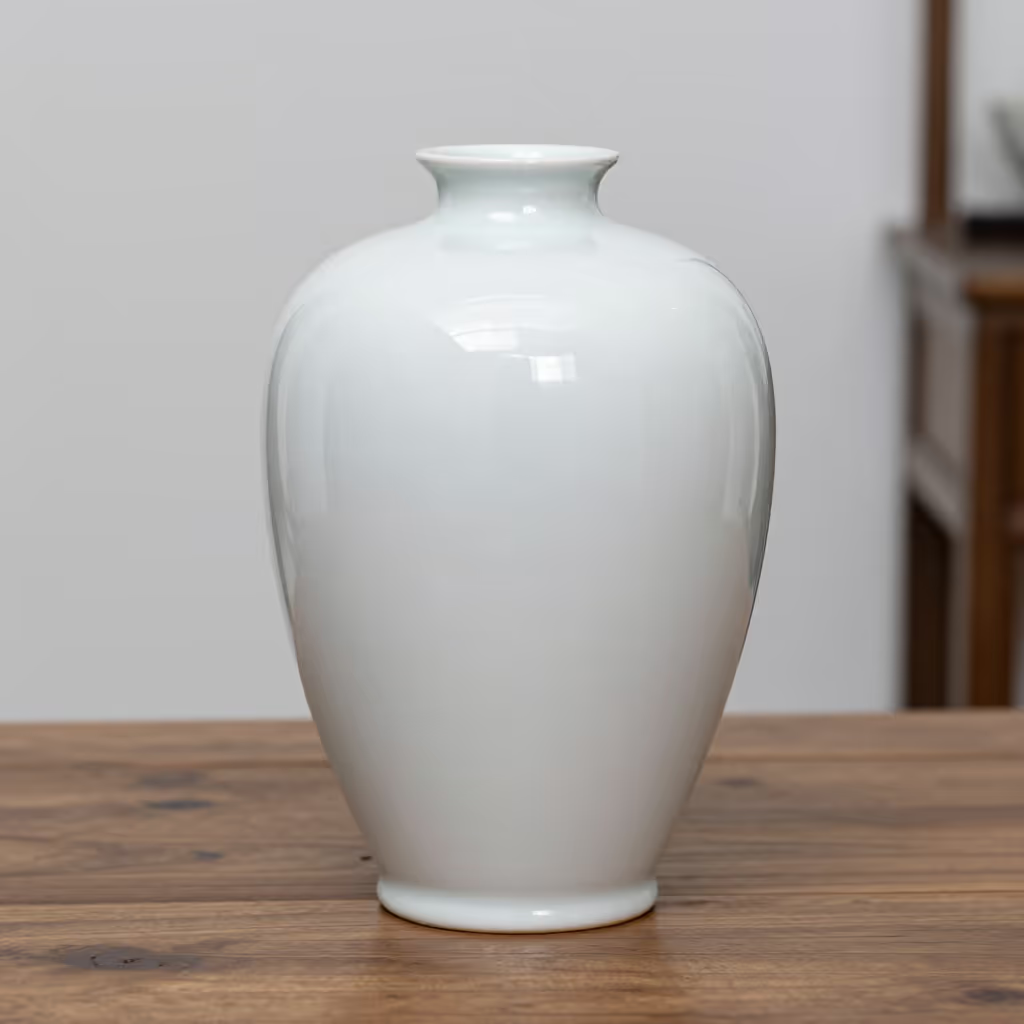
Completely without errors, stains, or defects; perfect. Often used for the appearance of people or the condition of surfaces.
example
Nach dem Polieren war der Lack des Autos wieder makellos.
After polishing, the car's paintwork was flawless again.

Usage tips
Word structure
The adjective 'makellos' (flawless) is made up of the noun 'der Makel' (a small flaw, a stain) and the ending '-los' (without). So it literally means 'without flaws'.
EXAMPLE
Sein Lebenslauf hatte keinen einzigen Makel.
His résumé did not have a single flaw.
Typical collocations
In its literal meaning, 'makellos' (flawless) often describes surfaces or appearance. Common combinations are 'makellose Haut' (flawless skin), 'makellose Zähne' (flawless teeth), or a 'makelloser Diamant' (flawless diamond).
EXAMPLE
Sie hat eine makellose Haut.
She has flawless skin.
Figurative meaning
In a figurative sense, 'makellos' (flawless) is used for abstract things that are perfect or beyond reproach. Typical examples are 'ein makelloser Ruf' (a flawless reputation), 'eine makellose Leistung' (a flawless performance), or 'makelloses Verhalten' (impeccable behavior).
EXAMPLE
Der Pianist lieferte eine makellose Vorstellung ab.
The pianist delivered a flawless performance.
Compare with
near_synonym
makellos vs perfekt
perfect
'perfekt' and 'makellos' can both express that something is without errors. 'perfekt' is very general and works for results, plans, situations, or things. 'makellos' especially emphasizes that there is no visible error, stain, or blemish. That is why it sounds very natural for appearance, surfaces, or even a good reputation. 'makellos' often feels a bit stronger or more elegant than 'perfekt'.
makellos
Der neue Tisch hat eine makellose Oberfläche.
The new table has a flawless surface.
perfekt
Wir brauchen vor der Reise noch einen perfekten Plan.