

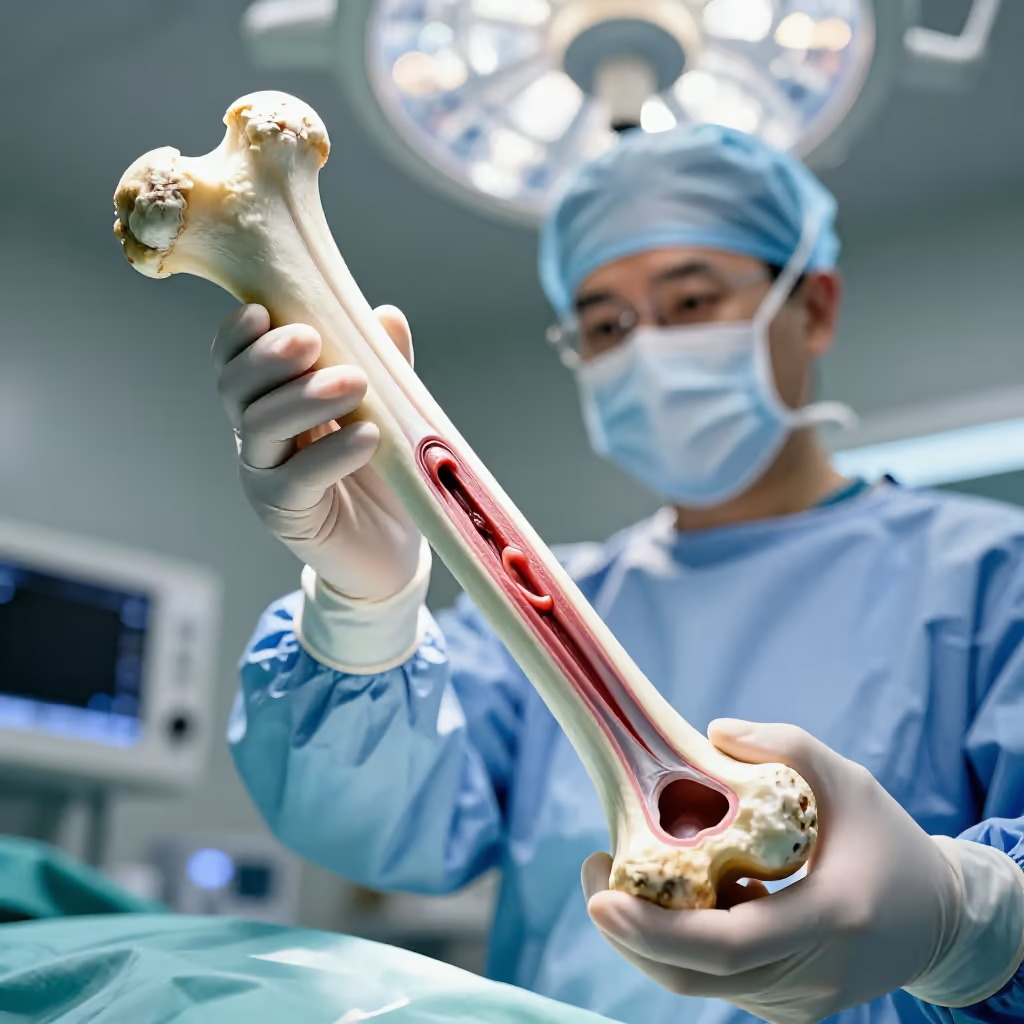
das Mark
marrow
The soft, fatty substance inside bones (bone marrow).
EXAMPLE
Markklößchensuppe wird mit dem Mark aus Rinderknochen zubereitet.
Marrow dumpling soup is prepared with marrow from beef bones.
marrow / pulp
Loading your saved state.
marrow
The soft, fatty substance inside bones (bone marrow).
Markklößchensuppe wird mit dem Mark aus Rinderknochen zubereitet.
Marrow dumpling soup is prepared with marrow from beef bones.
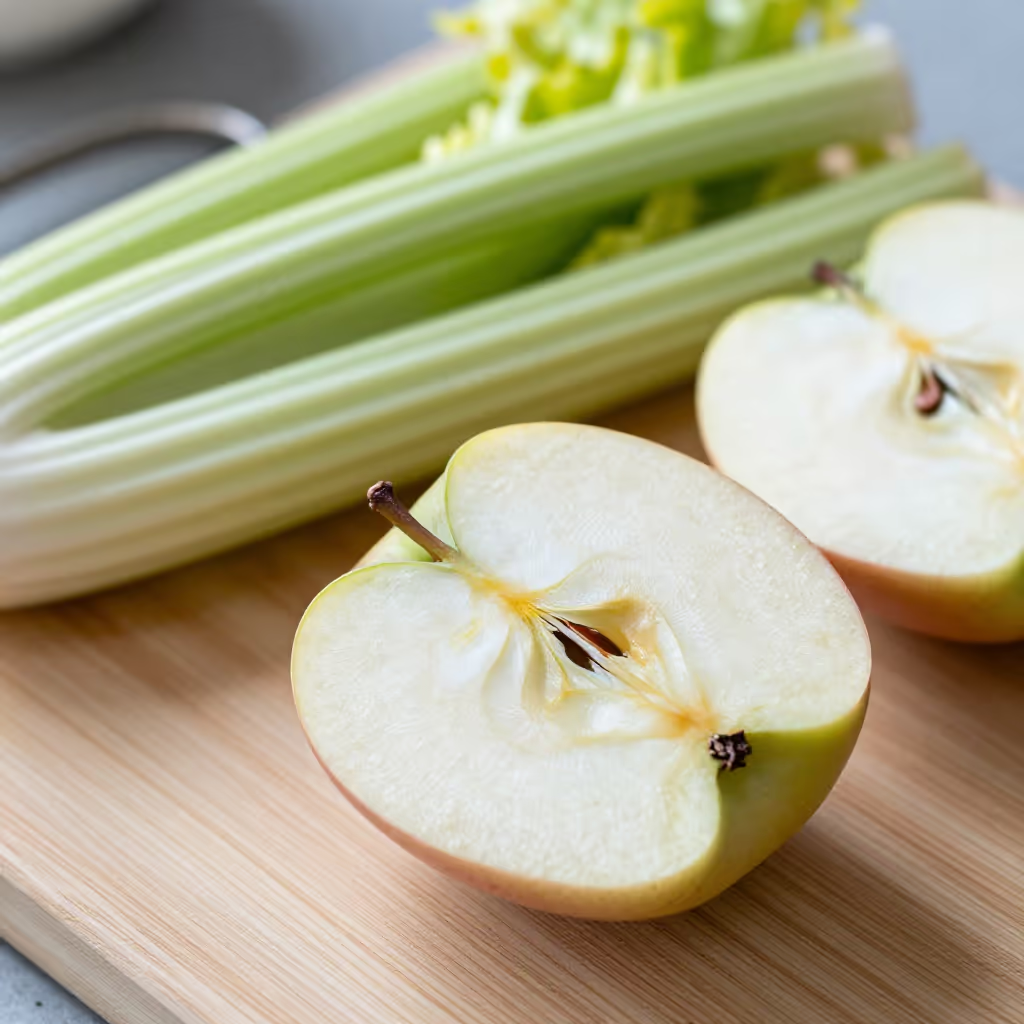
pulp
The innermost, soft part in the stem of plants or inside fruits.
Für das Rezept benötigen Sie nur das Mark der Vanilleschote.
For the recipe, you only need the pulp of the vanilla pod.

to the core
A fixed expression meaning that something touches, shakes, or penetrates a person deeply and intensely.
Der kalte Wind drang ihm bis ins Mark.
The cold wind penetrated him to the core.

core
In a figurative sense, the core or essential substance of something.
Seine Kritik traf das Mark des Problems.
His criticism struck at the core of the problem.
The article 'das' is crucial with this word. 'Das Mark' refers to the soft substance. Another noun, 'die Mark', was the former German currency. So the correct gender is important to avoid confusion.
Das Mark in den Knochen ist sehr nahrhaft.
The marrow in the bones is very nutritious.
The idiom 'bis ins Mark' (to the core) means 'very deeply' or 'intensely' and is not understood literally. It often describes strong feelings or physical sensations such as cold.
Seine Kritik hat sie bis ins Mark getroffen.
Her criticism hit her to the core.
In the figurative sense, 'das Mark' (the core) refers to the core or essence of an abstract matter. You can recognize this meaning when it is combined with words such as 'Problem' (problem), 'Diskussion' (discussion), or 'Kritik' (criticism).
Seine Frage trifft das Mark des Problems.
His question gets to the core of the problem.
In the literal meaning, 'Mark' (marrow/pulp) is often combined with verbs that describe removing it. Typical phrases are 'das Mark aus Knochen lösen' (to remove the marrow from bones) or 'das Mark aus einer Schote kratzen' (to scrape the pulp from a pod).
Für die Soße kratzt der Koch das Mark aus der Vanilleschote.
For the sauce, the cook scrapes the pulp from the vanilla pod.
core / pit / nucleus
Mark and Kern can both refer to the essential content of something. Kern is the normal, neutral word, while Mark sounds more literary and emphasizes the essential substance more strongly. In everyday speech, usually use Kern, and use Mark mainly in emphatic or figurative language.

Diese Frage trifft das Mark des gesamten Problems.
This question gets to the heart of the entire problem.
Diese Frage trifft den Kern des gesamten Problems.
This question gets to the core of the entire problem.