

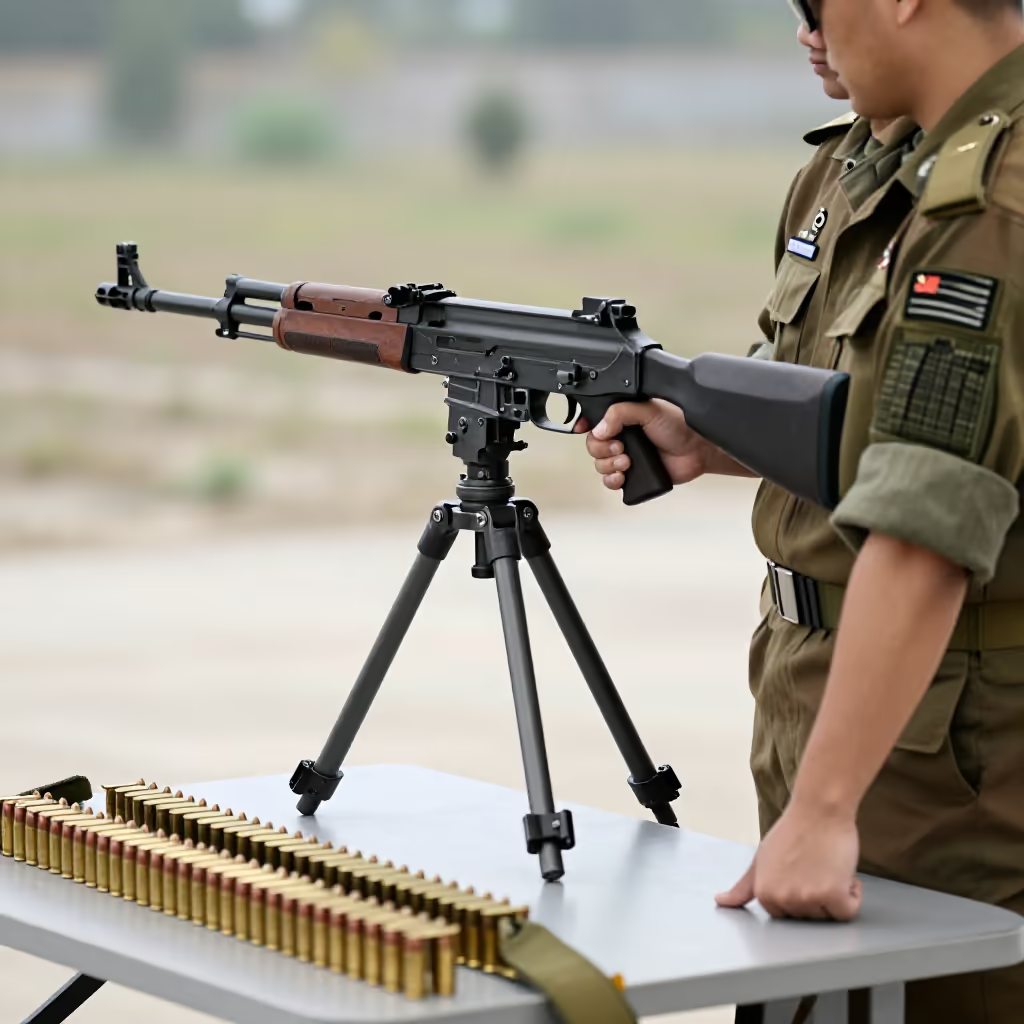
das Maschinengewehr
machine gun
A fully automatic firearm designed to fire many rounds in rapid succession.
EXAMPLE
Im Gefecht kam ein schweres Maschinengewehr zum Einsatz.
A heavy machine gun was used in the battle.
machine gun
Loading your saved state.
machine gun
A fully automatic firearm designed to fire many rounds in rapid succession.
Im Gefecht kam ein schweres Maschinengewehr zum Einsatz.
A heavy machine gun was used in the battle.
The word consists of 'Maschine' (machine) and 'Gewehr' (rifle/gun). The 'n' is a linking element. So it describes a gun that functions automatically like a machine.
Die Erfindung des Maschinengewehrs hat die Kriegsführung verändert.
The invention of the machine gun changed warfare.
A distinction is often made between a 'leichtes Maschinengewehr' (light machine gun), which can be carried by one person, and a 'schweres Maschinengewehr' (heavy machine gun), which requires a fixed position.
Die Soldaten trugen leichte Maschinengewehre.
The soldiers carried light machine guns.
Especially in historical, military, or journalistic texts, the abbreviation 'MG' is often used.
Der Schütze war für das MG verantwortlich.
The gunner was responsible for the MG.