


sich maskieren
to disguise oneself
To cover one's face with a mask or another disguise in order not to be recognized.
EXAMPLE
Die Bankräuber hatten sich mit Skimasken maskiert.
The bank robbers had disguised themselves with ski masks.
to mask
Loading your saved state.
to disguise oneself
To cover one's face with a mask or another disguise in order not to be recognized.
Die Bankräuber hatten sich mit Skimasken maskiert.
The bank robbers had disguised themselves with ski masks.

to mask
To hide or disguise something, especially feelings, intentions, or the true nature of something.
Er versuchte, seine Enttäuschung mit einem gezwungenen Lächeln zu maskieren.
He tried to mask his disappointment with a forced smile.
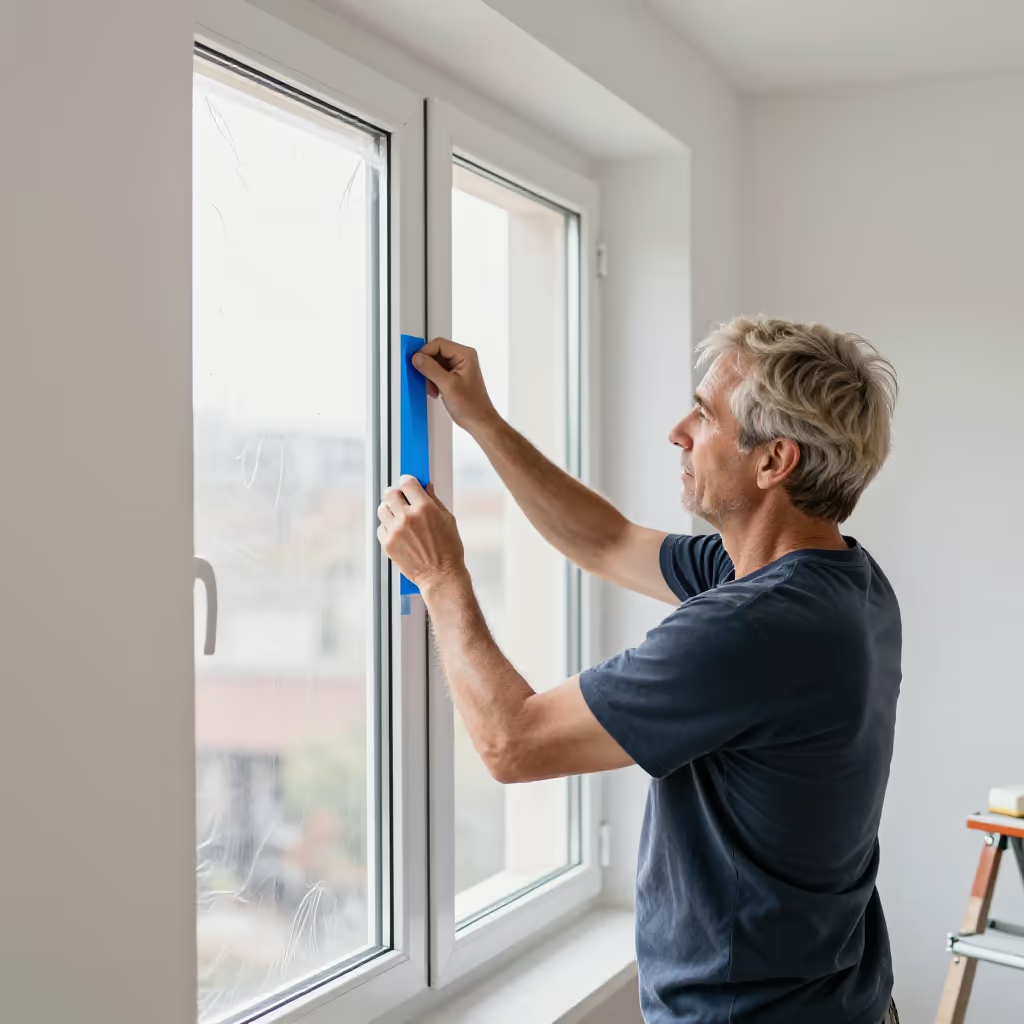
to mask
In crafts or painting, to cover a surface with tape or film in order to protect it from paint or work being done.
Vor dem Streichen der Wände müssen Sie die Fensterrahmen und Steckdosen sorgfältig maskieren.
Before painting the walls, you need to carefully mask the window frames and outlets.

to mask
In IT, to make certain data, such as an IP address or characters in a password field, unreadable or hidden.
Aus Sicherheitsgründen maskiert das System die eingegebenen Passwörter mit Sternchen.
For security reasons, the system masks the entered passwords with asterisks.
The verb 'maskieren' (to mask) is derived directly from the noun 'die Maske' (mask). In all meanings, it is about covering something with a kind of 'Maske' (mask), whether literally or figuratively.
An Karneval tragen viele Menschen eine Maske.
At Carnival, many people wear a mask.
When a person covers their own face, the verb is used reflexively: 'sich maskieren' (to disguise oneself). In all other meanings, it is transitive and needs an accusative object: 'etwas maskieren' (to mask something).
Der Schauspieler maskiert sich vor dem Auftritt.
The actor disguises himself before the performance.
In the figurative sense, 'maskieren' (to mask) is often used with abstract nouns. Typical combinations are 'seine Gefühle maskieren' (to mask one's feelings), 'seine Unsicherheit maskieren' (to mask one's insecurity), or 'die wahren Absichten maskieren' (to mask the true intentions).
Sie konnte ihre Enttäuschung nur schwer maskieren.
She could only barely mask her disappointment.
In a craft or DIY context, 'maskieren' (to mask) means to cover a surface with tape ('Kreppband', masking tape) or film in order to protect it while painting or varnishing.
Bevor du die Decke streichst, musst du die Ränder der Wände sauber maskieren.
Before you paint the ceiling, you have to neatly mask the edges of the walls.
In IT, 'maskieren' (to mask) means to make sensitive data such as passwords, credit card numbers, or IP addresses unreadable in order to protect privacy and security.
Wenn Sie Ihr Passwort eingeben, werden die Zeichen automatisch maskiert.
When you enter your password, the characters are automatically masked.
to hide / conceal
Verbergen and maskieren can both mean keeping feelings or intentions hidden from others. Verbergen generally refers to simply not showing something, while maskieren often involves presenting it differently so that what is hidden appears different. Use maskieren when there is an excuse or visible facade as well.

Sie maskierte ihre Nervosität mit einem freundlichen Lächeln.
She masked her nervousness with a friendly smile.
Sie verbarg ihre Nervosität und sprach ruhig mit dem neuen Kunden.
She hid her nervousness and spoke calmly to the new client.