

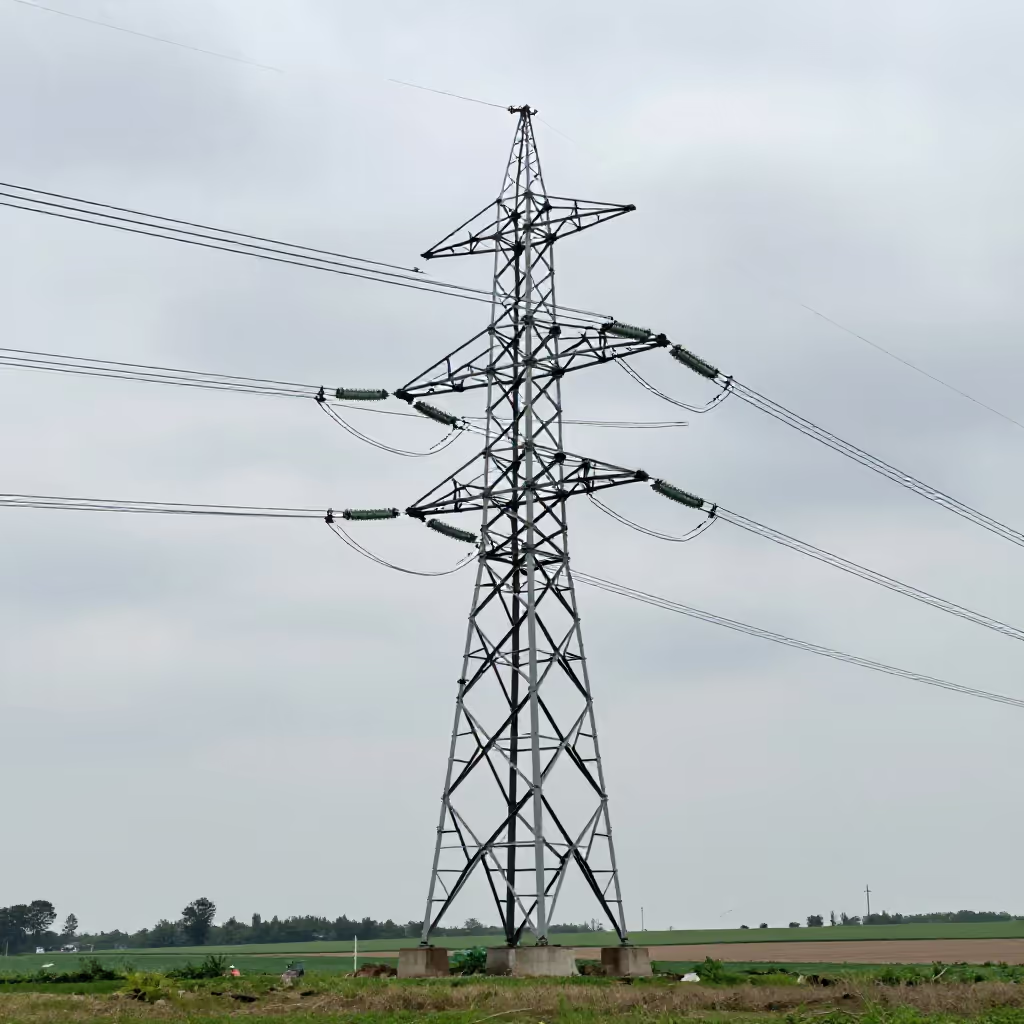
A tall, vertical pole or post made of wood or metal that supports, for example, a flag (Fahnenmast), antennas (Funkmast), or power lines (Strommast).
example
Ein Blitz ist in den Sendemast eingeschlagen.
Lightning struck the transmission mast.
Usage tips
Word structure
'Mast' (mast/pole) is often the base word in compound nouns. The first word describes the function of the mast, for example 'Fahnenmast' (flagpole), 'Strommast' (power pole), or 'Segelmast' (sailing mast).
EXAMPLE
Der neue Mobilfunkmast verbessert den Empfang in unserem Dorf.
The new mobile communications mast improves reception in our village.
Context clue
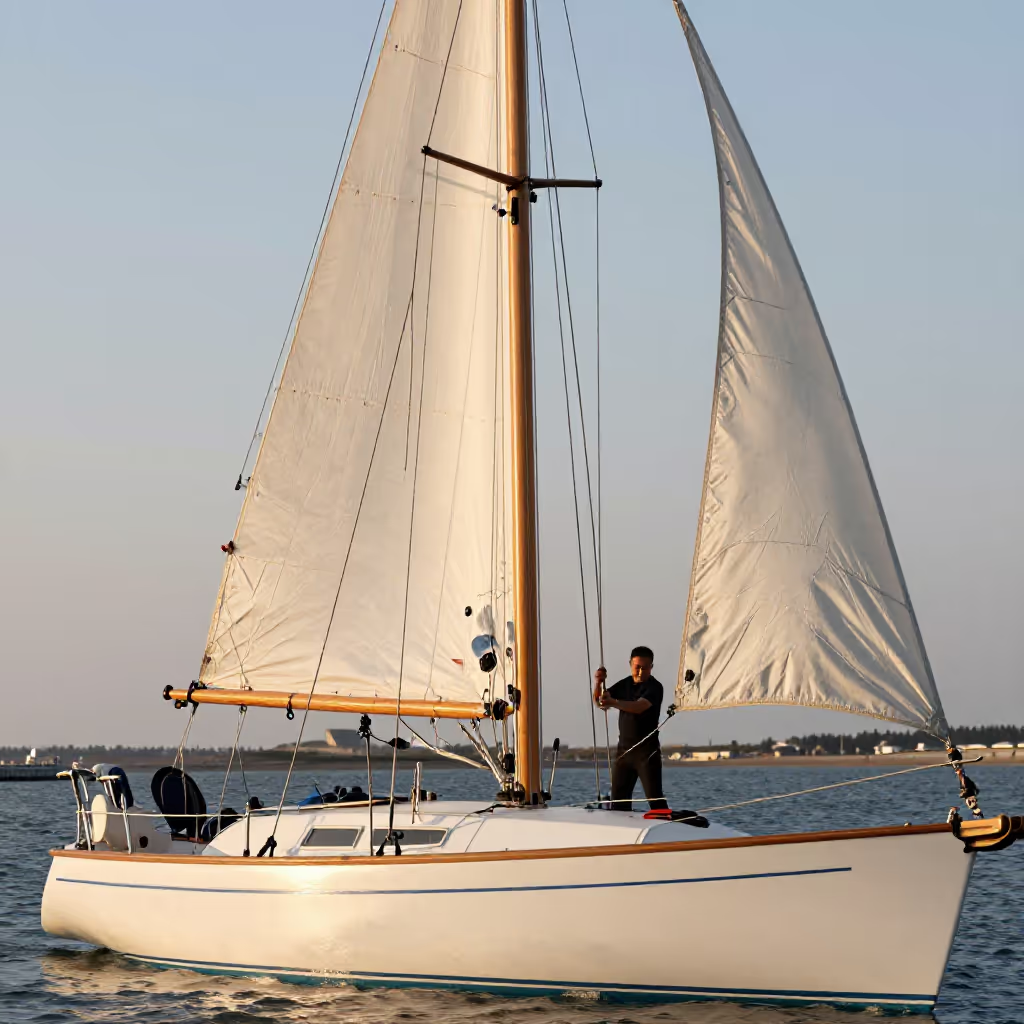
You can clearly recognize the meaning 'mast on a ship' from the context. If sails, ships, boats, or the sea are being discussed, this is always the meaning intended.
EXAMPLE
Bei starkem Wind brach der Mast des Segelbootes.
In strong winds, the mast of the sailboat broke.
Typical collocations
In a maritime context, the mast is often combined with verbs of movement. Typical phrases are 'den Mast erklimmen' (to climb the mast), 'am Mast hochklettern' (to climb up the mast), or 'die Segel am Mast hissen' (to hoist the sails on the mast).
EXAMPLE
Die Piraten hissten ihre schwarze Flagge am Mast.
The pirates hoisted their black flag on the mast.
Compare with
confusable
Mast vs Baum
tree
'der Baum' and 'der Mast' can both be tall and vertical, but they belong to very different things. A tree is a plant with a trunk, branches, and leaves or needles. A mast is a tall post or pole that supports something, for example a flag, power lines, antennas, or sails. Learners may confuse the words because from a distance both can look like tall trunks. If it grows, it is a tree; if it was built and supports something, it is a mast.
Mast
Am Hafen kletterte ein Arbeiter auf den Mast des Segelboots.
At the harbor, a worker climbed onto the mast of the sailboat.
Baum
Nach dem Sturm lag ein alter Baum quer über dem Weg.
After the storm, an old tree was lying across the path.