

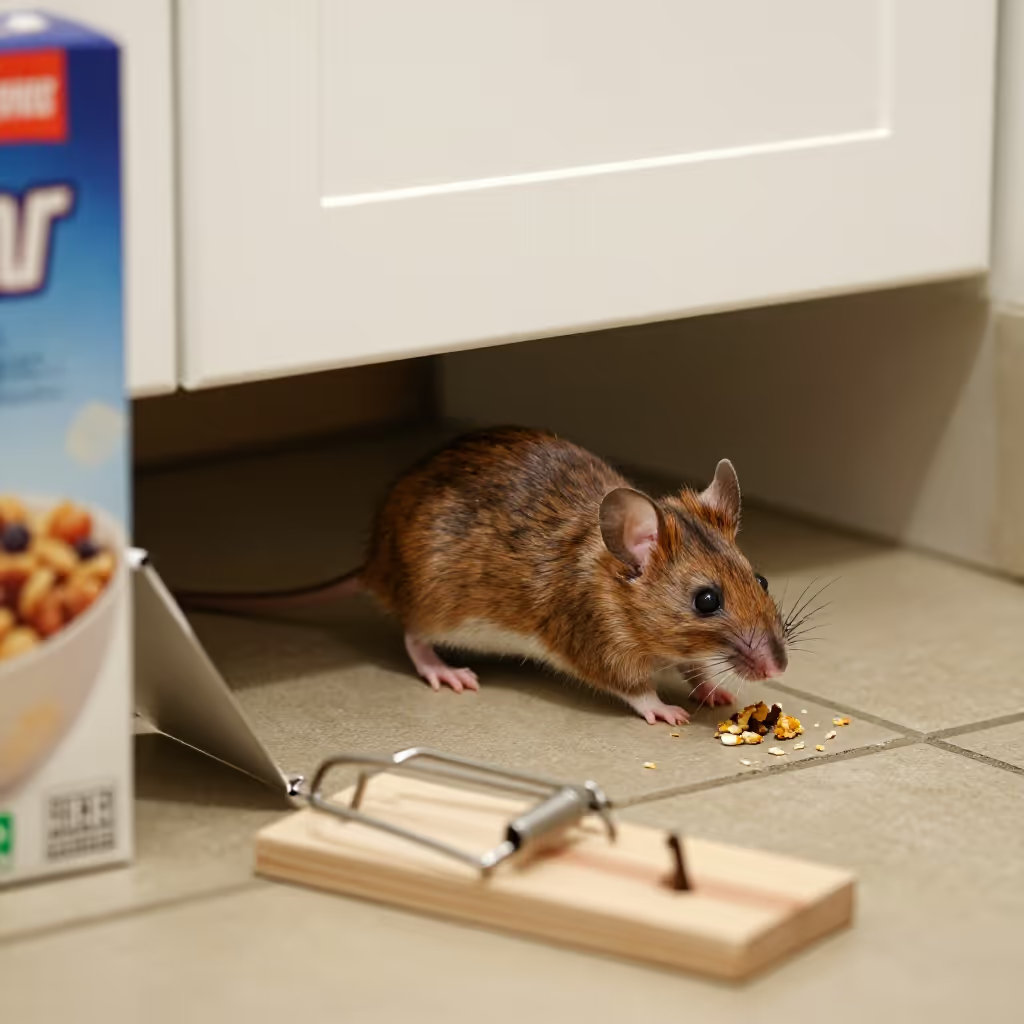
die Maus
mouse
A small rodent with a long tail, often regarded as a pest.
EXAMPLE
Die Katze hat eine Maus gefangen und sie vor die Tür gelegt.
The cat caught a mouse and laid it in front of the door.
mouse
Loading your saved state.
mouse
A small rodent with a long tail, often regarded as a pest.
Die Katze hat eine Maus gefangen und sie vor die Tür gelegt.
The cat caught a mouse and laid it in front of the door.
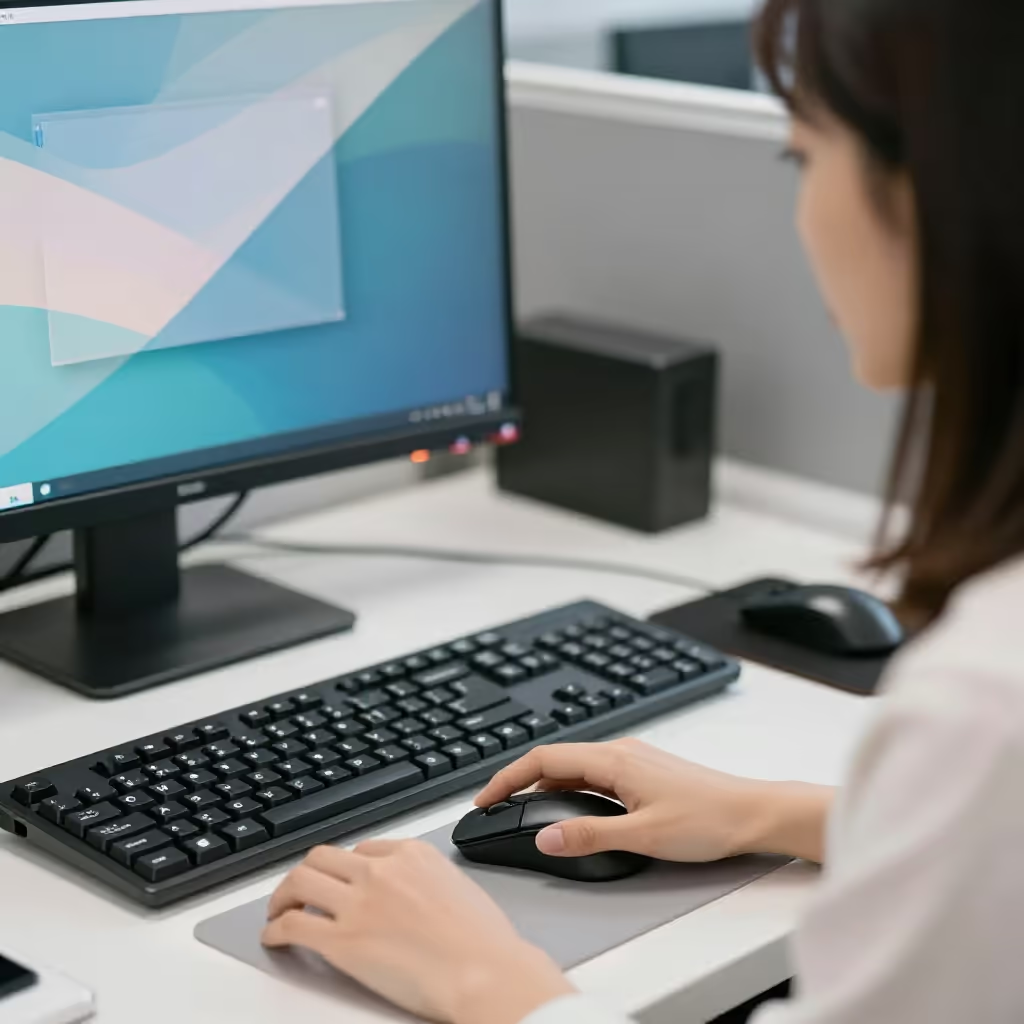
mouse
An input device for computers that is used to move the cursor on the screen.
Klicke mit der rechten Maustaste, um das Kontextmenü zu öffnen.
Click with the right mouse button to open the context menu.

sweetie
An affectionate pet name, often for children or female partners.
Komm her, meine kleine Maus, ich helfe dir beim Anziehen.
Come here, my little sweetie, I'll help you get dressed.

wallflower
A colloquial term for a very shy, inconspicuous person.
Im Büro ist sie eine graue Maus, aber privat ist sie sehr abenteuerlustig.
At the office she is a gray mouse, but in private she is very adventurous.
The four main meanings of 'Maus' (mouse) are very different. The context always makes clear what is meant: 'klicken' (to click) and 'Computer' (computer) for the device, 'Katze' (cat) and 'Falle' (trap) for the animal, and 'meine kleine' (my little) for the pet name.
Meine neue Computer-Maus hat sieben Tasten.
My new computer mouse has seven buttons.
In the computer context, typical expressions are 'mit der Maus klicken' (to click with the mouse), 'die rechte/linke Maustaste' (the right/left mouse button), and 'eine kabellose Maus' (a wireless mouse). The word 'Mauszeiger' (mouse pointer) refers to the symbol on the screen.
Du musst mit der rechten Maustaste auf das Symbol klicken.
You have to click on the icon with the right mouse button.
As a pet name, 'Maus' (sweetie/little mouse) is very informal and affectionate. It is used for male or female partners or small children, but never in a formal or professional setting.
„Hallo meine Maus, wie war dein Tag?“, fragte er seine Freundin.
'Hello, my sweetie, how was your day?' he asked his girlfriend.
The term for a shy person is almost always used in the fixed expression 'eine graue Maus' (a gray mouse / wallflower). The adjective 'grau' (gray) is a fixed part of the idiom here.
Sie galt lange als graue Maus, bis sie bei der Firmenfeier alle mit ihrem Gesang überraschte.
She was long considered a gray mouse until she surprised everyone with her singing at the company party.
little mouse / sweetheart
„Die Maus“ and „das Mäuschen“ can both be affectionate pet names for a child or a female partner. „Mäuschen“ is the more diminutive and especially intimate form, while „Maus“ sounds slightly less diminutive. Both words are possible; the choice mainly shows the desired degree of tenderness.

Komm, meine Maus, wir gehen jetzt nach Hause.
Come on, sweetie, we're going home now.
Komm, mein Mäuschen, wir gehen jetzt nach Hause.
Come on, sweetheart, we're going home now.