The larger part of a group of people or things; more than half of the total number.
example
Die Mehrheit der Anwohner sprach sich gegen den Bau der neuen Straße aus.
The majority of residents spoke out against the construction of the new road.
Usage tips
Word structure
The word is made up of 'mehr' (more) and the ending '-heit'. The ending '-heit' forms abstract nouns. 'Mehrheit' (majority) therefore literally describes the state of being 'more'.
EXAMPLE
Die Mehrheit ist der Teil einer Gruppe, der zahlenmäßig größer ist.
The majority is the part of a group that is larger in number.
Use with the genitive
'Mehrheit' is very often used with a noun in the genitive plural, e.g. 'die Mehrheit der Menschen' (the majority of people). In standard German, the verb that refers to 'die Mehrheit' is singular.
EXAMPLE
Die Mehrheit der Studierenden ist mit der neuen Regelung einverstanden.
The majority of students are in agreement with the new rule.
Typical adjectives
Certain adjectives are often used to describe the size of a majority. Typical combinations are 'eine knappe Mehrheit' (a narrow majority), 'eine große Mehrheit' (a large majority), or 'eine überwältigende Mehrheit' (an overwhelming majority).
EXAMPLE
Der Vorschlag wurde mit einer knappen Mehrheit angenommen.
The proposal was accepted by a narrow majority.
Political context
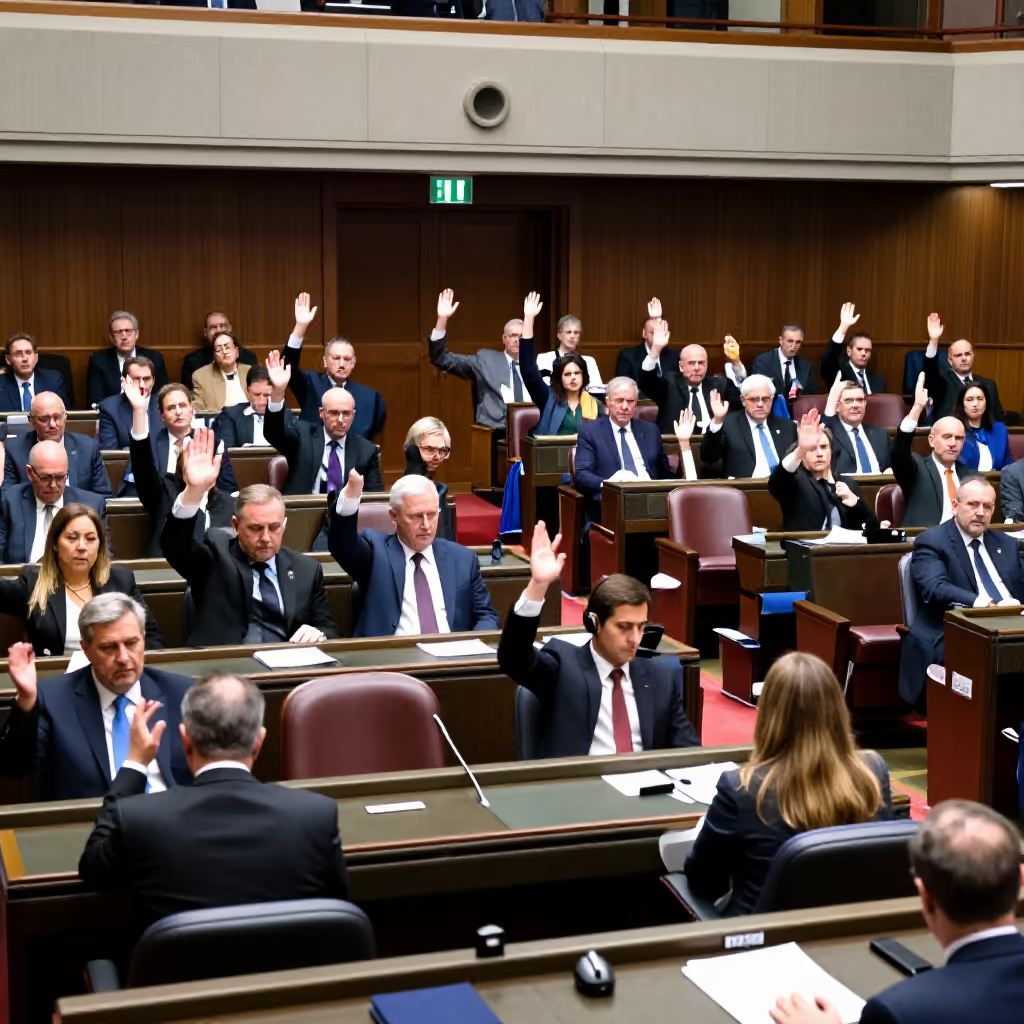
In news and political discussions, 'die Mehrheit' often refers to the party or coalition that has more than half the seats in a parliament. This is called the 'parlamentarische Mehrheit' (parliamentary majority).
EXAMPLE
Die Regierung verfügt über eine stabile Mehrheit im Bundestag.
The government has a stable majority in the Bundestag.
Compare with
near_synonym · confusable
Mehrheit vs meist
mostly / most
'die meisten' and 'die Mehrheit' both refer to the larger part of a group. The difference is mainly grammatical and stylistic. 'die meisten' is used directly with people or things and sounds very natural in everyday language: 'die meisten Schüler' (most students). 'die Mehrheit' is a noun and sounds a little more factual: 'die Mehrheit der Schüler' (the majority of students). Learners may confuse the words because both can mean more than half. In normal conversations, 'die meisten' is often simpler; in votes, reports, or more formal texts, 'die Mehrheit' fits well.
Mehrheit
Bei der Abstimmung war die Mehrheit für den neuen Plan.
In the vote, the majority was in favor of the new plan.
meist
Im Urlaub bleiben die meisten Gäste wegen des Regens im Hotel.
On vacation, most guests stay in the hotel because of the rain.