

metallen
metal
An outdated or poetic form meaning 'made of metal.'
EXAMPLE
Der Ritter trug einen metallenen Helm, der in der Sonne glänzte.
The knight wore a metal helmet that shone in the sun.
metal
Loading your saved state.
metal
An outdated or poetic form meaning 'made of metal.'
Der Ritter trug einen metallenen Helm, der in der Sonne glänzte.
The knight wore a metal helmet that shone in the sun.
'Metallen' (metal, made of metal) is formed from the noun 'das Metall' (metal) with the ending '-en.' This ending is often used to form adjectives that describe a material, such as 'golden' (made of gold) or 'hölzern' (made of wood).
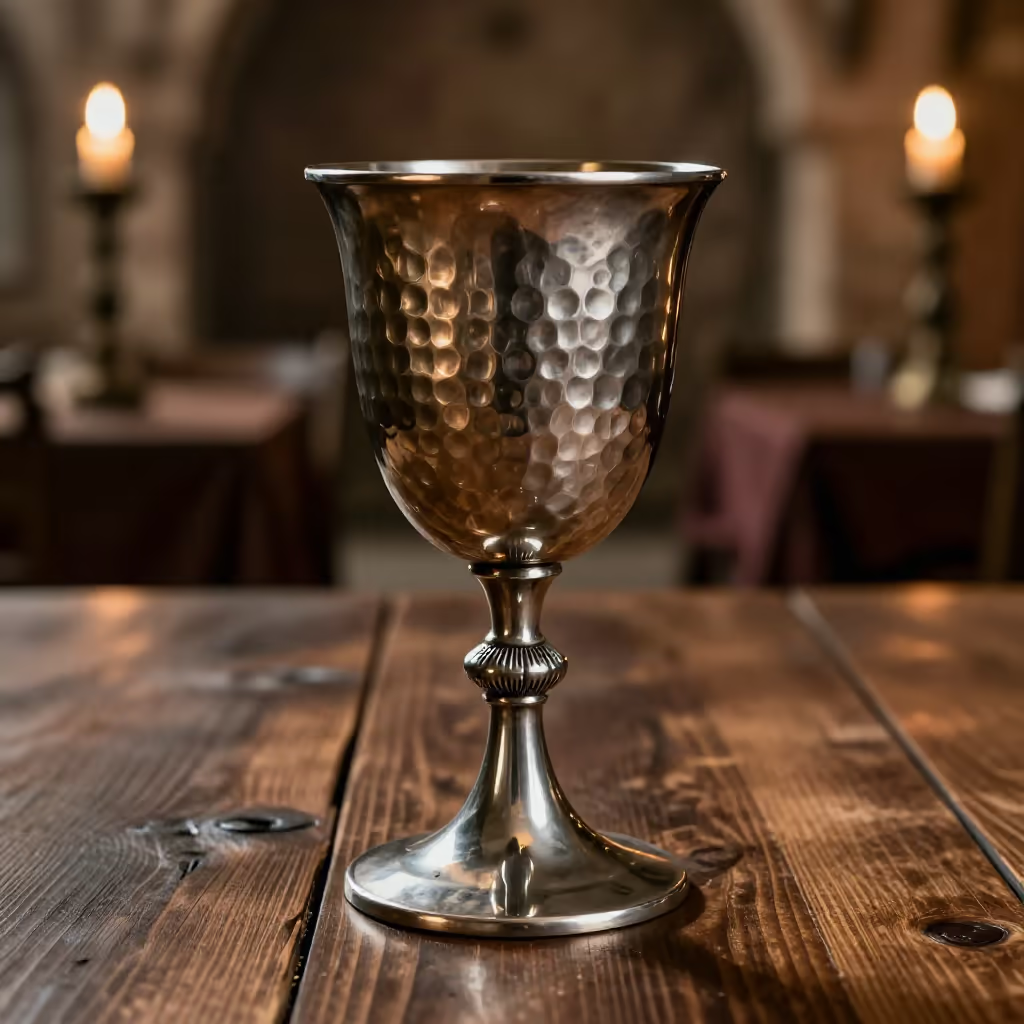
Der König trank aus einem goldenen Becher.
The king drank from a golden cup.
This word is outdated and today is used almost only in poetry, fairy tales, or historical novels to create an old-fashioned atmosphere. It is unusual in modern usage.
Hinter dem metallenen Tor lag ein verwunschener Garten.
Behind the metal gate lay an enchanted garden.
Since the word has a historical or fantastical style, it often describes matching objects. Typical nouns are: 'ein metallener Schild' (a metal shield), 'eine metallene Rüstung' (metal armor), or 'ein metallenes Tor' (a metal gate).
Der Krieger schützte sich mit seinem metallenen Schild.
The warrior protected himself with his metal shield.
metallic
Metallen and metallisch can both express that something is made of metal. Metallen sounds outdated or poetic today, whereas metallisch is the neutral form and can also refer only to metal-like properties such as shine or sound.

Im alten Gedicht trägt der Ritter einen metallenen Schild.
In the old poem, the knight carries a metal shield.
Im modernen Bericht wird der metallische Schild genau beschrieben.
The modern report describes the metallic shield in detail.