

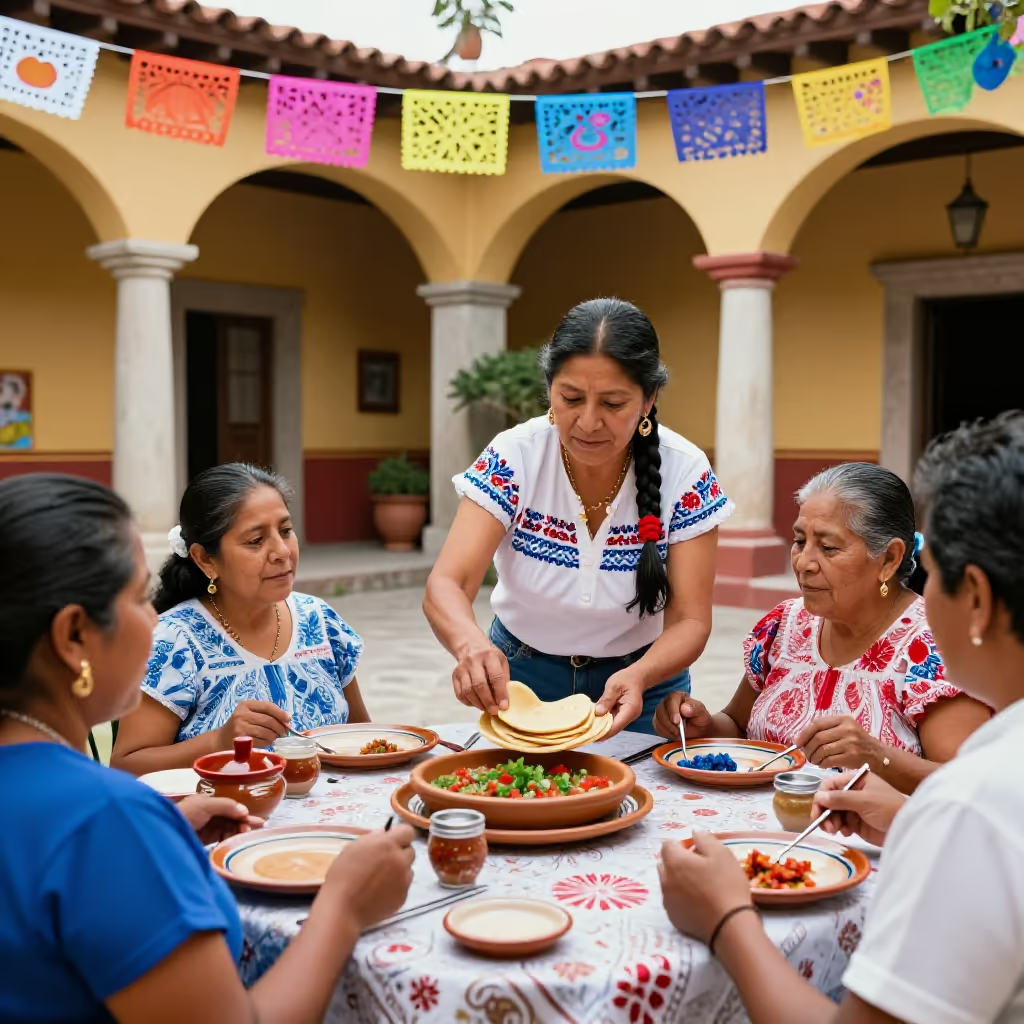
mexikanisch
Mexican
Related to Mexico, its inhabitants, its culture, or language.
EXAMPLE
Wir gehen heute Abend in ein mexikanisches Restaurant.
We're going to a Mexican restaurant this evening.
Mexican
Loading your saved state.
Mexican
Related to Mexico, its inhabitants, its culture, or language.
Wir gehen heute Abend in ein mexikanisches Restaurant.
We're going to a Mexican restaurant this evening.
Adjectives for countries or regions in German are often formed with the ending '-isch' or '-anisch'. 'Mexikanisch' is derived directly from the country 'Mexiko' (Mexico).
Die mexikanische Flagge hat drei Farben.
The Mexican flag has three colors.
The adjective 'mexikanisch' is used for things and concepts. To refer to a person from Mexico, you use the nouns 'der Mexikaner' (Mexican man) or 'die Mexikanerin' (Mexican woman).
Meine neue Kollegin ist Mexikanerin.
My new colleague is Mexican.
'Mexikanisch' is most commonly used in connection with culture and gastronomy. Typical phrases are 'die mexikanische Küche' (Mexican cuisine), 'mexikanisches Essen' (Mexican food), or 'mexikanische Musik' (Mexican music).
Die mexikanische Küche ist für ihre scharfen Gewürze bekannt.
Mexican cuisine is known for its spicy seasonings.