

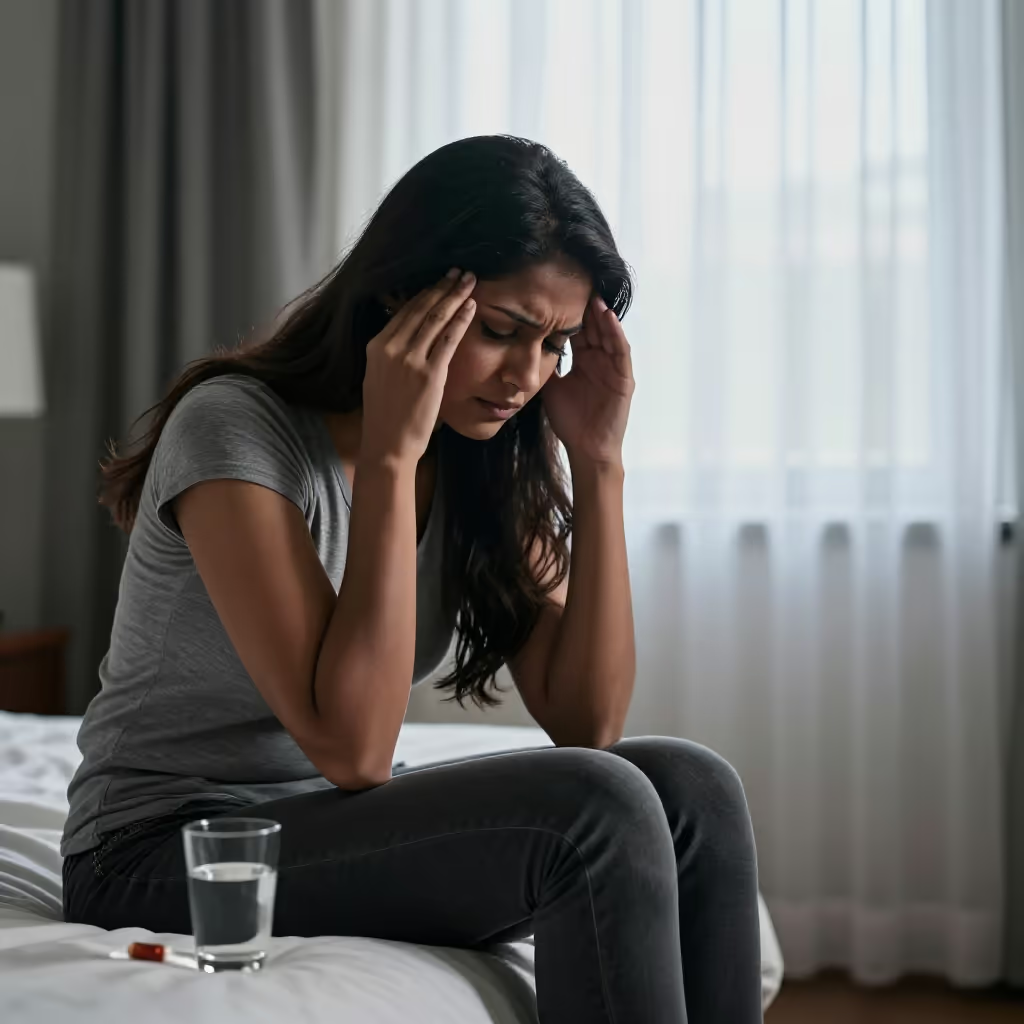
A neurological condition characterized by attacks of often one-sided, throbbing headaches. Common accompanying symptoms include nausea, vomiting, and sensitivity to light and noise.
example
Wenn sie einen Anfall von Migräne hat, muss sie sich in ein abgedunkeltes Zimmer legen.
When she has a migraine attack, she has to lie down in a darkened room.
Usage tips
Typical collocations
To talk about migraines, fixed phrases such as 'Migräne haben' (to have a migraine), 'an Migräne leiden' (to suffer from migraines), or 'einen Migräneanfall bekommen' (to get a migraine attack) are used.
EXAMPLE
Seit meiner Jugend leide ich an Migräne.
I have suffered from migraines since my youth.
Use without an article
As with other illnesses, 'Migräne' (migraine) is often used without an article when speaking generally about having it. You say 'Ich habe Migräne' (I have a migraine), not 'Ich habe die Migräne'.
EXAMPLE
Wegen starker Migräne konnte sie heute nicht zur Arbeit kommen.
Because of a severe migraine, she couldn't come to work today.
Fixed preposition
When you want to express that someone suffers from this condition, the fixed preposition 'an' with the dative is correct: 'an Migräne leiden' (to suffer from migraines).
EXAMPLE
Etwa 15 % der Bevölkerung leiden an chronischer Migräne.
About 15% of the population suffer from chronic migraines.
Compare with
near_synonym · confusable
Migräne vs Kopfschmerz
headache
'Kopfschmerz' and 'Migräne' both have to do with pain in the head. 'Kopfschmerz' is the general term for pain in the head; in everyday German, people very often say 'Kopfschmerzen'. 'Migräne' is more specific: it is a condition with severe, often attack-like headaches and sometimes nausea or sensitivity to light and noise. The words can be confused because migraines also cause headaches. But not every headache is a migraine. If you just mean head pain in general, 'Kopfschmerz' or 'Kopfschmerzen' fits. For the specific condition, you say 'Migräne'.
Migräne
Wegen ihrer Migräne legt sich Anna in ein dunkles Zimmer.
Because of her migraine, Anna lies down in a dark room.
Kopfschmerz
Nach dem langen Tag am Computer hat Paul starke Kopfschmerzen.
After the long day at the computer, Paul has a bad headache.