

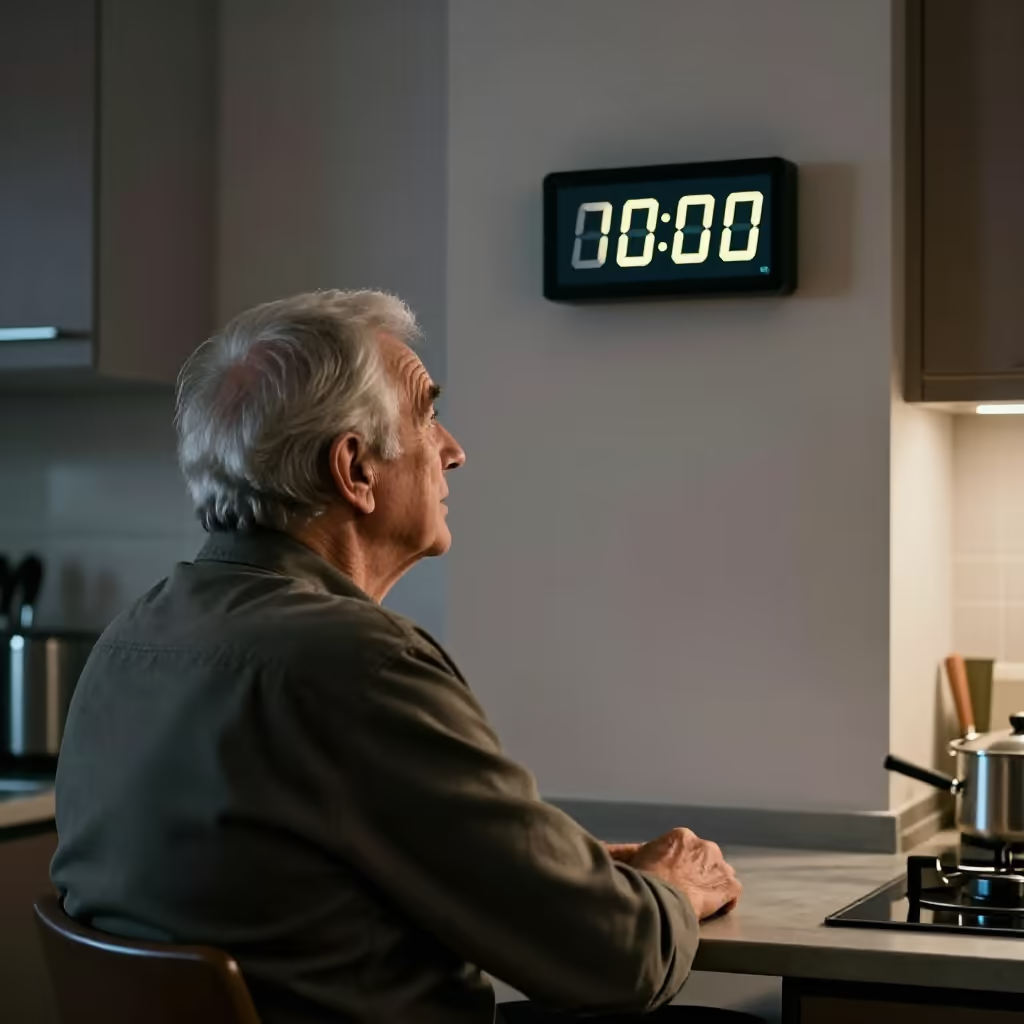
die Mitternacht
midnight
The point in time at 24:00 or 0:00; the middle of the night.
EXAMPLE
An Silvester stoßen die meisten Menschen um Mitternacht mit Sekt an.
On New Year's Eve, most people toast with sparkling wine at midnight.
midnight
Loading your saved state.
midnight
The point in time at 24:00 or 0:00; the middle of the night.
An Silvester stoßen die meisten Menschen um Mitternacht mit Sekt an.
On New Year's Eve, most people toast with sparkling wine at midnight.
The word 'Mitternacht' (midnight) is built simply: it consists of 'Mitte' (middle) and 'Nacht' (night). So it literally refers to the middle of the night.
Um Mitternacht schlagen die Kirchenglocken zwölfmal.
At midnight, the church bells strike twelve times.
To express the exact time, you use the preposition 'um': 'um Mitternacht' (at midnight). For an approximate time, you can say 'gegen Mitternacht' (around midnight / shortly before) or 'nach Mitternacht' (after midnight / shortly after).
Der letzte Zug fährt pünktlich um Mitternacht.
The last train leaves exactly at midnight.
The related adverb 'mitternachts' means 'at night, around midnight'. It describes when something typically happens.
Mitternachts ist die Stadt vollkommen still.
Around midnight, the city is completely quiet.