

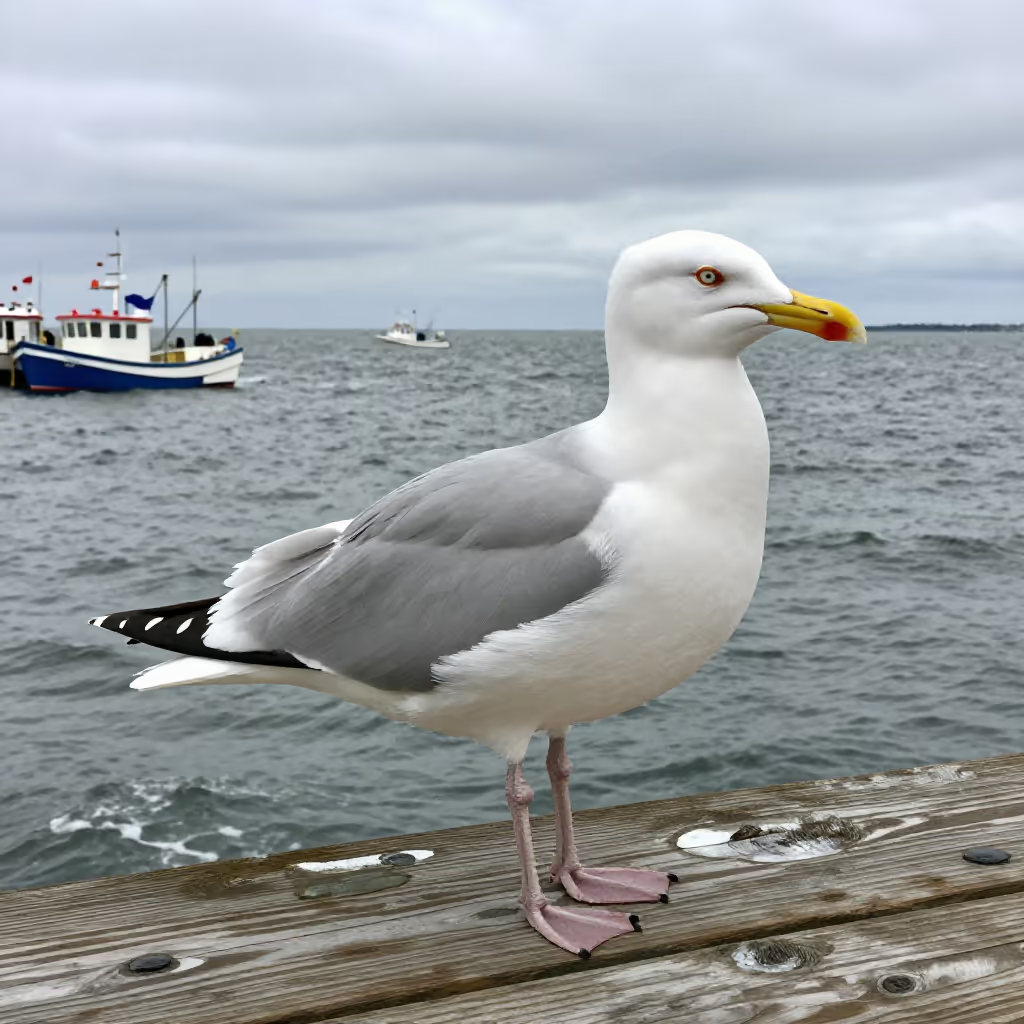
A medium-sized to large seabird that usually lives on coasts and near large bodies of water and often has white and gray feathers.
example
Am Hafen stahl eine freche Möwe ein Fischbrötchen direkt aus der Hand eines Touristen.
At the harbor, a cheeky seagull stole a fish sandwich right out of a tourist's hand.
Usage tips
Typical collocations
The word 'Möwe' (seagull) is very strongly associated with places by the water. You almost always hear and read it in connection with 'Meer' (sea), 'Küste' (coast), 'Strand' (beach), or 'Hafen' (harbor).
EXAMPLE
Am Strand flogen die Möwen über unsere Köpfe.
At the beach, the seagulls flew over our heads.
Typical verbs
The typical sounds made by seagulls are often described in German with the verb 'schreien' (to scream/cry). Other common verbs are 'fliegen' (to fly) and 'kreisen' (to circle).
EXAMPLE
Ich wachte auf, weil die Möwen vor dem Fenster schrien.
I woke up because the seagulls were crying outside the window.
Cultural context
Especially on the German coast, seagulls are often described as 'frech' (cheeky) because they steal food from tourists. This trait is a well-known cliché.
EXAMPLE
Pass auf dein Eis auf, die Möwen hier sind sehr frech!
Watch your ice cream; the seagulls here are very cheeky!