

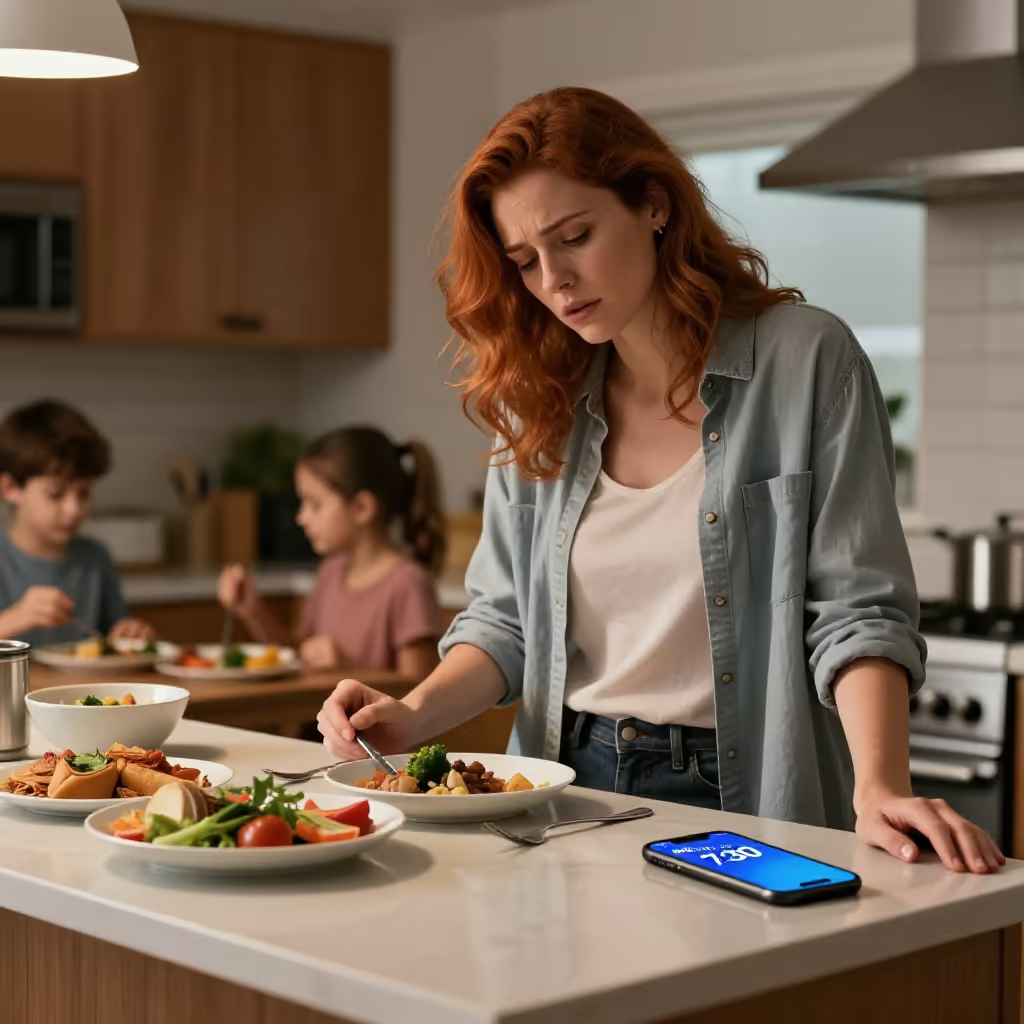
der Montagabend
Monday evening
The evening of the weekday Monday. Refers to the period from late afternoon until night.
EXAMPLE
Am Montagabend schaue ich immer meine Lieblingsserie.
On Monday evenings, I always watch my favorite series.
Monday evening
Loading your saved state.
Monday evening
The evening of the weekday Monday. Refers to the period from late afternoon until night.
Am Montagabend schaue ich immer meine Lieblingsserie.
On Monday evenings, I always watch my favorite series.
The word is clearly made up of 'Montag' (Monday) and 'Abend' (evening). This pattern is very common and also works with all other weekdays and times of day, such as 'Dienstagvormittag' (Tuesday morning) or 'Sonntagnachmittag' (Sunday afternoon).
Der Montagabend ist oft der ruhigste Abend der Woche.
Monday evening is often the quietest evening of the week.
To express a specific point in time, 'Montagabend' (Monday evening) is almost always used with the preposition 'am'. The question for this is 'Wann?' (When?).
Am Montagabend treffen wir uns zum Essen.
On Monday evening, we're meeting for dinner.
For regular, repeated actions, there is the lowercase form 'montagabends'. The 's' at the end signals repetition and means 'every Monday evening.'
Montagabends gehe ich immer zum Sport.
On Monday evenings, I always go to the gym.