01
der Morgen
morning
The first part of the day, from dawn or sunrise until noon.
example
Ich trinke jeden Morgen eine Tasse Kaffee.
I drink a cup of coffee every morning.
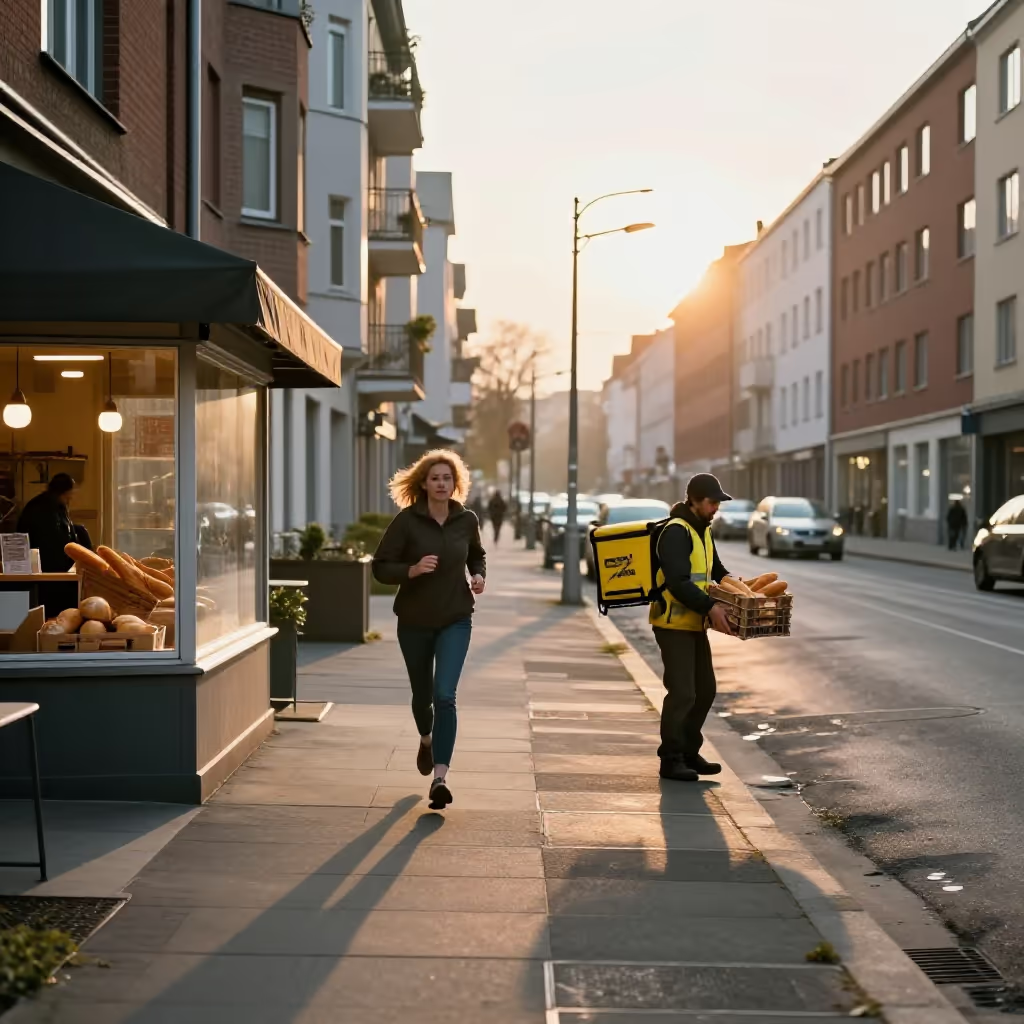
morning
Loading your saved state.
morning
The first part of the day, from dawn or sunrise until noon.
Ich trinke jeden Morgen eine Tasse Kaffee.
I drink a cup of coffee every morning.
A common mistake is confusing 'der Morgen' (the morning; noun, capitalized) with 'morgen' (tomorrow; adverb, lowercase). 'Der Morgen' refers to the time of day, while 'morgen' means the next day.
Am Morgen trinke ich gerne Tee.
In the morning, I like drinking tea.
Important adverbs are derived from the noun 'der Morgen' (the morning). 'Morgens' describes a regular action in the morning, while 'übermorgen' refers to the day after tomorrow.
Morgens gehe ich immer eine Runde joggen.
In the mornings, I always go for a jog.
To express that something takes place in the morning, German uses the preposition 'an' with the dative, usually contracted to 'am Morgen' (in the morning). For a regular action, 'jeden Morgen' (every morning) is often used.
Am Morgen des 24. Dezember war die ganze Familie aufgeregt.
On the morning of December 24, the whole family was excited.
The expression 'von heute auf morgen' is a fixed idiom. It means that something happens very suddenly or within an extremely short period of time.
Er hat seinen Job von heute auf morgen gekündigt.
He quit his job overnight.
tomorrow / morning
'morgen' and 'der Morgen' look almost the same and both have to do with time. Lowercase 'morgen' is an adverb and usually means the next day. Together with a time expression, it can also refer to the morning, for example in 'morgen früh' (tomorrow morning). Capitalized 'der Morgen' is a noun and refers to the first part of the day. Learners easily confuse the words because of the spelling. The important point is: 'morgen' says when something happens; 'der Morgen' names a time of day.
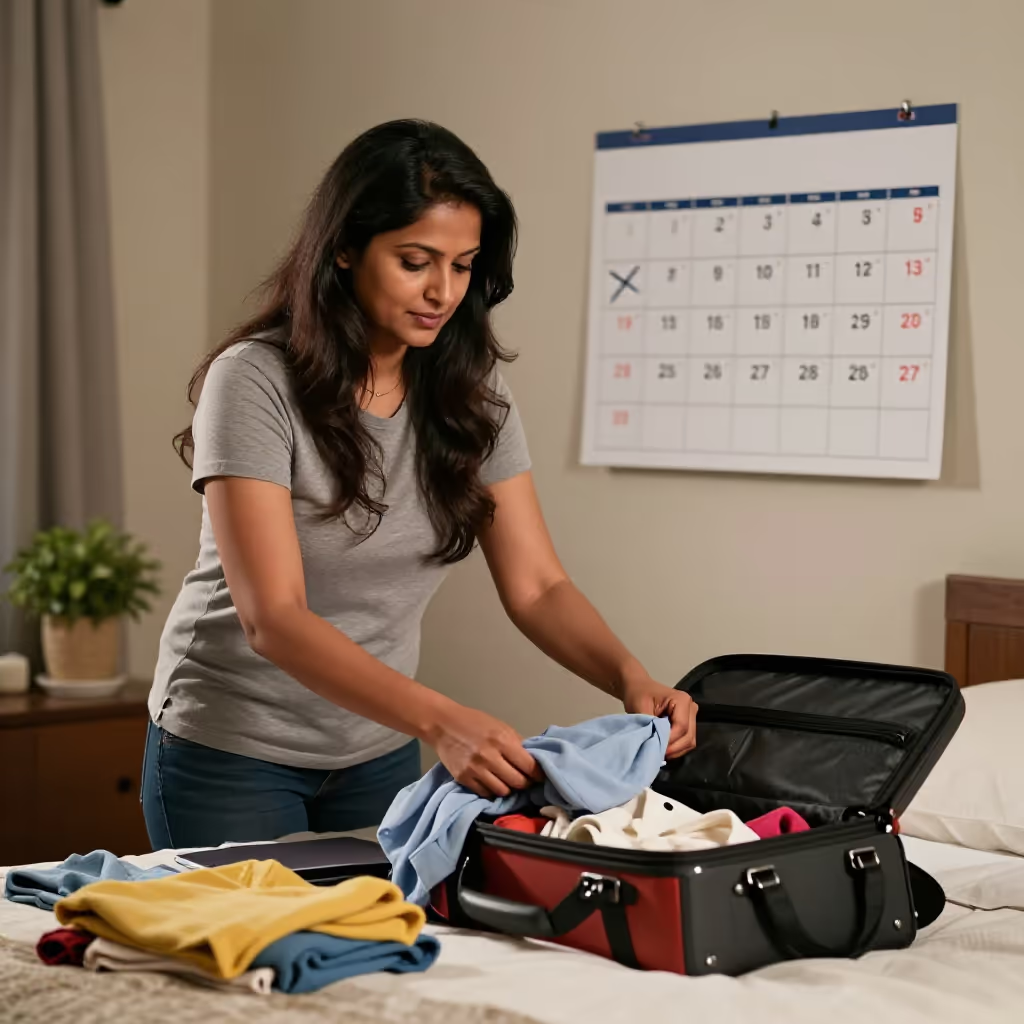
Der Morgen war kalt, aber sehr sonnig.
The morning was cold but very sunny.
Morgen besuche ich meine Schwester nach der Arbeit.
Tomorrow I’m visiting my sister after work.