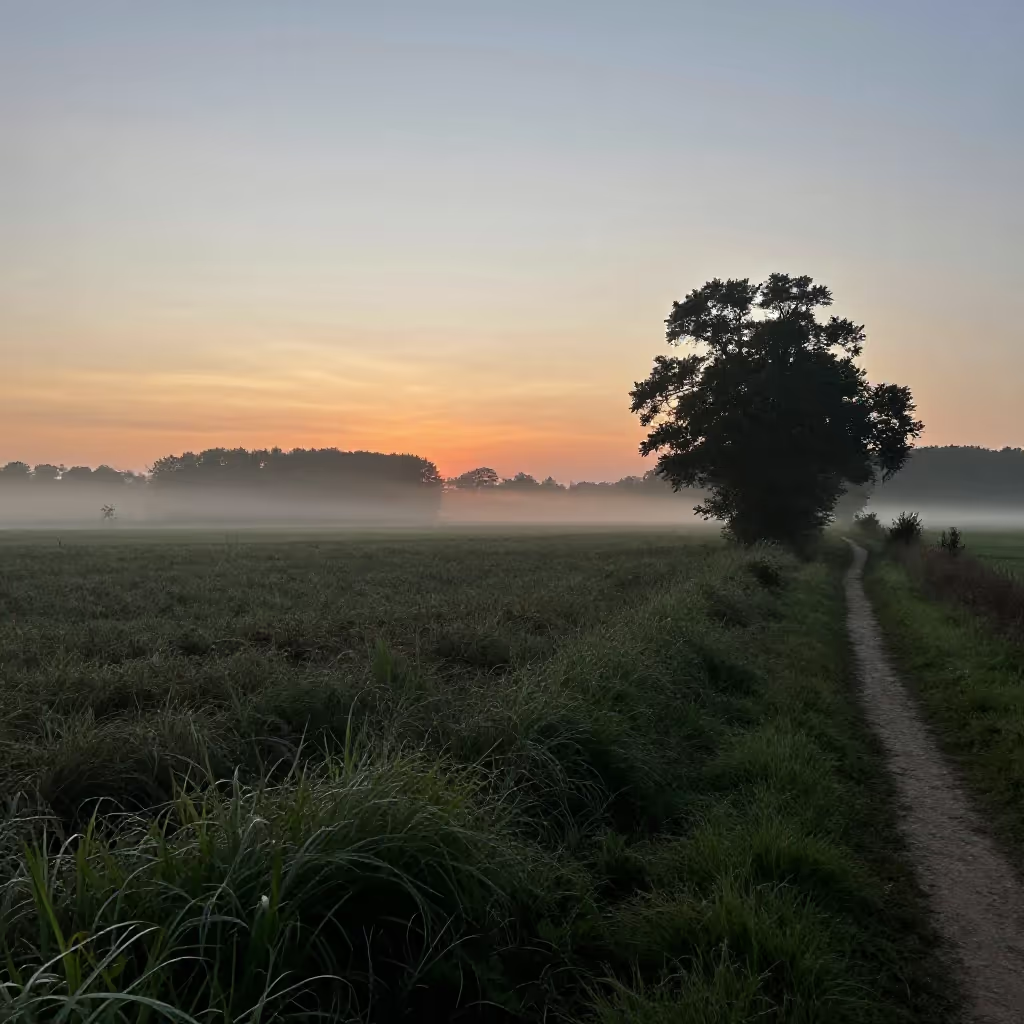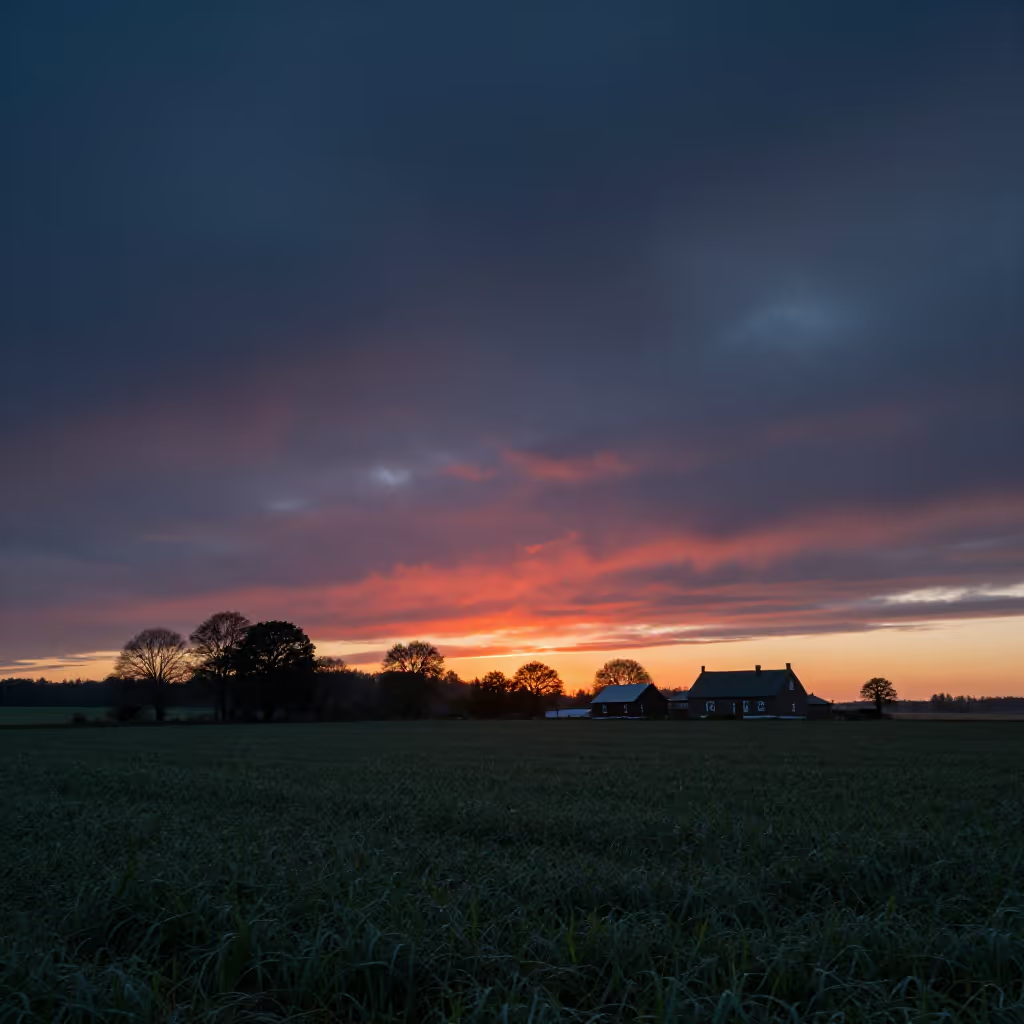
The reddish coloring of the sky in the east shortly before sunrise, caused by the scattering of sunlight in the atmosphere.
example
Wir standen früh auf, um die wunderschöne Morgenröte über den Bergen zu sehen.
We got up early to see the beautiful dawn glow over the mountains.

Usage tips
Word composition
The word is made up of 'Morgen' (morning) and 'Röte' (redness/glow). 'Röte' comes from the adjective 'rot' (red) and describes a red coloring. So it is literally the 'Röte des Morgens' (red glow of the morning).
EXAMPLE
Die frühe Morgenröte tauchte die Landschaft in ein sanftes Licht.
The early dawn glow bathed the landscape in a soft light.
Context clue
The literal meaning refers to the sky and nature. The figurative, poetic meaning can be recognized by the fact that it refers to abstract concepts such as an era, a development, or a new age.
EXAMPLE
Vom Berggipfel aus beobachteten wir die Morgenröte.
From the mountain peak, we watched the dawn glow.
Typical collocations
In the literal sense, the 'Morgenröte' (dawn glow) is often 'gesehen' (seen), 'beobachtet' (observed), or 'bewundert' (admired). It frequently appears in connection with the horizon or the mountains.
EXAMPLE
Wir bewunderten die Morgenröte am Horizont.
We admired the dawn glow on the horizon.
Register and style
The figurative meaning is very poetic and is used mainly in written language or in speeches. It is often followed by a genitive that describes what it is the beginning of.
EXAMPLE
Viele sahen in den neuen Technologien die Morgenröte einer besseren Zukunft.
Many saw the new technologies as the dawn of a better future.
Compare with
near_synonym
Morgenröte vs Aufbruch
departure / new beginning
'der Aufbruch' and 'die Morgenröte' can both describe the beginning of something new in a figurative sense. 'Aufbruch' sounds more active: people begin something, change something, or start a new movement. 'Morgenröte' is more figurative and poetic. It refers to the first bright moment of a hopeful time, like early morning. For political, social, or personal changes, 'Aufbruch' is often more direct. 'Morgenröte' fits better when you want to describe the new beginning in a beautiful or solemn way.
Morgenröte
Für die junge Bewegung war dieser Erfolg die Morgenröte einer besseren Zukunft.
For the young movement, this success was the dawn of a better future.
Aufbruch
Nach der Wahl sprachen viele Menschen von einem Aufbruch in der Stadt.
After the election, many people spoke of a new beginning in the city.