

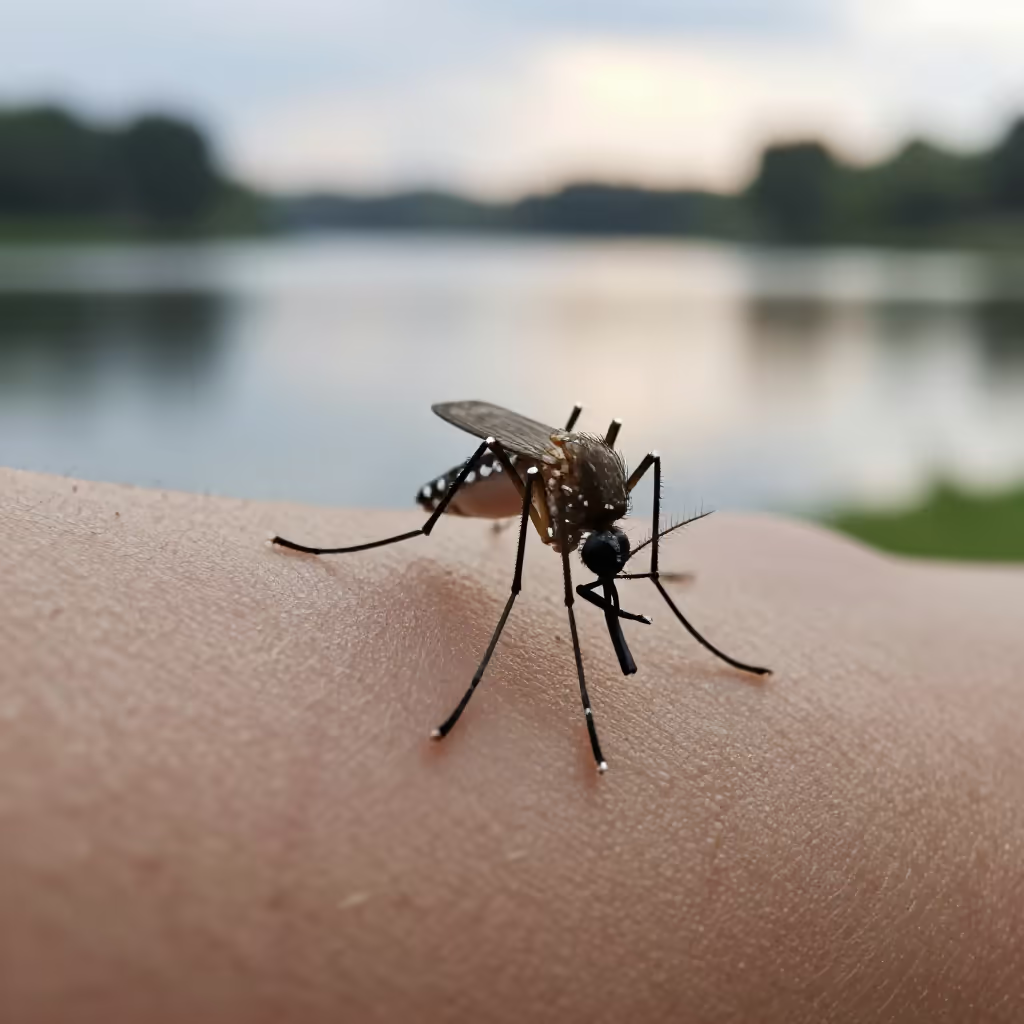
die Mücke
mosquito
A small flying insect whose females often sting humans and animals in order to suck blood.
EXAMPLE
Eine Mücke hat mich die ganze Nacht nicht schlafen lassen.
A mosquito kept me from sleeping all night.
mosquito
Loading your saved state.
mosquito
A small flying insect whose females often sting humans and animals in order to suck blood.
Eine Mücke hat mich die ganze Nacht nicht schlafen lassen.
A mosquito kept me from sleeping all night.

to make a mountain out of a molehill
A fixed idiom meaning to greatly exaggerate a small problem or insignificant matter and blow it out of proportion unnecessarily.
Es war nur eine kleine Meinungsverschiedenheit, du musst nicht gleich aus einer Mücke einen Elefanten machen.
It was just a small disagreement; you don't have to make a mountain out of a molehill right away.
Eine Mücke 'sticht' (stings/bites); it does not 'beißt' (bite). The verb 'beißen' is used for animals with teeth. This mistake is very common among learners.
Ich wurde gestern Abend von einer Mücke am Arm gestochen.
I was bitten by a mosquito on my arm yesterday evening.
Mosquitoes are known for 'summen' (buzzing) and 'stechen' (biting/stinging) people. To protect yourself, you use 'Mückenschutz' (mosquito repellent/protection) or a 'Mückennetz' (mosquito net).
Das Summen der Mücke hat mich wahnsinnig gemacht.
The buzzing of the mosquito drove me crazy.
In Austria and parts of southern Germany, the word 'Gelse' is often used for 'Mücke' (mosquito). Both words mean the same insect.
Mach das Fenster zu, sonst kommen die Gelsen herein!
Close the window, otherwise the mosquitoes will come in!
The idiom 'aus einer Mücke einen Elefanten machen' (to make a mountain out of a molehill, literally 'to make an elephant out of a mosquito') is a fixed structure. The verb 'machen' (to make) is conjugated and adapted to the person in the sentence.
Reg dich nicht so auf, du machst schon wieder aus einer Mücke einen Elefanten.
Don't get so upset; you're making a mountain out of a molehill again.
stabber / biter / engraver
Mücke and Stecher can both refer to the same stinging insect. Mücke is the neutral and generally common term, while Stecher is colloquial and emphasizes the insect's tendency to sting. Mücke is usually better in a normal description, while Stecher is more suitable in informal speech.
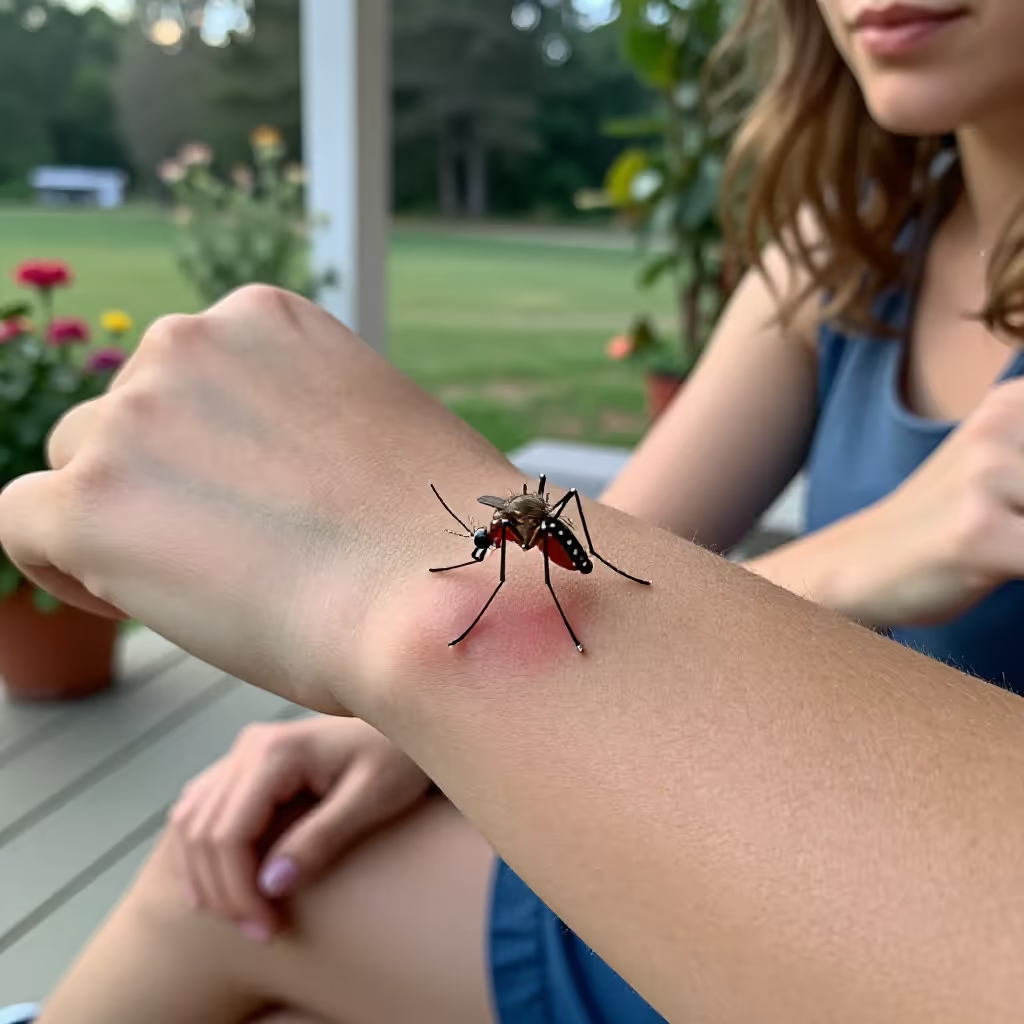
Eine Mücke hat mich gestern Abend im Garten am Arm gestochen.
A mosquito bit me on the arm in the garden yesterday evening.
Im Schlafzimmer summte die ganze Nacht ein Stecher, deshalb konnte ich kaum schlafen.
A biter buzzed in the bedroom all night, so I could hardly sleep.