

münchner
Munich
Refers to the city of Munich; originating from Munich or belonging to Munich. This adjective is not declined.
EXAMPLE
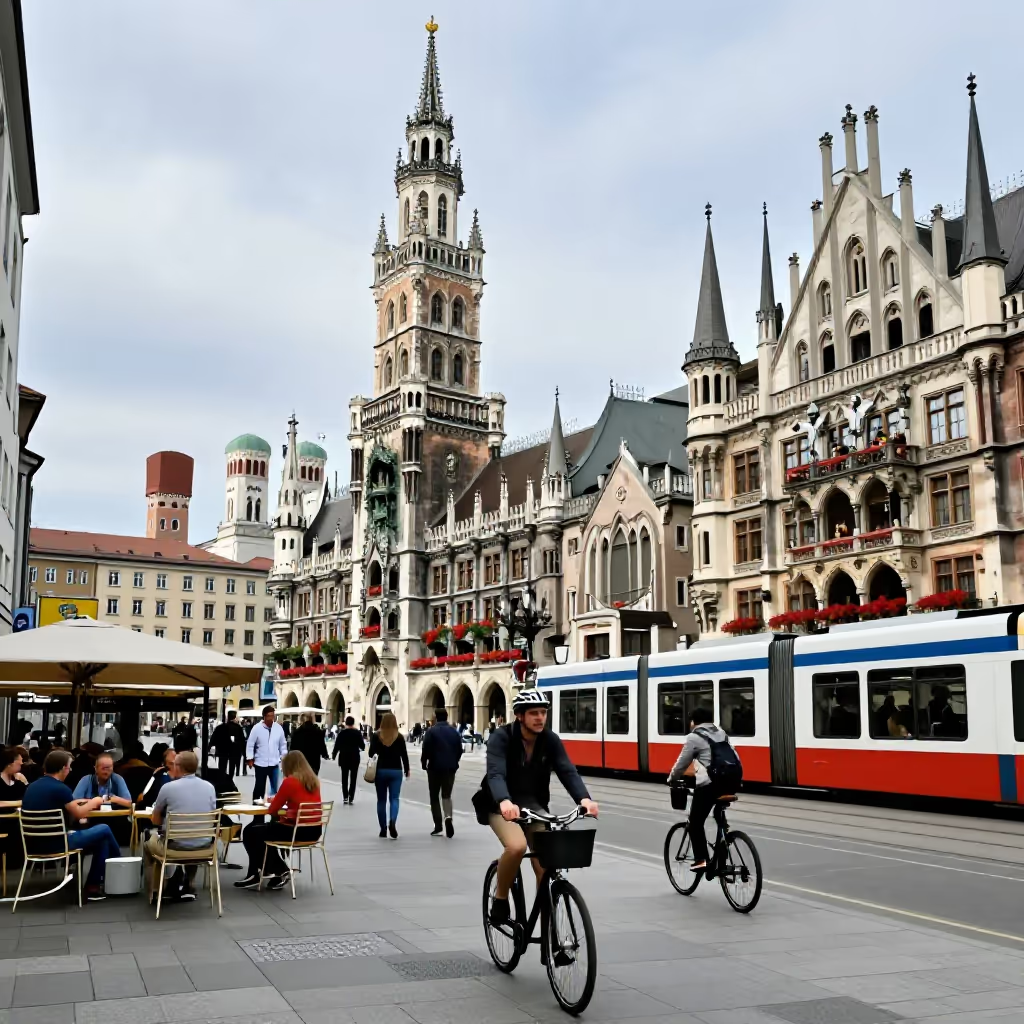
Die Münchner Frauenkirche ist das Wahrzeichen der Stadt.
The Munich Frauenkirche is the city's landmark.
Munich
Loading your saved state.
Munich
Refers to the city of Munich; originating from Munich or belonging to Munich. This adjective is not declined.
Die Münchner Frauenkirche ist das Wahrzeichen der Stadt.
The Munich Frauenkirche is the city's landmark.
Adjectives derived from city names with '-er' are never declined. The form 'münchner' (Munich) always stays the same, no matter what gender, case, or number the noun has.
Ich trinke gern ein münchner Bier.
I like drinking Munich beer.
This adjective follows the pattern 'city name + -er'. This pattern is very productive in German for expressing that something belongs to or is associated with a city.
Der Kölner Dom ist weltberühmt.
Cologne Cathedral is world-famous.
As an adjective, 'münchner' (Munich) is written in lowercase. Exceptions are proper names, such as names of sights or institutions.
Viele Touristen bewundern das Münchner Glockenspiel am Marienplatz.
Many tourists admire the Munich Glockenspiel at Marienplatz.