

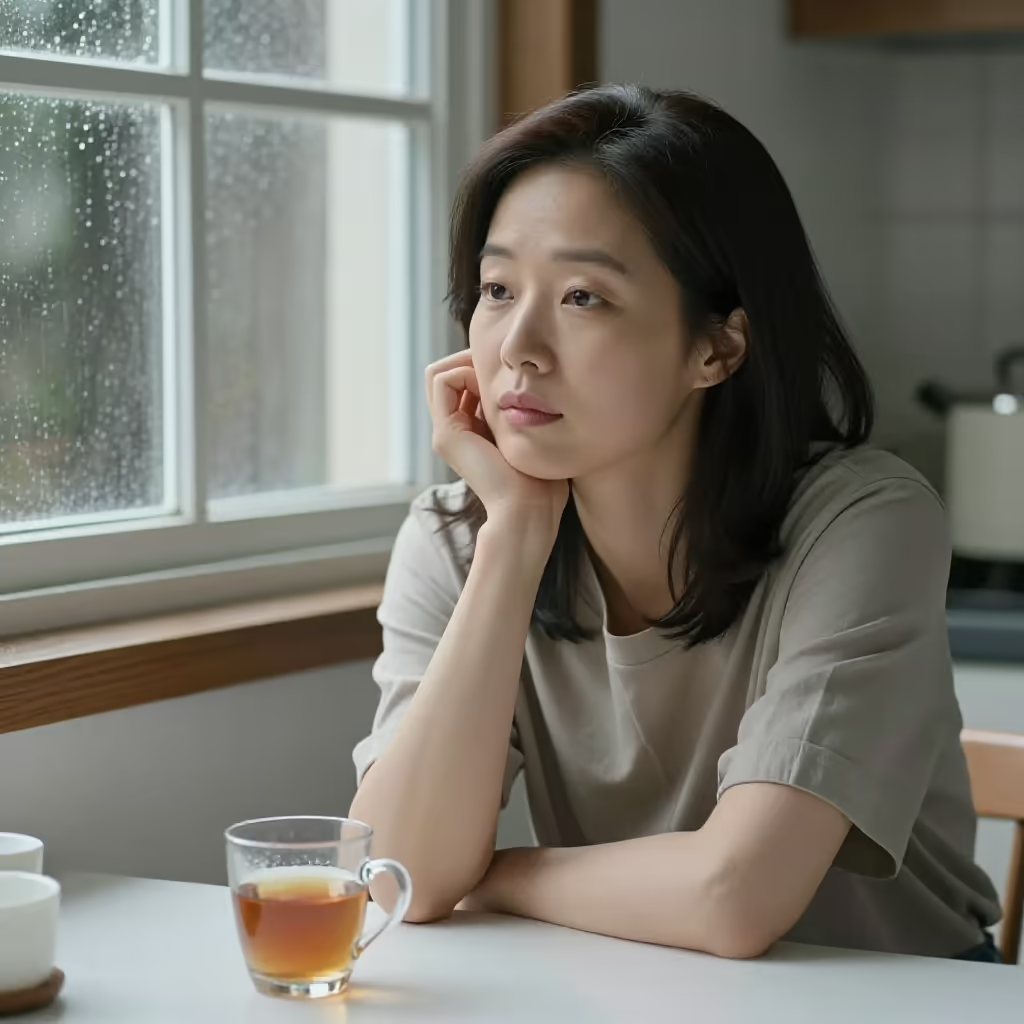
nachdenklich
thoughtful / pensive
Lost in thought and thinking deeply about something. A person in this state often appears quiet and serious.
EXAMPLE
Sein Vorschlag machte sie nachdenklich.
His suggestion made her thoughtful.
thoughtful / pensive
Loading your saved state.
thoughtful / pensive
Lost in thought and thinking deeply about something. A person in this state often appears quiet and serious.
Sein Vorschlag machte sie nachdenklich.
His suggestion made her thoughtful.
The word is derived from the verb 'nachdenken' (to think about, to reflect). The ending '-lich' turns it into an adjective that describes the state of a person who is currently thinking about something.
Nach dem Gespräch war er sehr nachdenklich.
After the conversation, he was very thoughtful.
A very typical construction is 'jemanden nachdenklich machen' (to make someone thoughtful) or 'jemanden nachdenklich stimmen' (to make someone pensive). This means that a piece of information or an event makes a person start thinking.
Der Film hat mich sehr nachdenklich gemacht.
The film made me very thoughtful.
'Nachdenklich' (thoughtful/pensive) often describes a person's facial expression or mood. Common combinations are 'ein nachdenklicher Blick' (a thoughtful look), 'eine nachdenkliche Miene' (a thoughtful expression), or 'nachdenklich werden' (to become thoughtful).
Mit nachdenklicher Miene blickte er aus dem Fenster.
With a thoughtful expression, he looked out the window.
thinking
Nachdenklich describes a state or the impression of a person who is quietly and seriously reflecting on something. Denkend places more emphasis on the ongoing thought process during an action. Use nachdenklich for the visible mood and denkend for thinking that accompanies an activity.

Lena saß nachdenklich am Fenster und dachte über die schwierige Aufgabe nach.
Lena sat thoughtfully by the window, thinking about the difficult task.
Lena ging die schwierige Aufgabe denkend Schritt für Schritt durch.
Lena worked through the difficult task step by step while thinking it over.