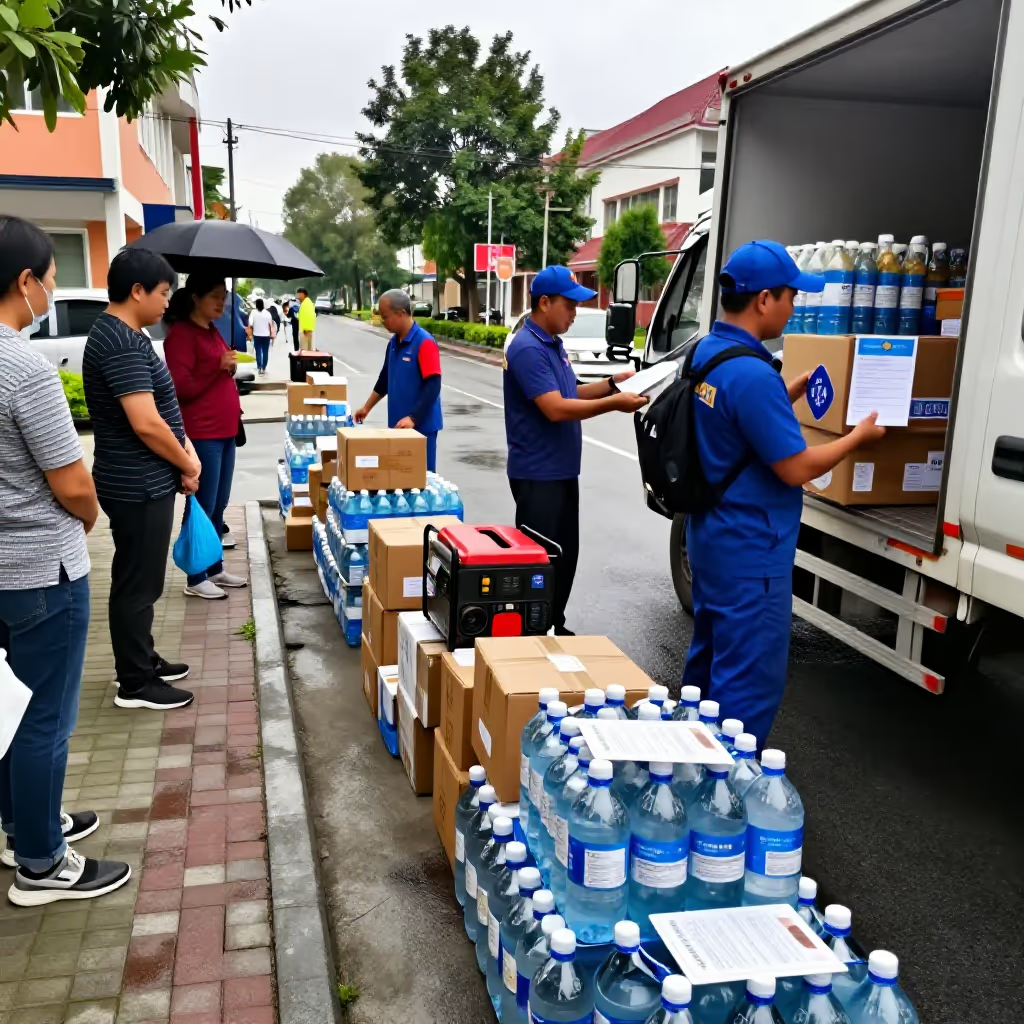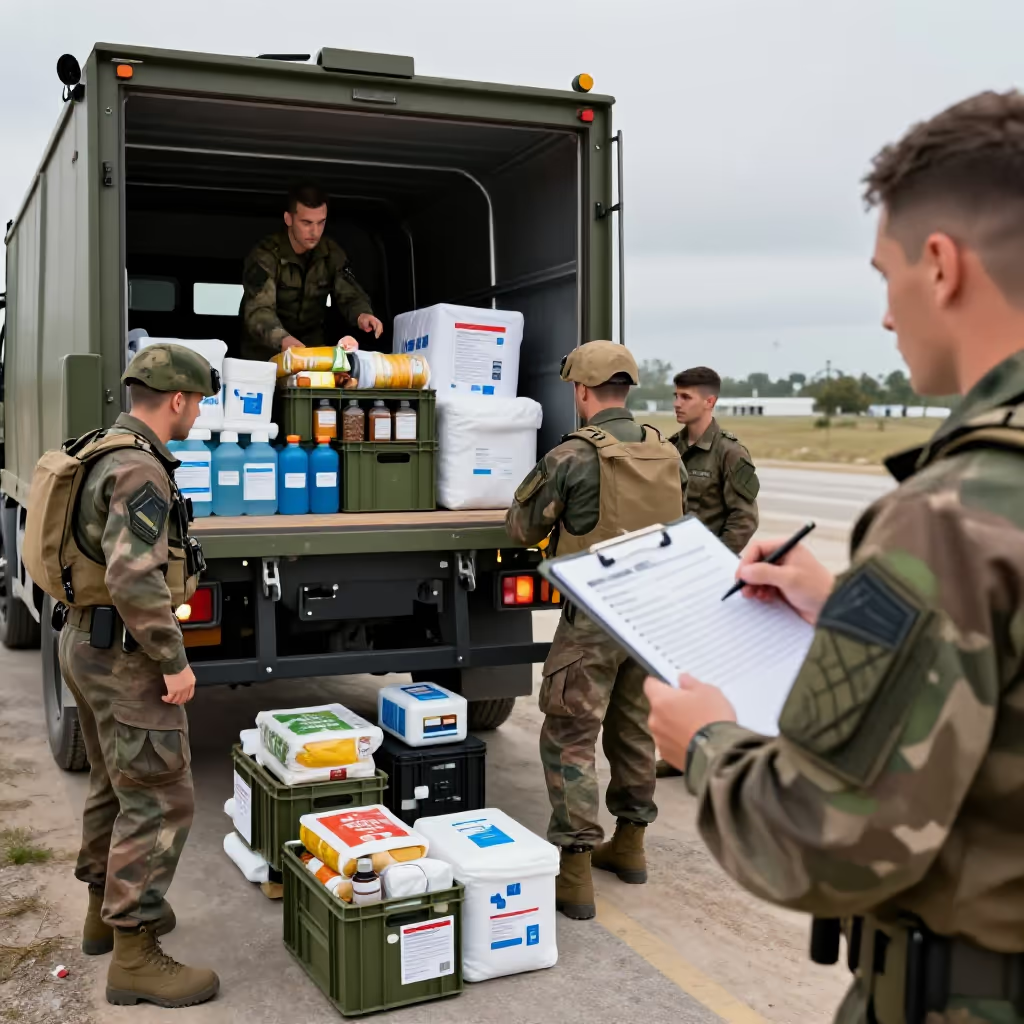
The supply of troops or an organization with material, food, or personnel needed to continue operations. Usually used in a military or logistical context.
example
Der Nachschub an Munition für die Front wurde unterbrochen.
The supply of ammunition for the front was cut off.

Usage tips
Word composition
The word is made up of 'nach' (after/along) and 'Schub' (push/batch). A 'Schub' is a delivery or a sudden movement. So 'Nachschub' (supplies/resupply) literally describes something that is delivered afterward or 'pushed in after' in order to make up for a shortage.
EXAMPLE
Ohne Nachschub an Baumaterialien kann die Baustelle nicht weitermachen.
Without a new supply of building materials, the construction site cannot continue.
Use in the singular
'Nachschub' (supplies/resupply) is almost always used in the singular, even when it refers to many different things or a large quantity. A plural form practically does not exist in general usage.
EXAMPLE
Die Supermärkte bekommen täglich frischen Nachschub.
The supermarkets receive fresh supplies every day.
Preposition 'an'
To specify what the supplies consist of, the preposition 'an' with the dative is very commonly used. The structure is: Nachschub + an + dem/der/den + noun.
EXAMPLE
Es mangelt an Nachschub an qualifizierten Arbeitskräften.
There is a lack of new supply of qualified workers.
Context clue
You can recognize this meaning from the military or logistical context. Words like 'Truppen' (troops), 'Front' (front), 'Armee' (army), 'Material' (material), or 'Munition' (ammunition) clearly point to the supply of units.
EXAMPLE
Die Versorgungslinien für den Nachschub wurden angegriffen.
The supply lines for the resupply were attacked.
Compare with
near_synonym · confusable
Nachschub vs Versorgung
supply / care
'die Versorgung' and 'der Nachschub' can both mean that needed things reach a group. 'die Versorgung' is the more general term. It fits a regular and important provision of things, for example water, food, or electricity. 'der Nachschub' emphasizes that something new is arriving because supplies are running low or the work needs to continue. The word often sounds more logistical or military, but it can also be used in everyday language for new deliveries. The words can be confused because 'Nachschub' can be a kind of 'Versorgung'. When you mean the whole reliable provision, 'Versorgung' fits. When you mean an additional delivery, 'Nachschub' fits.
Nachschub
Beim Stadtfest kam schnell Nachschub, als die Getränke fast ausverkauft waren.
At the city festival, new supplies arrived quickly when the drinks were almost sold out.
Versorgung
In der Berghütte ist die Versorgung mit Lebensmitteln im Winter nicht immer einfach.
At the mountain hut, the supply of food is not always easy in winter.