

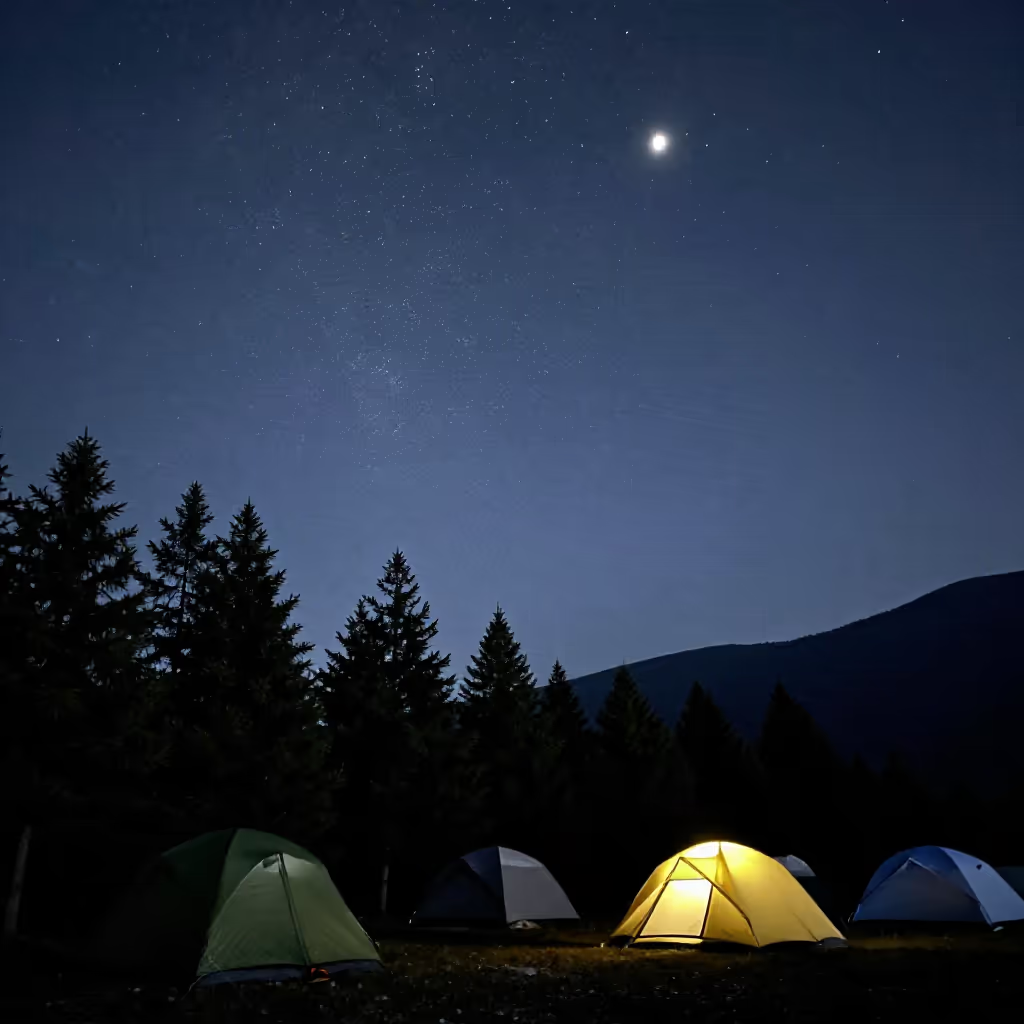
The sky as it is seen during the night, often with stars, the moon, and planets.
example
An einem klaren Abend kann man am Nachthimmel Tausende von Sternen erkennen.
On a clear evening, you can make out thousands of stars in the night sky.
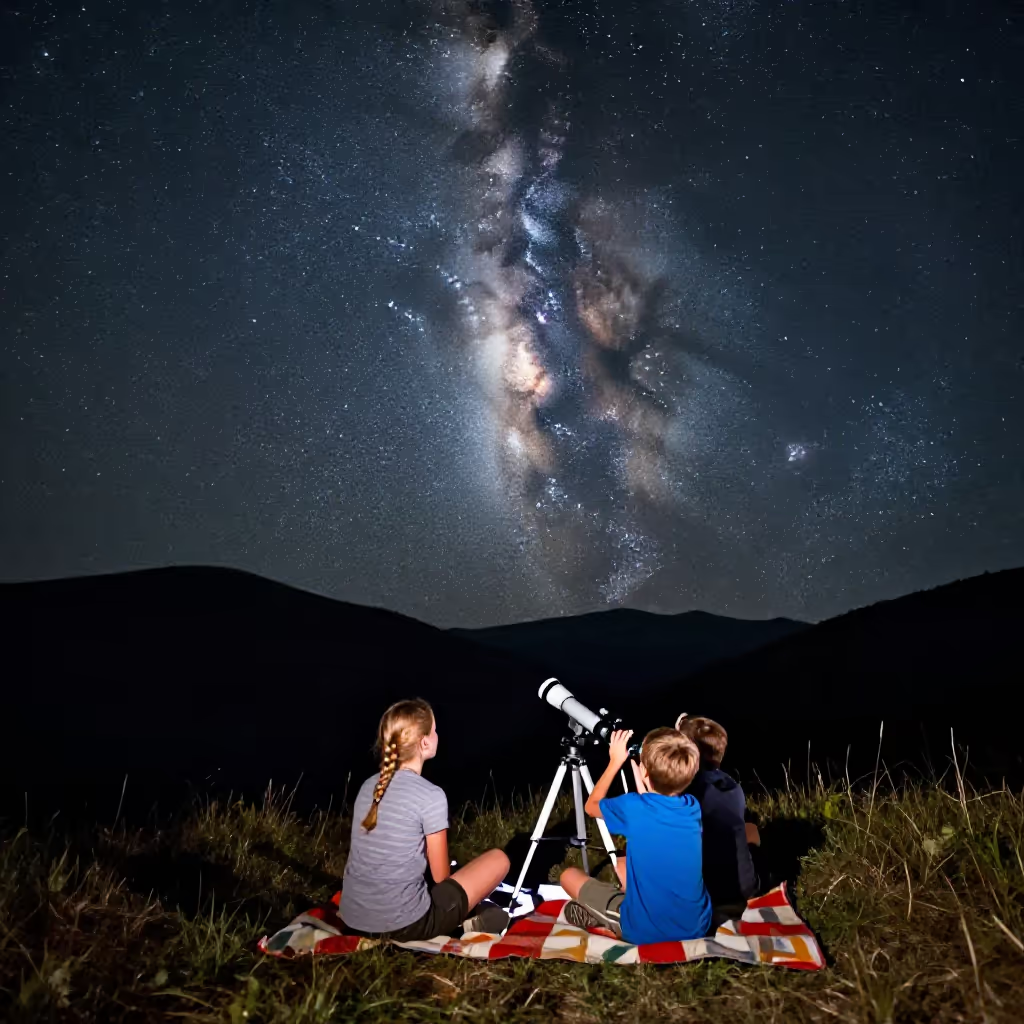
Usage tips
Compound word
This word is a simple compound made up of 'Nacht' (night) and 'Himmel' (sky). So it describes exactly what it literally means: the sky at night.
EXAMPLE
Der Vollmond erhellte den gesamten Nachthimmel.
The full moon lit up the entire night sky.
Typical preposition
When describing what can be seen in the sky, the preposition 'am' is almost always used.
EXAMPLE
Am Nachthimmel funkelten unzählige Sterne.
Countless stars sparkled in the night sky.
Typical collocations
Common adjectives are 'klar' (clear), 'dunkel' (dark), and 'sternenklar' (starry / clear and full of stars). Typical verbs used in this context are 'beobachten' (to observe), 'leuchten' (to shine), and 'funkeln' (to sparkle).
EXAMPLE
Durch das Teleskop beobachteten wir den klaren Nachthimmel.
Through the telescope, we observed the clear night sky.
Compare with
near_synonym · confusable
Nachthimmel vs Himmel
sky / heaven
'der Himmel' and 'der Nachthimmel' both refer to the space above us that we can see. 'Himmel' is more general and fits any time of day: morning, daytime, evening, or night. 'Nachthimmel' is more precise and means only the sky at night, often with stars, the moon, or planets. Learners may confuse the words because the night sky is also a sky. If the night is important or you are describing stars, 'Nachthimmel' is more precise. Otherwise, 'Himmel' is usually enough.
Nachthimmel
Auf dem Land kann man am Nachthimmel besonders viele Sterne erkennen.
In the countryside, you can make out especially many stars in the night sky.
Himmel
In der Pause haben wir den dunklen Himmel über den Bergen gesehen.
During the break, we saw the dark sky over the mountains.