

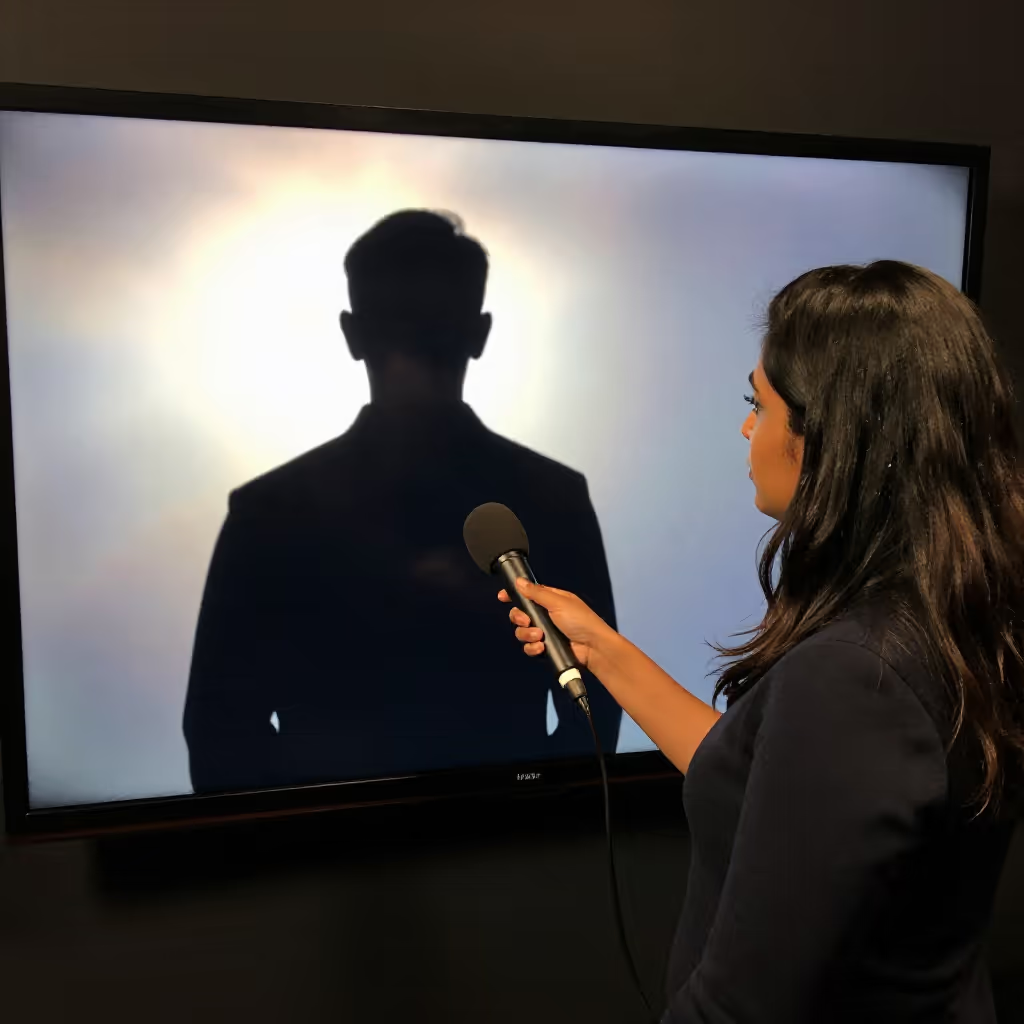
namenlos
nameless
Without a known name; anonymous.
EXAMPLE
Das Denkmal ehrt die namenlosen Soldaten, die im Krieg gefallen sind.
The monument honors the nameless soldiers who fell in the war.
nameless
Loading your saved state.
nameless
Without a known name; anonymous.
Das Denkmal ehrt die namenlosen Soldaten, die im Krieg gefallen sind.
The monument honors the nameless soldiers who fell in the war.

indescribable
Present to such a high degree that it can hardly be put into words; indescribable, unspeakable.
Als sie den Hauptgewinn sah, überkam sie eine namenlose Freude.
When she saw the grand prize, she was overcome with indescribable joy.
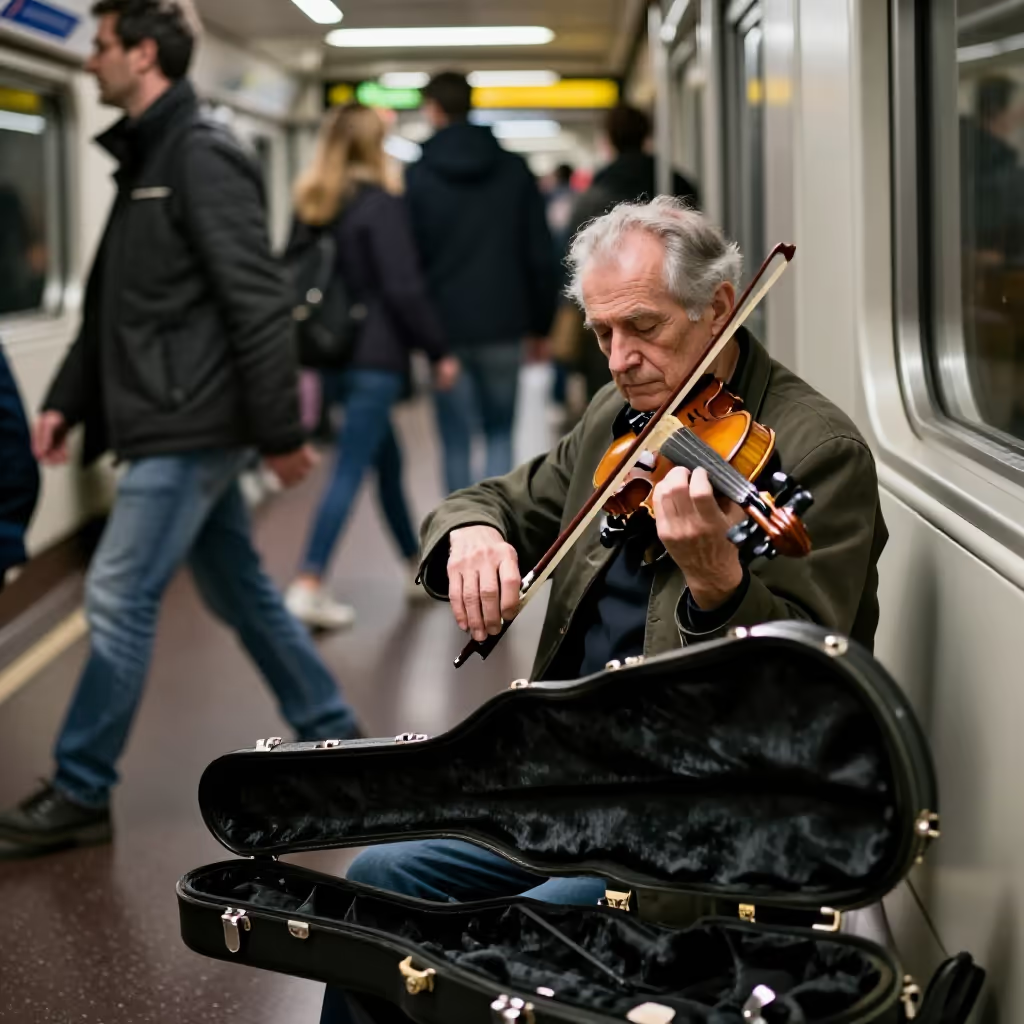
unknown
Unknown, insignificant, and without fame or reputation.
Er war ein namenloser Dichter, dessen Werke erst nach seinem Tod entdeckt wurden.
He was an unknown poet whose works were only discovered after his death.
The word is made up of 'Namen' (names) and the ending '-los' (-less). The ending '-los' always means 'without', so 'namenlos' (nameless) literally means 'without a name'.
Ein anonymer Spender hinterließ eine große Summe, er wollte namenlos bleiben.
An anonymous donor left a large sum; he wanted to remain nameless.
The meaning of 'namenlos' (nameless) depends on the noun. In connection with people, it means 'anonymous' or 'unknown'. In connection with feelings or states, it means 'indescribable' or 'extreme'.
Ein namenloser Held rettete das Kind aus dem brennenden Haus.
A nameless hero rescued the child from the burning house.
In the meaning of 'unbeschreiblich' (indescribable), 'namenlos' (nameless) is often combined with strong emotions. Typical expressions are 'namenlose Freude' (indescribable joy), 'namenloses Leid' (unspeakable suffering), 'namenlose Wut' (indescribable rage), or 'namenlose Enttäuschung' (indescribable disappointment).
Ihre Erleichterung nach der Prüfung war namenlos.
Her relief after the exam was indescribable.
The use of 'namenlos' (nameless) to intensify feelings is typical of written language or an elevated, emotional style. It is used less often in normal everyday conversation.
In seinen Augen spiegelte sich eine namenlose Trauer.
A nameless sadness was reflected in his eyes.
unknown
Unbekannt (unknown) means that one does not know a person or thing or knows nothing about it. Namenlos (nameless), on the other hand, specifically emphasizes that no name is known. A nameless person can therefore be known in other respects.

Der Mann auf dem Foto bleibt im Bericht namenlos.
The man in the photo remains nameless in the report.
Der Mann auf dem Foto ist den Ermittlern völlig unbekannt.
The man in the photo is completely unknown to the investigators.