

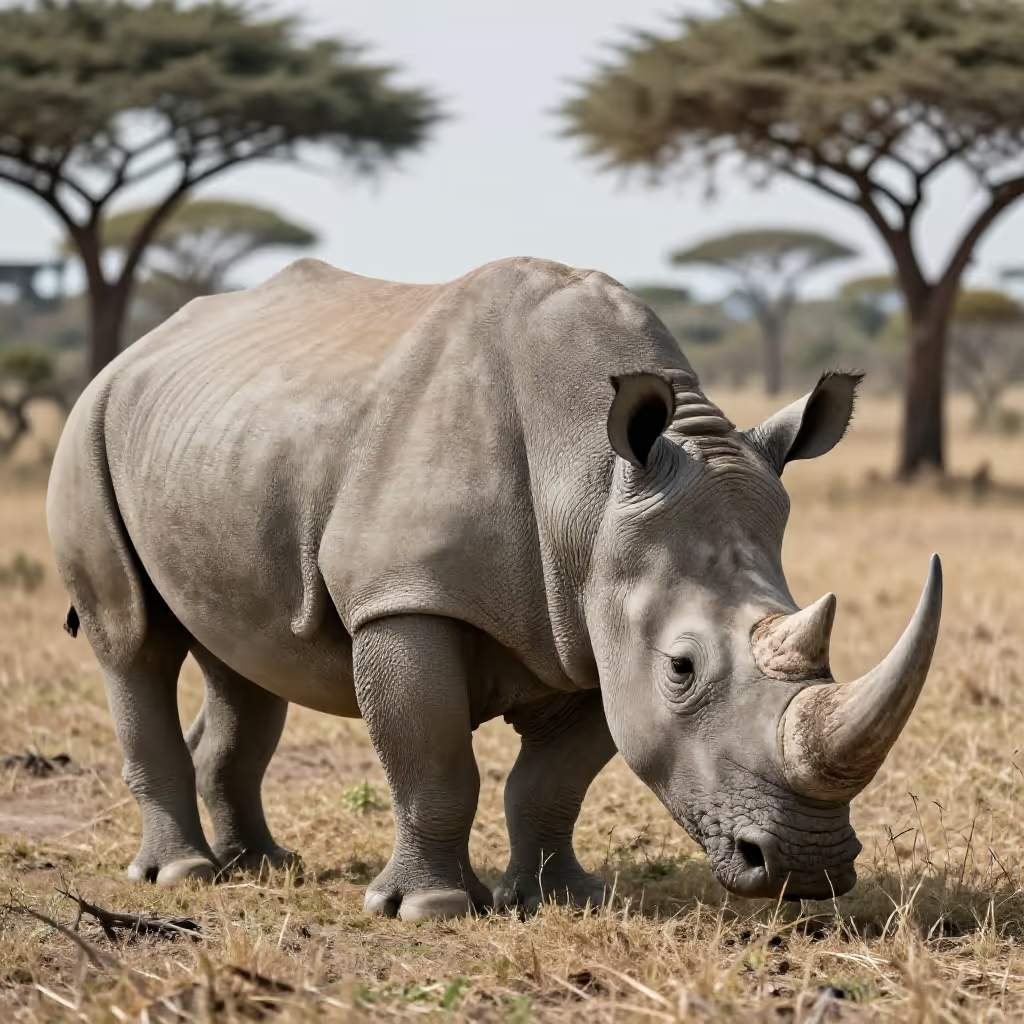
A large, herbivorous mammal from Africa and Asia, characterized by one or two horns on its nose.
example
Das Nashorn ist wegen seines Horns stark von Wilderei bedroht.
The rhinoceros is severely threatened by poaching because of its horn.
Usage tips
Compound word
'Nashorn' (rhinoceros) is a compound word made up of 'die Nase' (nose) and 'das Horn' (horn). So the name describes the animal's most striking feature very visually: a horn on its nose.
EXAMPLE
Kinder können sich den Namen „Nashorn“ leicht merken, wenn sie an die Nase und das Horn denken.
Children can easily remember the name 'Nashorn' (rhinoceros) if they think of the nose and the horn.
Article help
The article of compound nouns is always determined by the last word. Since it is 'das Horn' (the horn), it is also 'das Nashorn' (the rhinoceros).
EXAMPLE
Es heißt „der Apfel“ und „der Baum“, also „der Apfelbaum“; genauso heißt es „das Horn“ und daher „das Nashorn“.
It is 'der Apfel' (the apple) and 'der Baum' (the tree), so 'der Apfelbaum' (the apple tree); in the same way, it is 'das Horn' (the horn) and therefore 'das Nashorn' (the rhinoceros).
Typical collocations
In connection with rhinoceroses, you often read or hear that they are 'vom Aussterben bedroht' (threatened with extinction) or that it is about protection from 'Wilderei' (poaching).
EXAMPLE
Viele Organisationen setzen sich für den Schutz der Nashörner ein.
Many organizations campaign for the protection of rhinoceroses.