

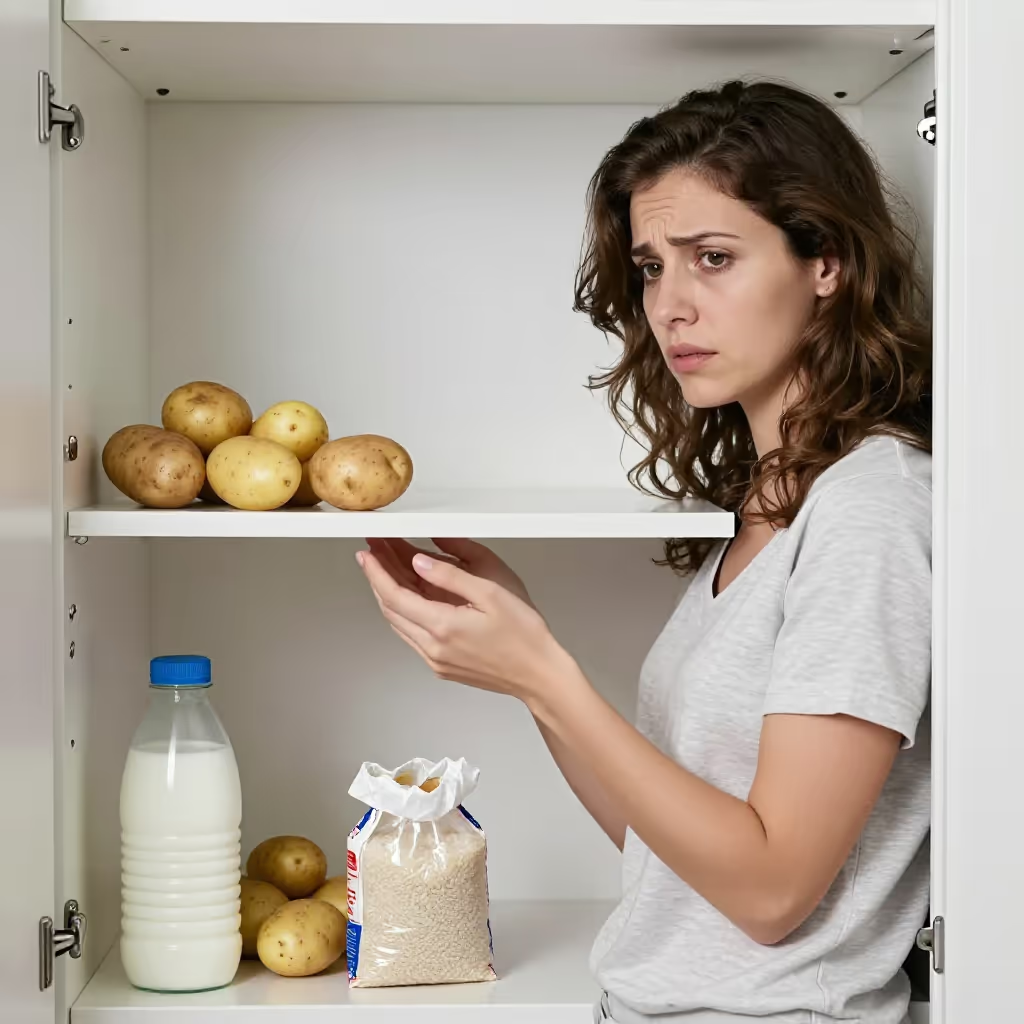
zur Neige gehen
to be running out
To be almost used up; to be close to the end. Used for supplies, resources, or also time.
EXAMPLE
Unsere Geduld geht langsam zur Neige.
Our patience is slowly running out.
end / incline
Loading your saved state.
to be running out
To be almost used up; to be close to the end. Used for supplies, resources, or also time.
Unsere Geduld geht langsam zur Neige.
Our patience is slowly running out.

incline
An inclination or slant; the lowering or bending of something. This meaning is outdated and is now used almost only in literary language.
Mit einer kaum merklichen Neige des Kopfes signalisierte er seine Zustimmung.
With a barely noticeable incline of his head, he signaled his agreement.
The noun 'die Neige' is related to the verb 'neigen' (to tilt / to bend), which means 'kippen' (to tip) or 'sich beugen' (to bend). The phrase 'zur Neige gehen' (to be running out) describes figuratively how the contents of a bottle come to an end when you tilt it.
Er neigte die Flasche, um den letzten Rest Wein einzuschenken.
He tilted the bottle to pour the last bit of wine.
In modern German, 'Neige' is used almost exclusively in the fixed expression 'zur Neige gehen' (to be running out) or 'sich dem Ende zuneigen' (to be drawing to a close). The word hardly ever appears on its own anymore.
Der Winter geht langsam zur Neige und der Frühling beginnt.
Winter is slowly drawing to a close, and spring is beginning.
The phrase 'zur Neige gehen' (to be running out) is often used for abstract things like 'Geduld' (patience), 'Zeit' (time), or 'Kraft' (strength), but also for concrete supplies like 'Geld' (money), 'Essen' (food), or 'Wein' (wine).
Nach dem langen Marsch gingen seine Kräfte zur Neige.
After the long march, his strength was running out.
The meaning 'Neigung' (inclination) or 'Senkung' (lowering) is outdated and is used only in very elevated or literary language. You should not use this meaning in everyday speech.
In dem historischen Roman erwiderte sie seinen Gruß mit einer leichten Neige des Hauptes.
In the historical novel, she returned his greeting with a slight inclination of her head.
inclination
Neigung and Neige can both describe a sloping position. Neigung is the normal word for this in modern standard German; Neige is outdated in this meaning and now appears almost only in literary language. In everyday speech, Neigung is therefore usually the appropriate word.

Der Dichter beschreibt die sanfte Neige des alten Daches.
The poet describes the gentle incline of the old roof.
Der Handwerker prüft die Neigung des alten Daches.
The tradesperson checks the inclination of the old roof.