

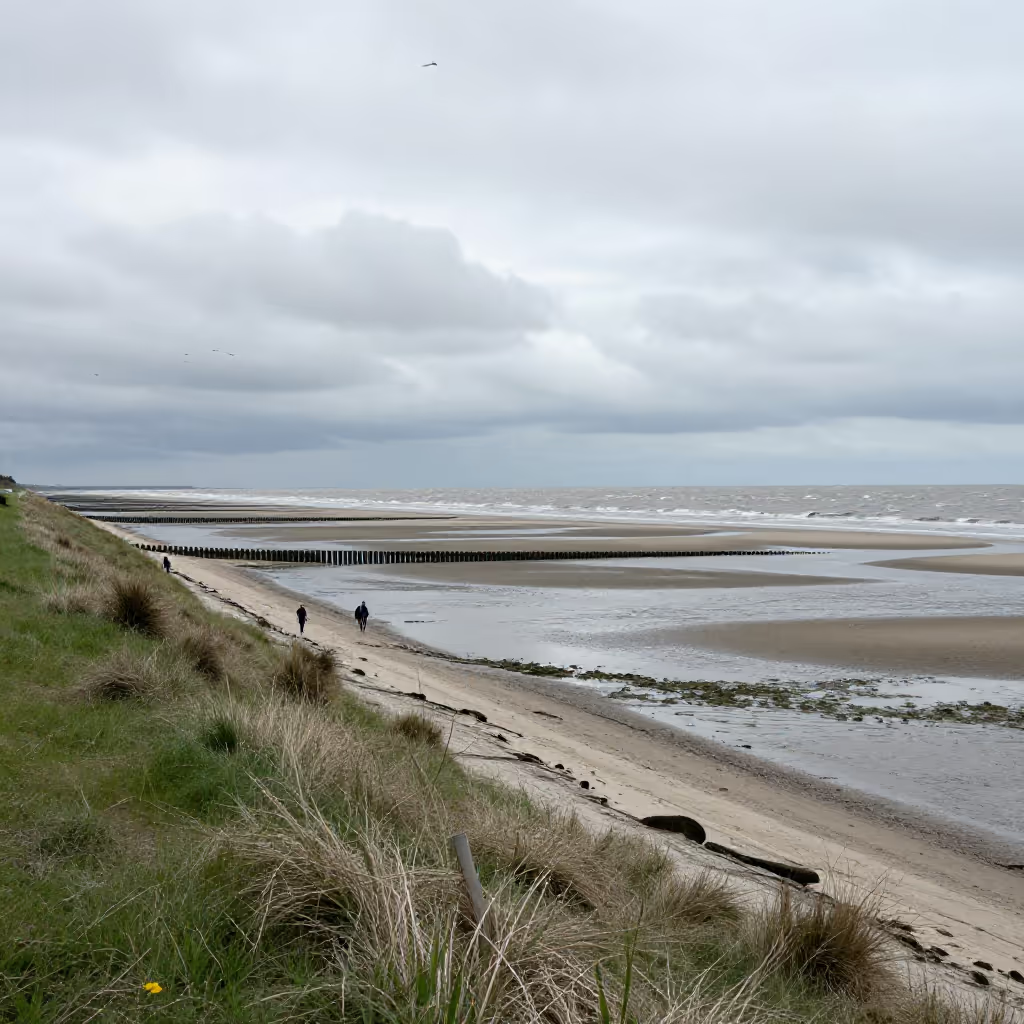
The coastal strip where the land meets the North Sea. This includes beaches, dikes, the Wadden Sea, and adjacent areas.
example
Wir verbringen unseren Sommerurlaub jedes Jahr an der deutschen Nordseeküste.
We spend our summer vacation on the German North Sea coast every year.
Usage tips
Word composition
The word is made up of three parts: 'Nord' (north), 'See' (sea), and 'Küste' (coast). So it literally describes the coast that lies on the North Sea.
EXAMPLE
An der Nordseeküste gibt es viele Leuchttürme.
There are many lighthouses on the North Sea coast.
Correct preposition
To describe a place on the coast, you use the preposition 'an' (on/at). So you go on vacation 'an der Nordseeküste' (on the North Sea coast).
EXAMPLE
Wir haben ein kleines Ferienhaus direkt an der Nordseeküste gemietet.
We rented a small vacation home right on the North Sea coast.
Typical collocations
Common activities connected with the North Sea coast are 'Urlaub machen' (to go on vacation), 'spazieren gehen' (to go for a walk), or 'entlangfahren' (to drive along).
EXAMPLE
Im Sommer fahren viele Touristen die Nordseeküste entlang.
In summer, many tourists drive along the North Sea coast.
Compare with
confusable
Nordseeküste vs Nordsee
North Sea
'die Nordsee' and 'die Nordseeküste' are closely connected, but they do not mean the same thing. 'die Nordsee' is the sea itself. 'die Nordseeküste' is the strip of land along the edge of this sea, for example beaches, dikes, and seaside towns. The words can be confused because on vacation people often say that they are going 'an die Nordsee' (to the North Sea), even though they actually mean they are going to the coast. Strictly speaking, you swim in the North Sea, but you walk along the North Sea coast.
Nordseeküste
Maria besuchte wegen der frischen Luft die Nordseeküste.
Maria visited the North Sea coast because of the fresh air.
Nordsee
Im Sommer baden viele Urlauber in der Nordsee.
In summer, many vacationers swim in the North Sea.