

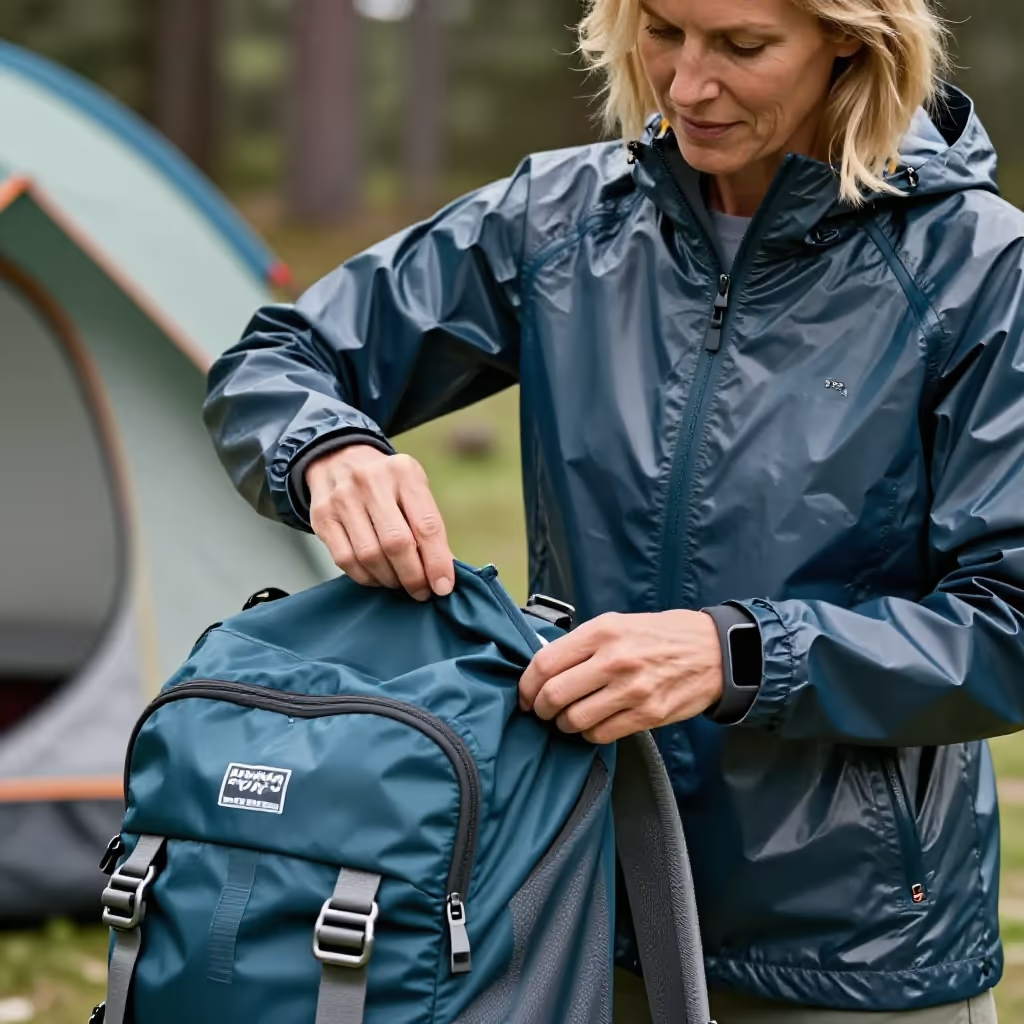
Made of or manufactured from the synthetic material nylon. This adjective is usually used attributively and often undeclined.
example
Für die Wanderung zog er seine alten, aber robusten nylone Socken an.
For the hike, he put on his old but sturdy nylon socks.
Usage tips
Undeclined form
The adjective 'Nylon' (nylon) is often used like a noun before another noun and is not declined. This form is very common, especially in product descriptions.
EXAMPLE
Sie trägt eine Nylon-Strumpfhose.
She is wearing nylon tights.
Alternative with 'aus'
To describe that something is made of the material nylon, you can also simply use the preposition 'aus' (made of/from). This construction is always correct and easy to form.
EXAMPLE
Die Jacke ist aus Nylon und daher sehr leicht.
The jacket is made of nylon and is therefore very light.
Typical products
The word 'Nylon' (nylon) is often combined with clothing or technical products known for their tear resistance and lightness. Typical examples are stockings, ropes, or tents.
EXAMPLE
Nylonstrümpfe waren in den 50er Jahren eine modische Revolution.
Nylon stockings were a fashion revolution in the 1950s.
Compare with
near_synonym · confusable
Nylon vs künstlich
artificial
'künstlich' and 'Nylon' are connected because nylon is an artificially produced material. 'künstlich' describes in general that something does not occur naturally, but is made by humans. 'Nylon', on the other hand, names a specific synthetic material. The words can be confused when talking about clothing, bags, or fabrics. 'künstlich' describes the type of material in general; 'Nylon' says more precisely what material something is made of.
Nylon
Für die Reise kauft Tom eine leichte Tasche aus Nylon.
For the trip, Tom buys a lightweight bag made of nylon.
künstlich
Diese Jacke besteht aus einem künstlichen Stoff und trocknet sehr schnell.
This jacket is made of an artificial fabric and dries very quickly.