

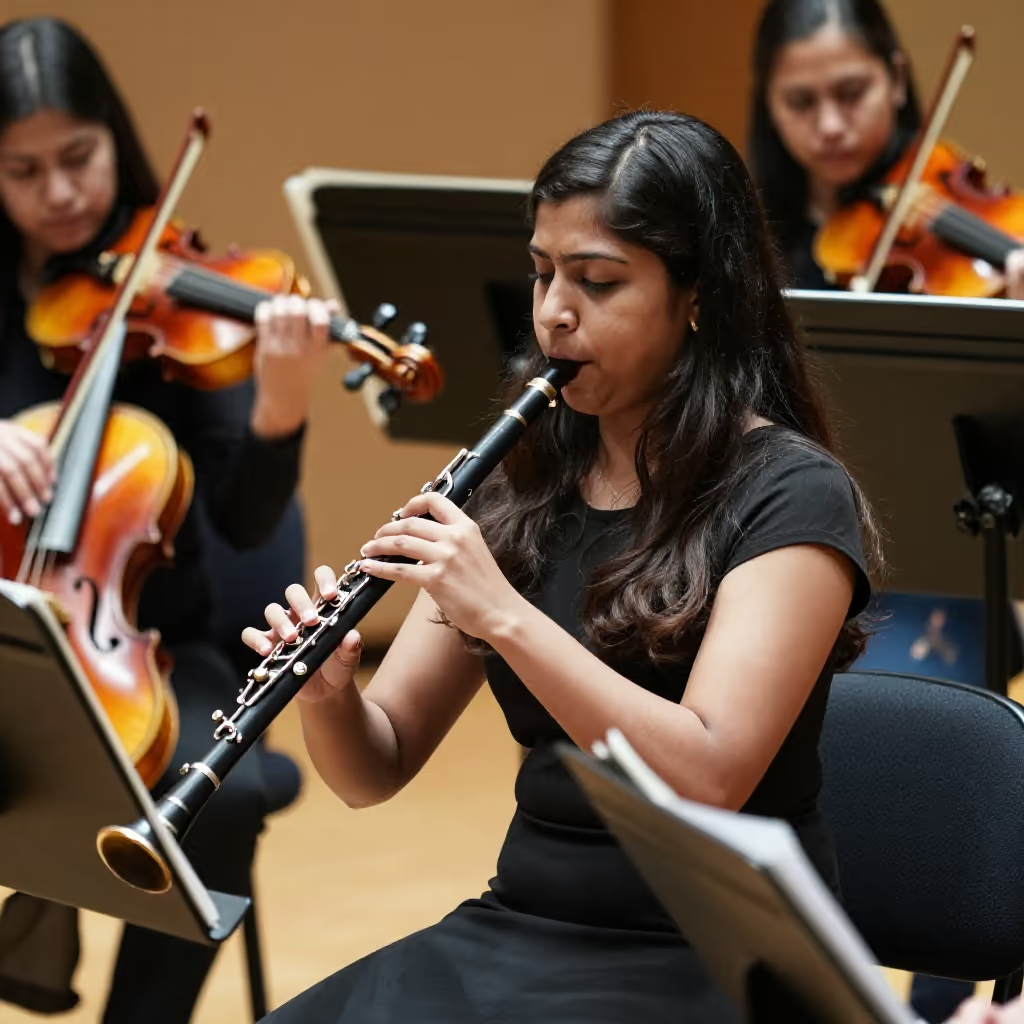
A woodwind instrument with a double reed that produces a clear, penetrating, and often melancholy sound and is frequently used in the orchestra.
example
Das berühmte Solo am Anfang des zweiten Satzes wird von der Oboe gespielt.
The famous solo at the beginning of the second movement is played by the oboe.
Usage tips
Word family
The person who plays this instrument is called 'der Oboist' (the male oboist) or 'die Oboistin' (the female oboist).
EXAMPLE
Die Oboistin bereitete sich auf ihr Solo vor.
The oboist prepared for her solo.
Typical verb
As with most musical instruments, the verb 'spielen' (to play) is used here too. So you say 'Oboe spielen' (to play the oboe).
EXAMPLE
Schon als Kind wollte sie Oboe spielen lernen.
Even as a child, she wanted to learn to play the oboe.
Role in the orchestra
The oboe has a special function in the orchestra: because of its clear, stable tone, it gives the note 'A' before concerts, to which all the other instruments are tuned.
EXAMPLE
Alle Musiker lauschten auf die Oboe, um ihre Instrumente zu stimmen.
All the musicians listened to the oboe in order to tune their instruments.
Compare with
confusable
Oboe vs Flöte
flute
'Flöte' and 'Oboe' both belong to the woodwind instruments and often appear in music lessons or orchestras. Learners may therefore confuse them. A 'Flöte' produces sound through air moving across an edge, for example in a transverse flute or recorder. An 'Oboe' has a double reed and often sounds very clear and penetrating. If you are only thinking generally of a wind instrument, the confusion can happen. But for the exact instrument, you need to distinguish between 'Flöte' and 'Oboe'.
Oboe
Im Orchester beginnt die Oboe oft mit einem klaren Ton.
In the orchestra, the oboe often begins with a clear note.
Flöte
Im Musikzimmer liegt eine Flöte auf dem Stuhl.
There is a flute lying on the chair in the music room.