

ohne
without
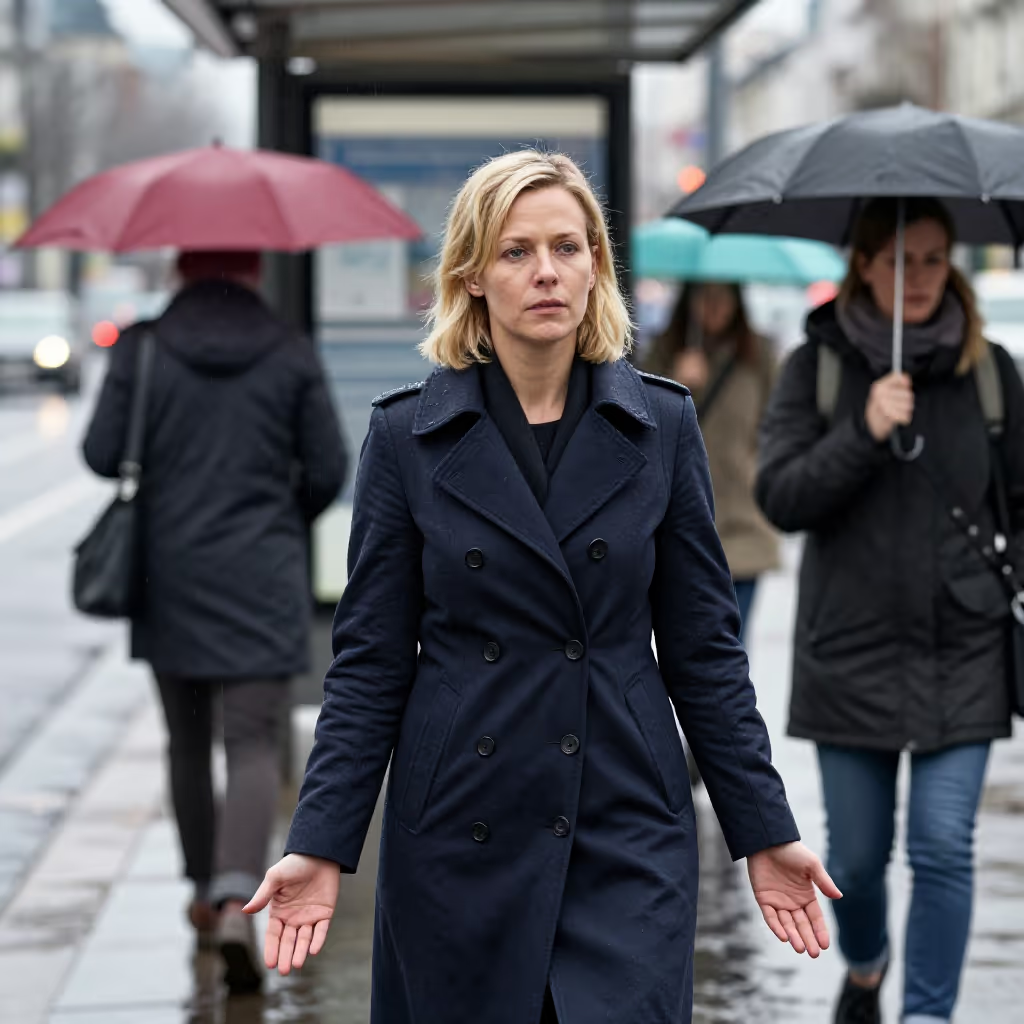
Expresses the lack or absence of something or someone.
EXAMPLE
Ich trinke meinen Kaffee immer ohne Zucker.
I always drink my coffee without sugar.
without
Loading your saved state.
without
Expresses the lack or absence of something or someone.
Ich trinke meinen Kaffee immer ohne Zucker.
I always drink my coffee without sugar.
without … -ing
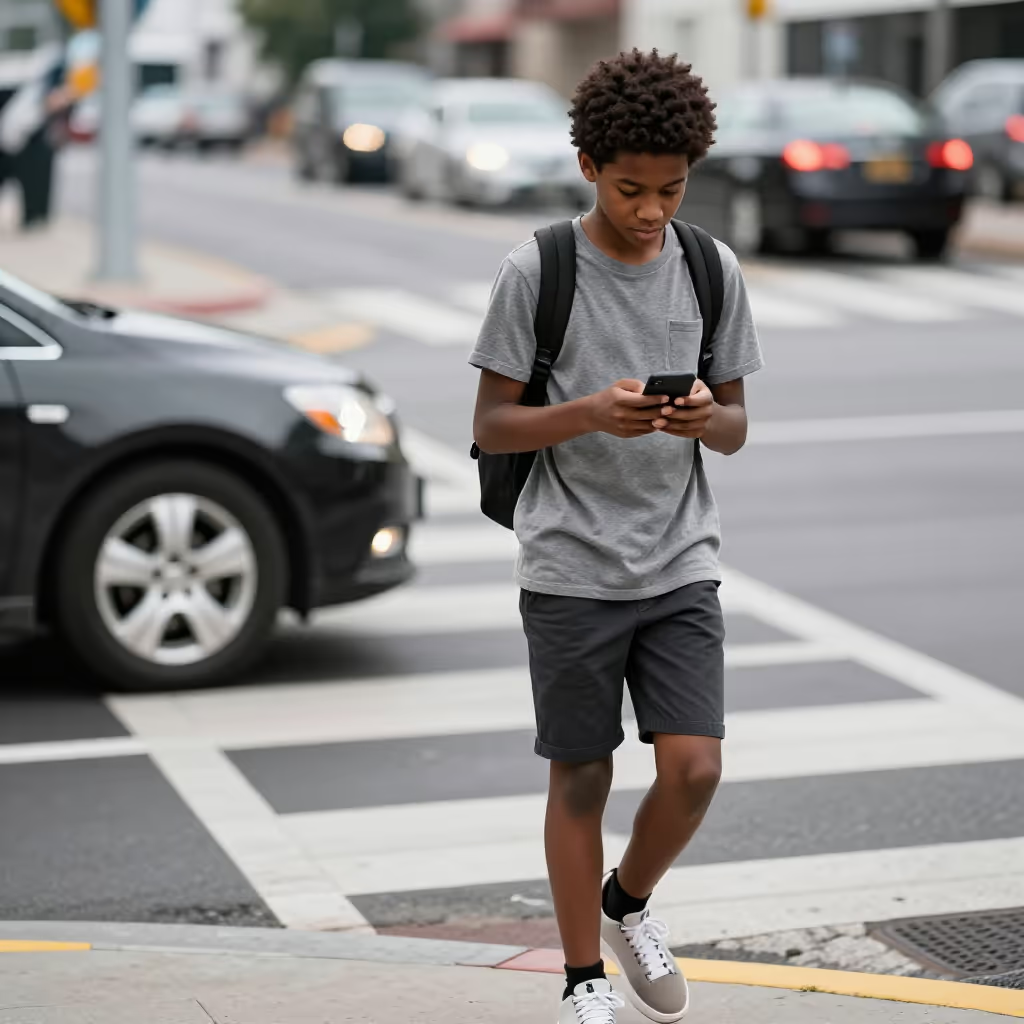
Introduces an infinitive clause that describes an accompanying action that is not carried out.
Er verließ den Raum, ohne ein Wort zu sagen.
He left the room without saying a word.

without
Introduces a subordinate clause that describes an event that does not happen or did not happen.
Das Fest war ein Erfolg, ohne dass es zu Problemen kam.
The celebration was a success without any problems occurring.
without difficulty
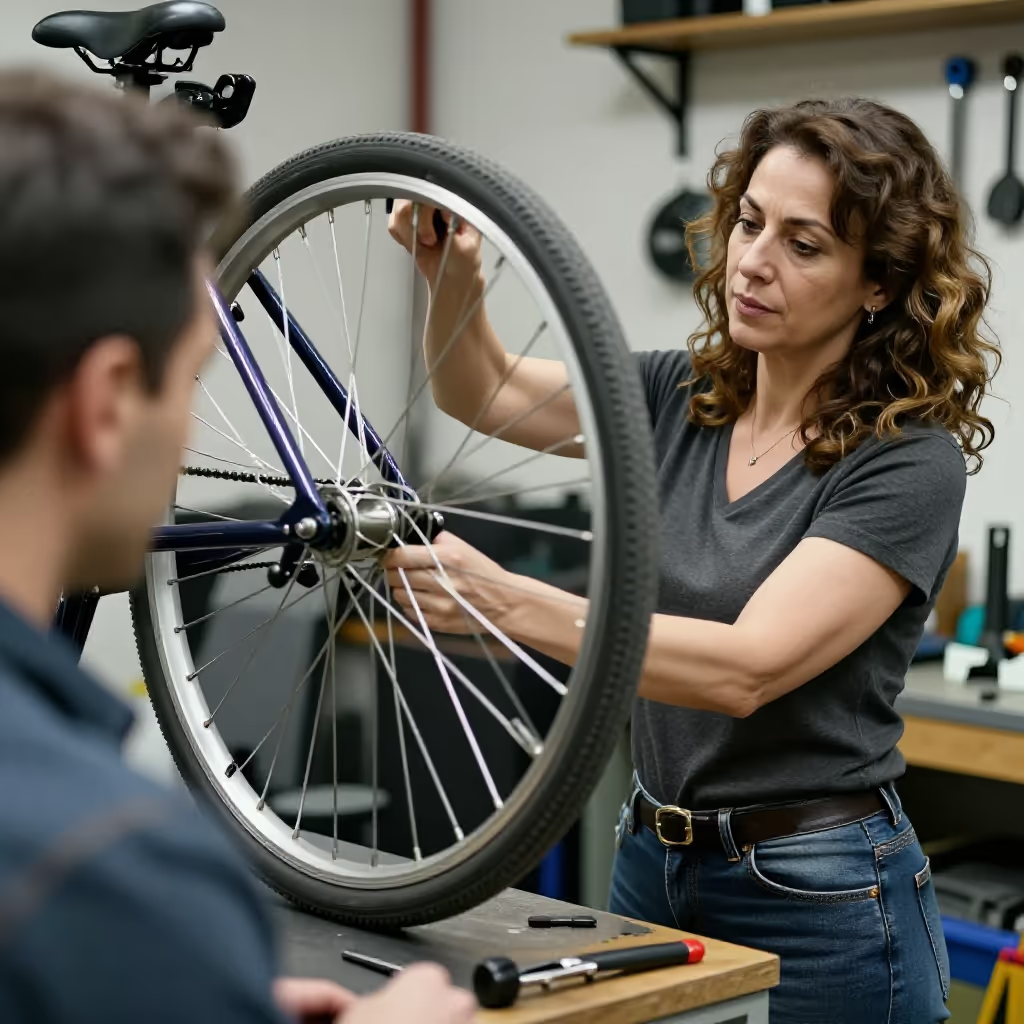
Means 'without problems', 'easily', or 'without difficulty'.
Diese Aufgabe können Sie ohne Weiteres allein erledigen.
You can easily complete this task on your own.
The preposition 'ohne' (without) always requires the accusative. So the noun or pronoun that follows 'ohne' must be in the accusative.
Ich gehe nicht ohne meinen Schirm aus dem Haus.
I don't leave the house without my umbrella.
When the absence of something is expressed in a general way, there is often no article after 'ohne' (without). For example, you say 'Ich habe kein Auto' (I don't have a car) or 'Ich bin ohne Auto hier' (I'm here without a car).
Er reist immer ohne Gepäck.
He always travels without luggage.
The construction 'ohne ... zu + infinitive' (without ... -ing) is used when the subject in the main clause and subordinate clause is identical. The 'zu' stands directly before the infinitive at the end of the clause.
Sie ging an mir vorbei, ohne mich zu grüßen.
She walked past me without greeting me.
The conjunction 'ohne dass' (without) introduces a subordinate clause and is used when the main clause and subordinate clause have different subjects. After 'ohne dass', a complete subordinate clause follows with the verb at the end.
Ich habe das Auto repariert, ohne dass mein Vater es gemerkt hat.
I repaired the car without my father noticing.
Common and useful expressions with 'ohne' (without) are 'ohne Zweifel' (without a doubt), 'ohne Frage' (without question), 'ohne Grund' (without reason), and 'ohne Erfolg' (without success).
Er ist ohne Zweifel der beste Spieler der Mannschaft.
He is without a doubt the best player on the team.
The expression 'ohne Weiteres' (without difficulty / easily) is a fixed expression and means 'without problems' or 'quite simply'. You should learn it as a unit.
Du kannst das Formular ohne Weiteres online ausfüllen.
You can easily fill out the form online.
except / besides
„Ohne“ focuses on the absence of a person or thing. „Außer“, by contrast, names a person or thing as an exception to a group or general statement. If Anna is absent, both can work, but „ohne Anna“ describes the absence, while „außer Anna“ describes the exception.
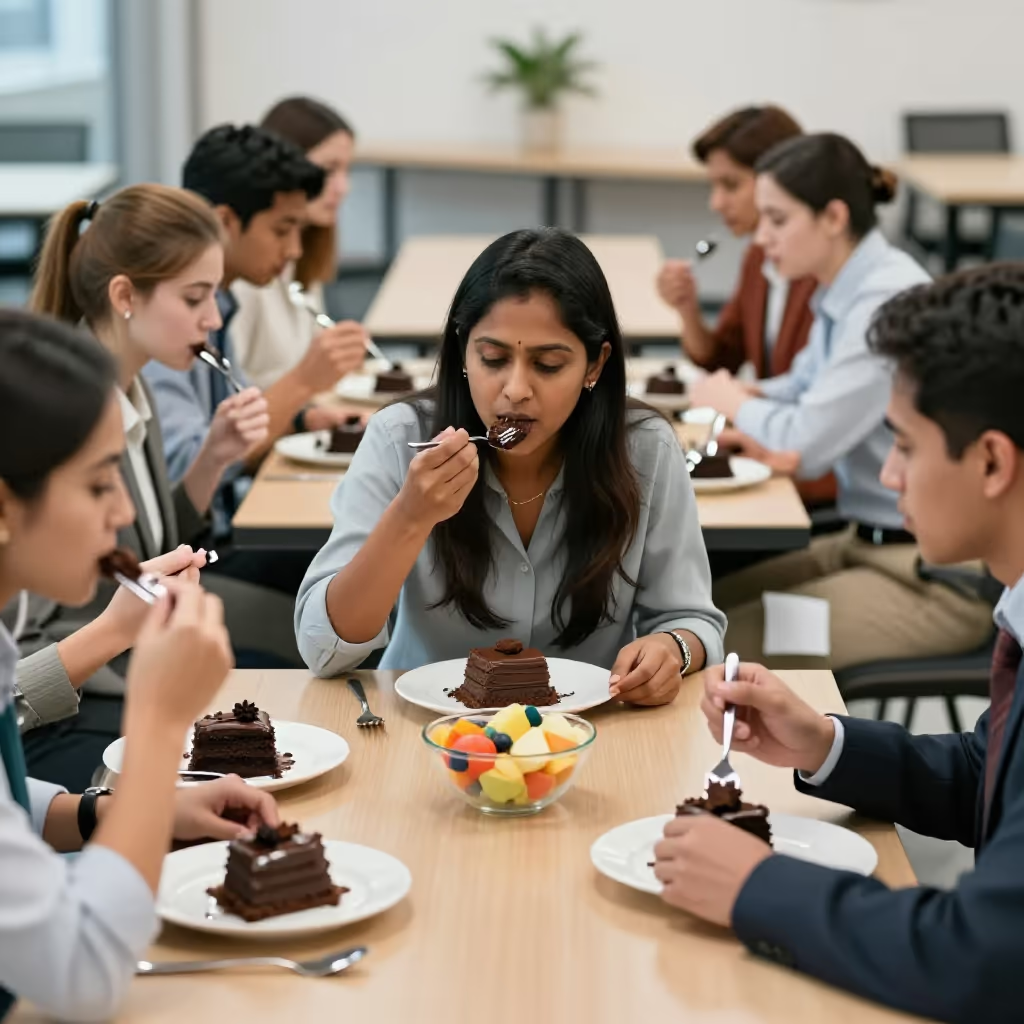
Alle Gäste kamen ohne Anna zur Feier.
All the guests came to the party without Anna.
Alle Gäste kamen außer Anna zur Feier.
All the guests came to the party except Anna.