

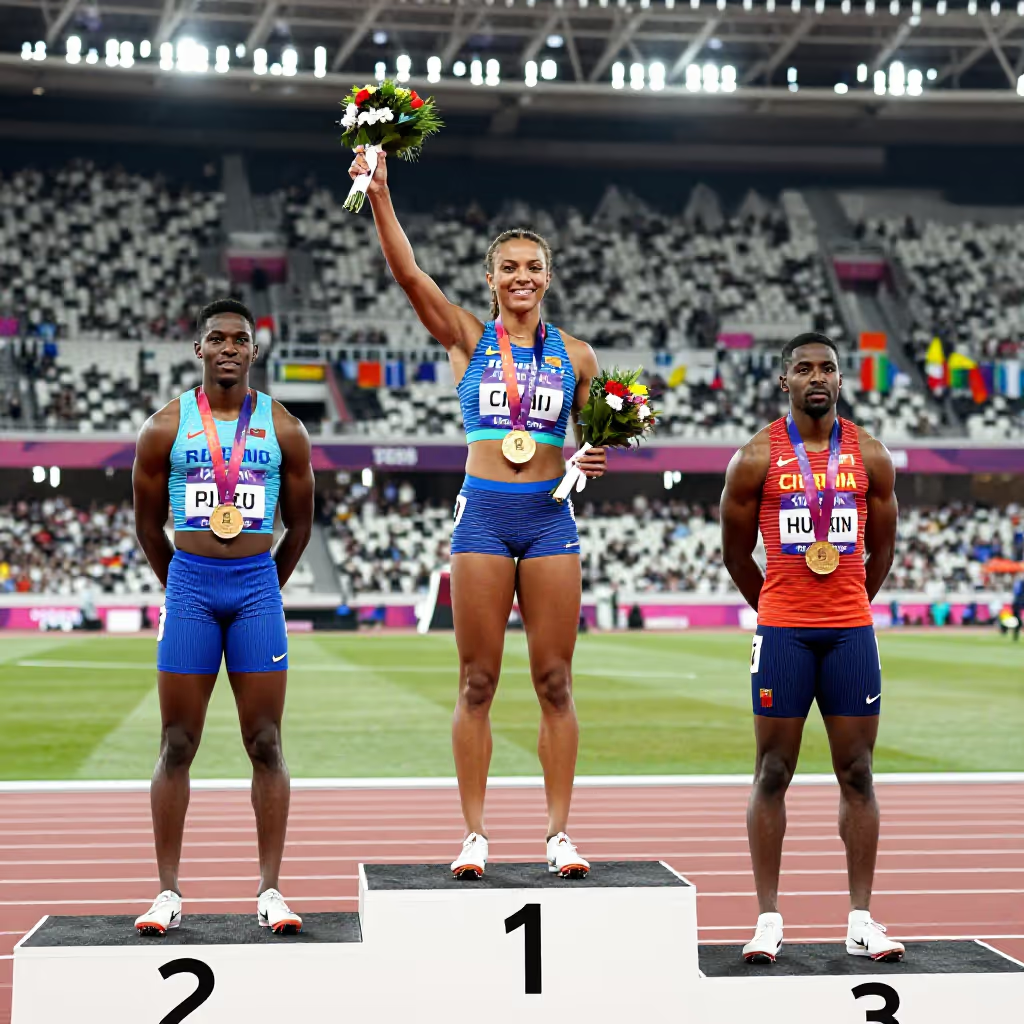
A person who finishes first in an event at the Olympic Games and has won a gold medal.
example
Der Olympiasieger im 100-Meter-Lauf wurde im Stadion frenetisch gefeiert.
The Olympic champion in the 100-meter dash was celebrated enthusiastically in the stadium.
Usage tips
Compound word
The word is made up of 'Olympia' (Olympics) and 'Sieger' (winner). So it literally means 'winner at the Olympics.'
EXAMPLE
Jeder Athlet träumt davon, einmal Olympiasieger zu werden.
Every athlete dreams of becoming an Olympic champion one day.
Usage pattern
To name the sport, you use the preposition 'in' with the dative. For example, you say 'Olympiasieger im Schwimmen' (Olympic champion in swimming) or 'Olympiasiegerin im Skifahren' (female Olympic champion in skiing).
EXAMPLE
Sie wurde 2018 Olympiasiegerin im Eiskunstlauf.
She became Olympic champion in figure skating in 2018.
Typical verbs
'Olympiasieger' (Olympic champion) is often used with the verbs 'sein' (to be) or 'werden' (to become). The construction is then: subject + sein/werden + Olympiasieger.
EXAMPLE
Er ist amtierender Olympiasieger über 10.000 Meter.
He is the reigning Olympic champion over 10,000 meters.
Compare with
near_synonym
Olympiasieger vs Sieger
winner
'der Sieger' and 'der Olympiasieger' both refer to someone who has won. 'der Sieger' is the general word for a person, team, or group that takes first place in a competition. 'der Olympiasieger' is much more specific: this person has won an event at the Olympic Games and received gold. So every 'Olympiasieger' is a 'Sieger', but not every 'Sieger' is an 'Olympiasieger'.
Olympiasieger
Der Olympiasieger zeigte den Kindern nach dem Training seine Goldmedaille.
After training, the Olympic champion showed the children his gold medal.
Sieger
Erik ist der Sieger des kleinen Schachturniers im Verein.
Erik is the winner of the small chess tournament at the club.